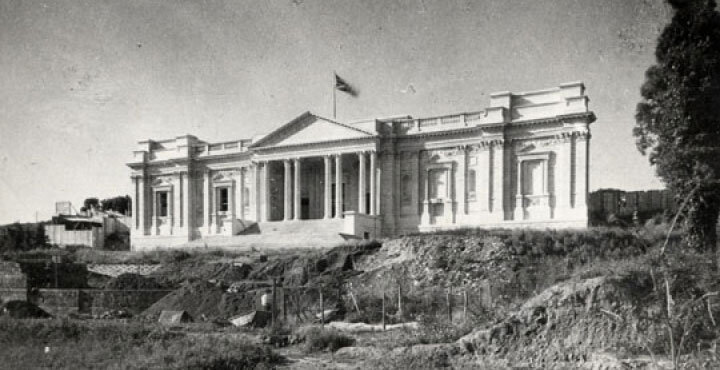


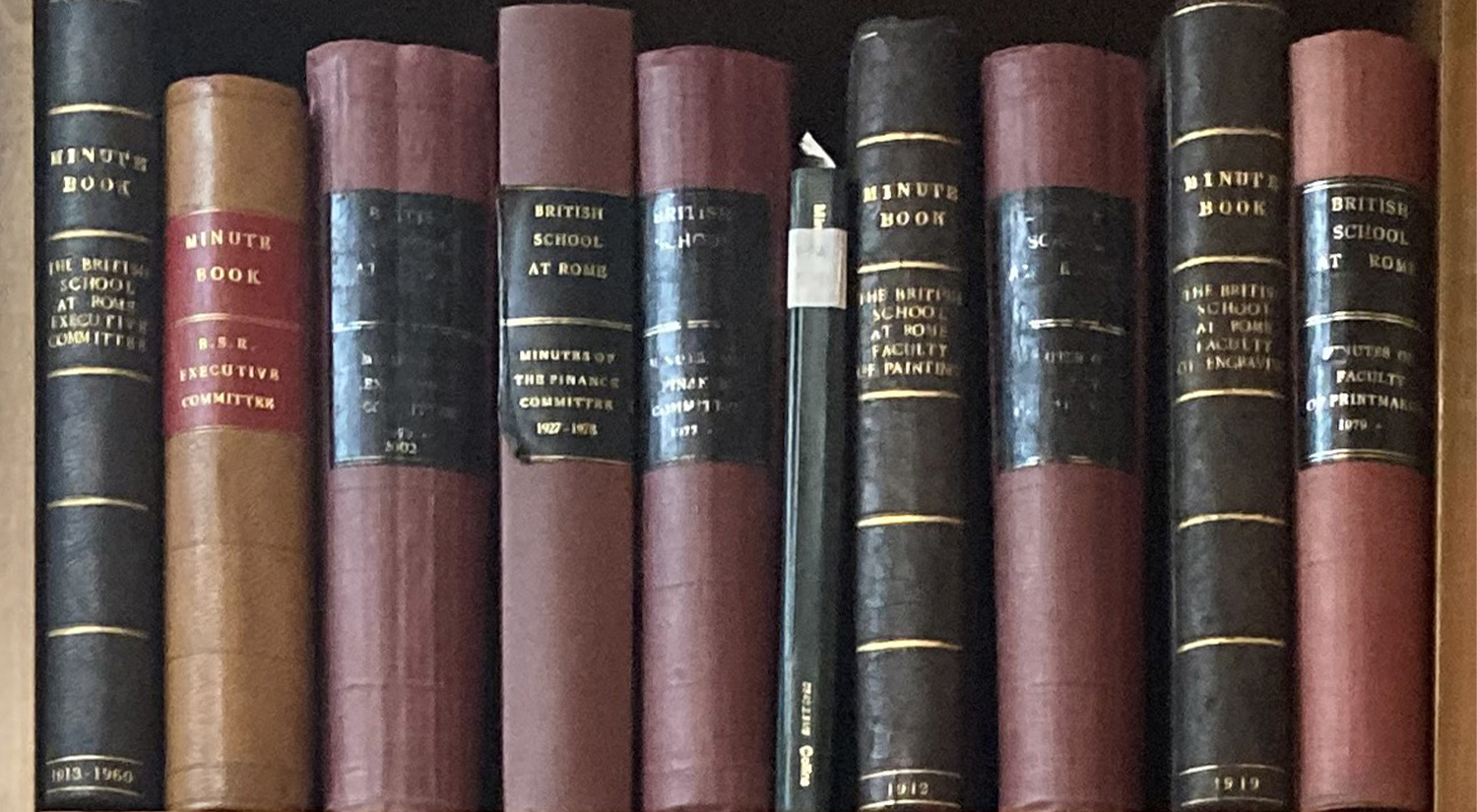
Corporate records can tell us a great deal about an institution’s historical trajectory. They provide insight into its life through official documents, decisions, and discussions recorded in Minute Books, Registers, and Bylaws.
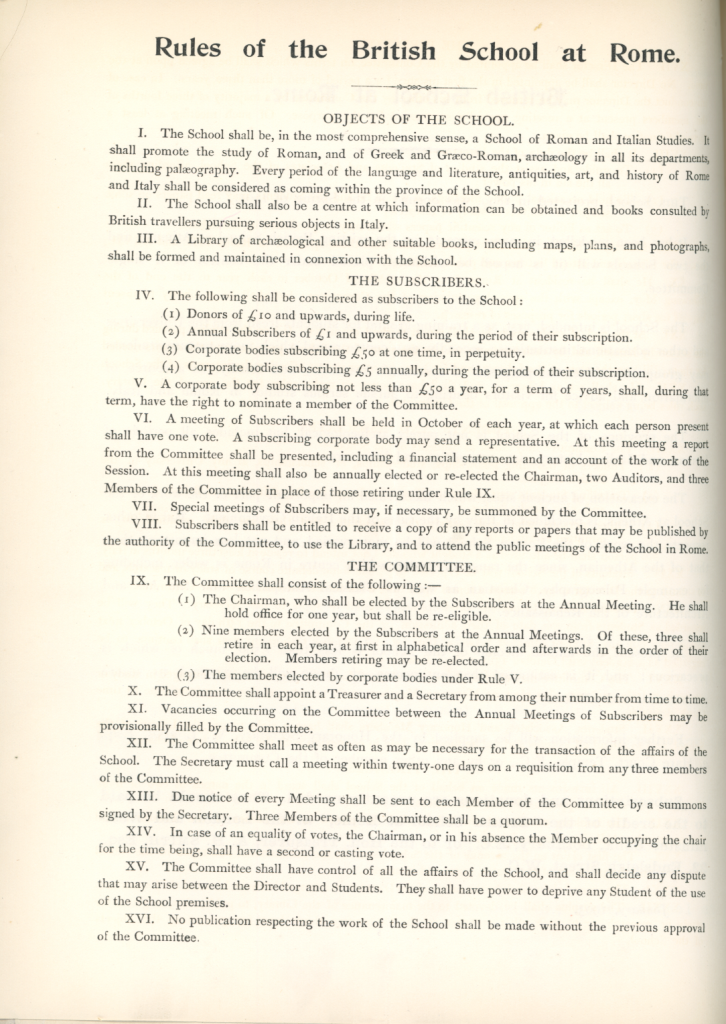
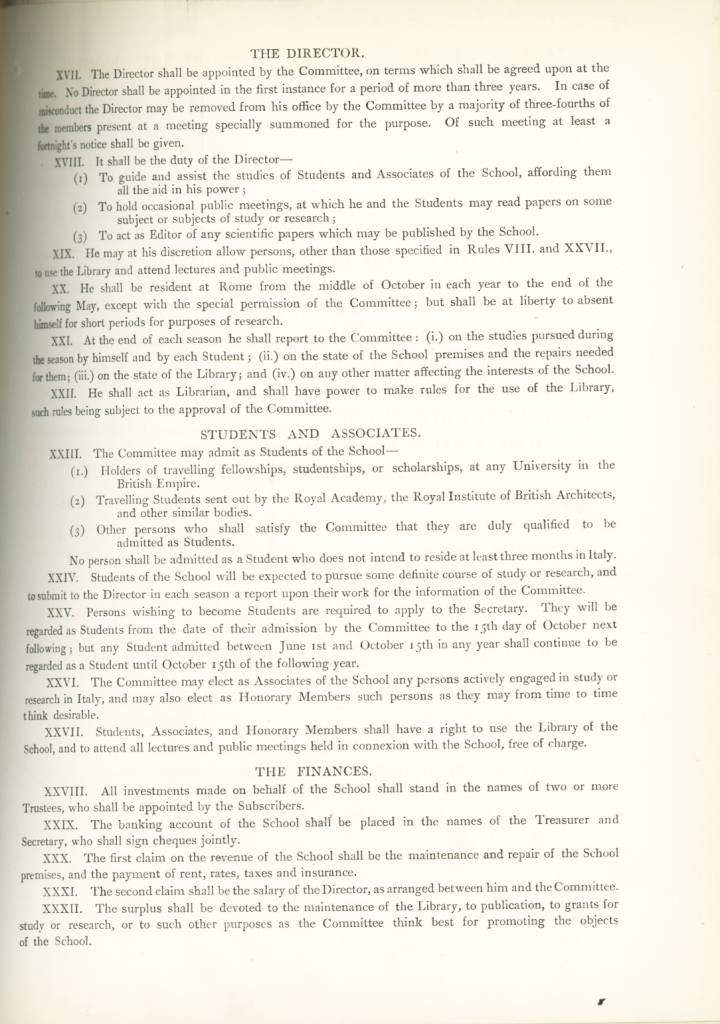
Just as buildings require strong foundations, well-documented rules and determinations form the backbone of learned societies and cultural organisations, supporting their growth and long-term success. Actions and motions are taken in a ritual reiteration that reinforces mission and objectives before their members and stakeholders.
In the case of the British School at Rome, commonly known by its familiar acronym ‘BSR’, the Series documenting the institution’s evolution over 125 years of existence is remarkable: from the black-and-red-coloured notebooks with minutes of meetings meticulously annotated by the Chair or the Secretary of the Managing Committee in the early years to the solemn volumes prepared by the 1851 Royal Commissioners, marking the shift to the enlarged scheme with the establishment of the Arts Scholarships and the Royal Charter of Incorporation in 1912.
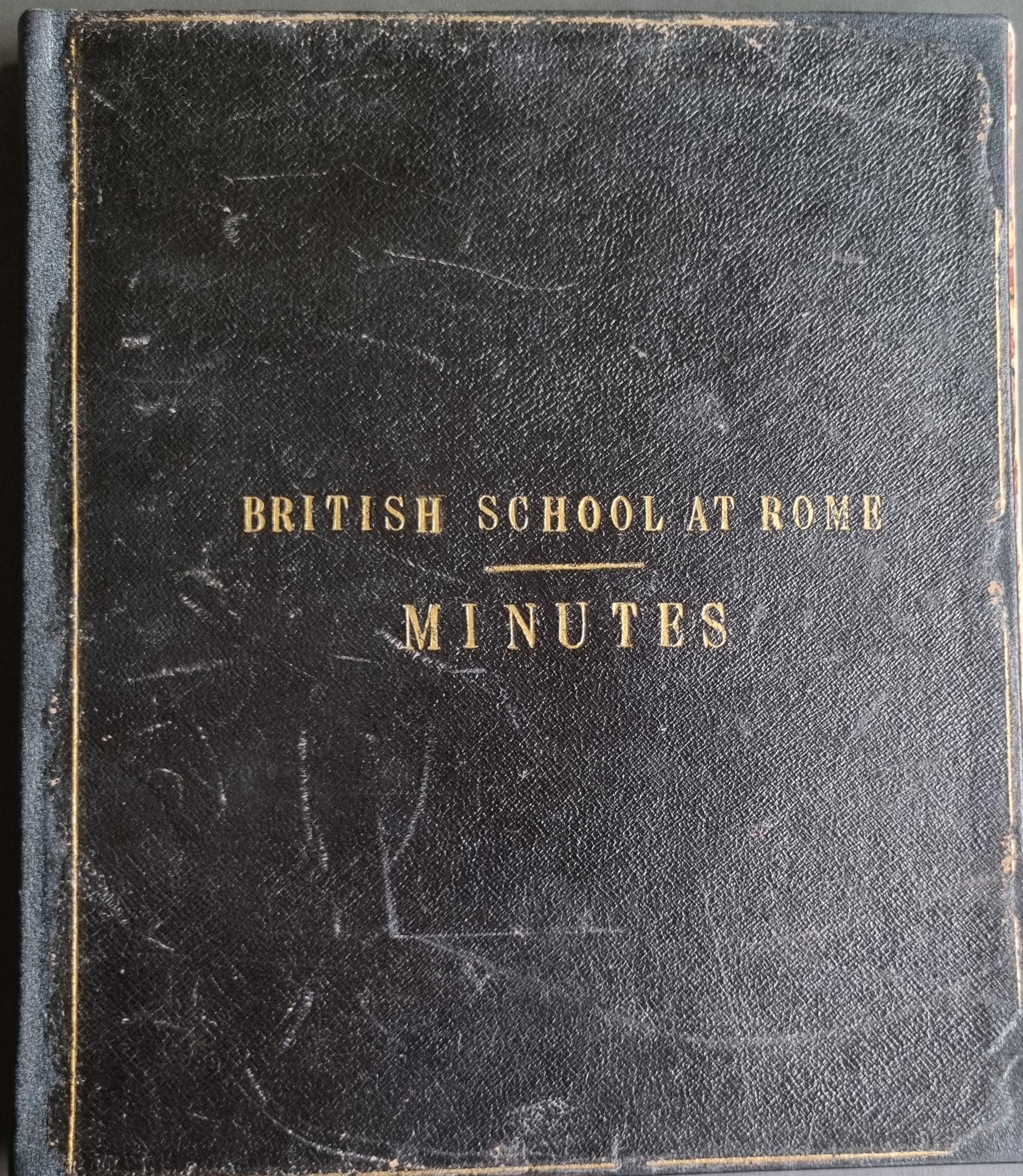
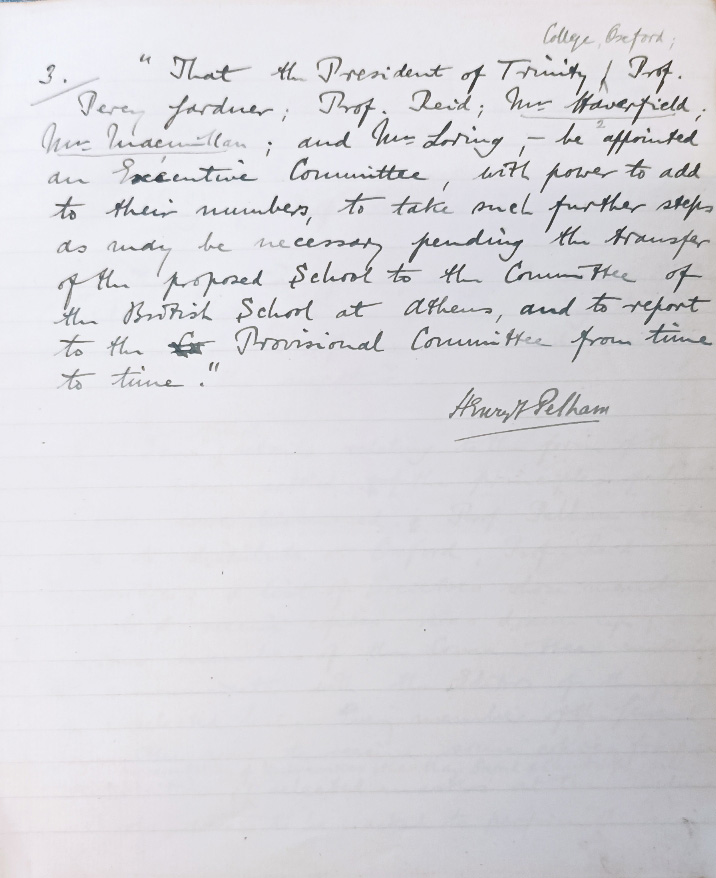
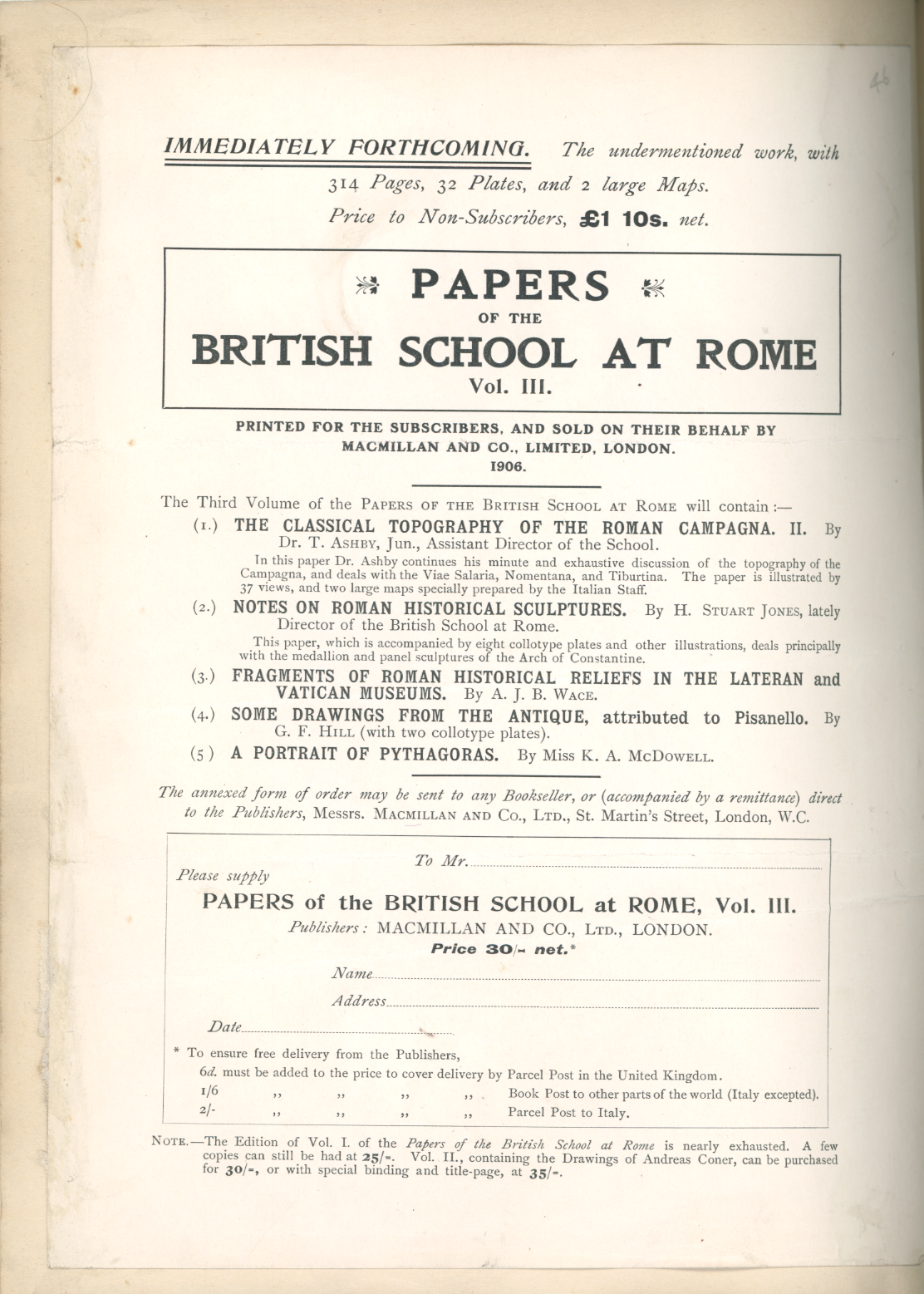
The frequency of the early meetings is considerable and shows a fervent array of initiatives. One of these sets the ground for the publication of the works of the School, by stating that “such publication should take the form of a series of papers to be entitled ‘Papers of the British School at Rome’ and consecutively numbered” (27 June 1901, AR-10.01/1) and “they should be in a shape uniform with that of the British School Annual (Athens) except with respect to the annual numeration” (31 October 1901, AR-10.01/1).
But though links between Athens and Rome were strong, other initiatives pointed in different directions, envisaging a future for the newly established British School quite unlike that of Athens. In fact, from the outset, the multilayered nature of Rome itself – la città palinsesto -, recognised worldwide for its historical and artistic significance, helped broaden and enhance the Rome School’s mission. Reaching out to artists, architects and historians was facilitated through connections with other institutions such as the Royal Academy of Arts (RA), the Public Record Office (PRO – as the ‘National Archive’ was then known) and the Royal Institute of British Architects (RIBA). Representatives of such institutions and public bodies were invited to take part in the development of the School’s strategy, including Sir E. Maunde Thompson (1840-1929), from the British Museum, Sir Edward J. Poynter (1836-1919), from RA, Sir Henry Maxwell Lyte (1848-1940), from PRO, and Professor George Aitchison, (1825-1910), from RA and RIBA (4 January 1900, AR-10.01/1). Such connections not only encouraged students from these institutions to visit Rome regularly and to find academic and logistical support there, but also proved fruitful in terms of financial backing, as evidenced by a £21 contribution from RIBA for 5 years (15 May 1902, AR-10.01/1). It is no surprise, therefore, that when the 1851 Commission pops up in 1910 to negotiate, with the existing School, the incorporation into a larger body also promoting the Art practice, conditions for initiating a successful multidisciplinary enterprise were already in place.
Central to the mission of the BSR, in addition to the promotion of Roman and Italian Studies, were, undoubtedly, the creation and expansion of a solid network of membership, both individual and public. Members were invited, and still are, to support the funding of the School regularly. Further, there was the establishment of a Library, sustained by the generous donations of friends and members. These began with “a gift of about 120 more volumes to the Library from Dr Steele (James Peddie Steele, 1836-1917), a gift of the Vasi’s plan of Rome from Mr Ashby Sr., …” (23 April 1903, AR-10.01/1), who also endowed the position of his son Thomas Ashby Jr. as Assistant Director with a contribution of 250 £.
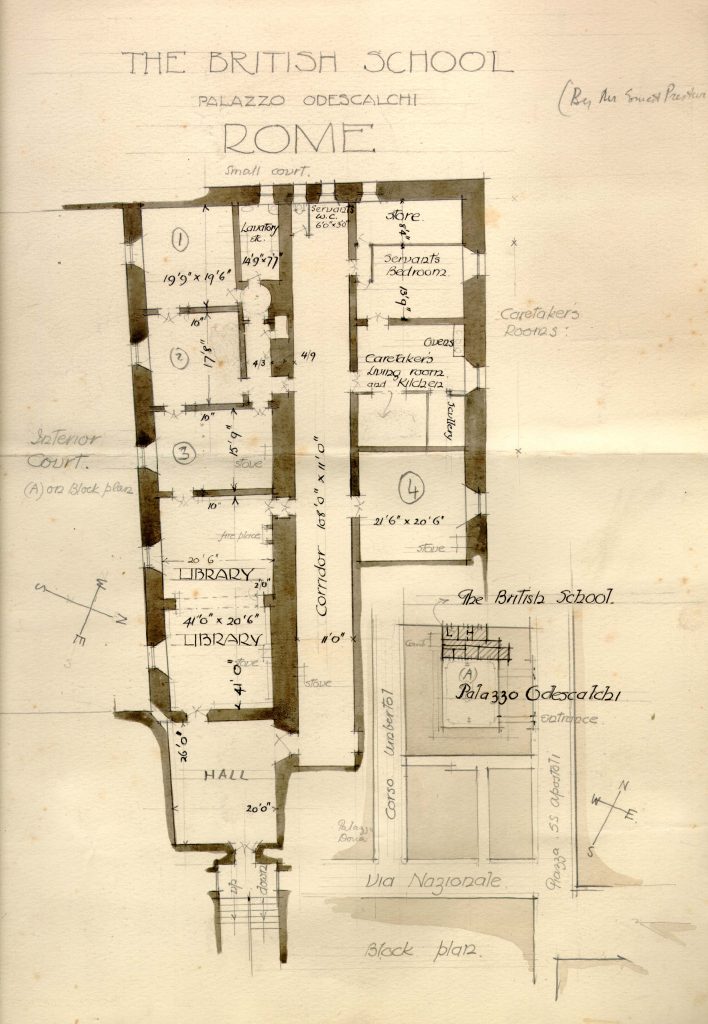
The early history of giving interweaves with the formation and development of the first nucleus of the BSR’s Research Collections, the admission of students and the hiring of high-profile officers, and the installation of its first headquarters in the premises of Palazzo Odescalchi, a lease secured by Gordon McNeil Rushfort (1862-1938), first BSR Director, in January 1901.
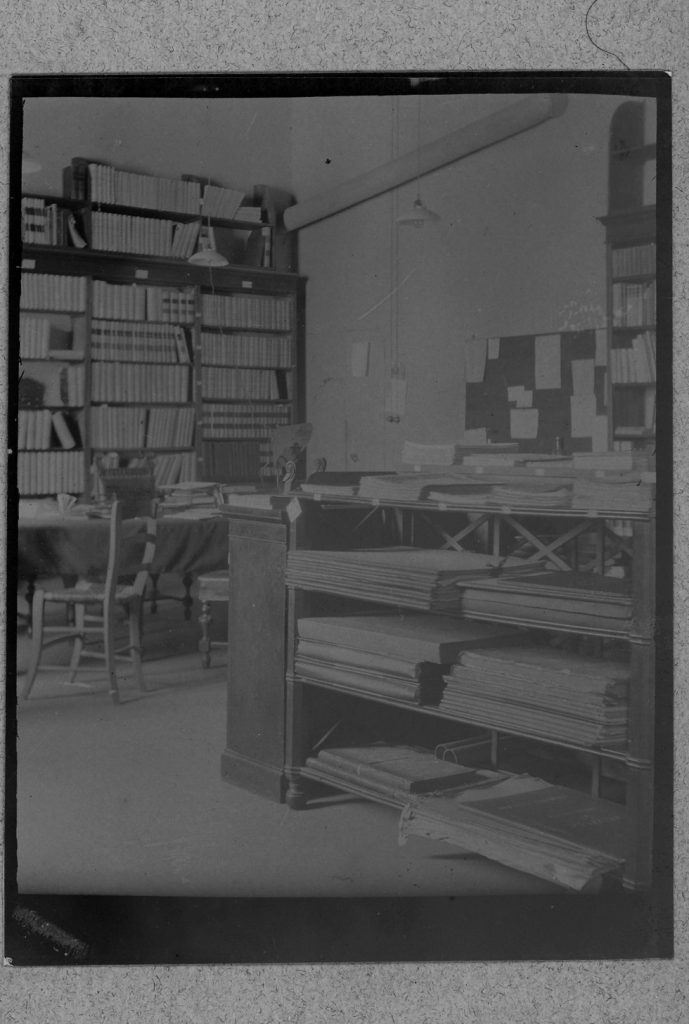
The Minutes predating the 1851 Commissioners’ arrival reflect a more academic approach to running an institution. They are even more valuable, given that records in the Archives from 1901 to 1912 are scarce and erratic. The 1851 Commission’s takeover in 1912 marks, indeed, a substantial change in the formal elements of the Minute Books, both extrinsic and intrinsic, demonstrating the level of bureaucratic accuracy of the imperial administration and the dramatic shift the institution was about to face in the forthcoming years. The Managing Committee became the Faculty of Archaeology, History and Letters. Three Arts Faculties were established, responsible for the governing of the scholarships in Painting, Sculpture and Architecture, followed by Engraving in 1919.
Although the British School at Rome formally opened on 11 April 1901, meetings held in preparation for its establishment took place as early as October 1899, with the formal approval of a provisional scheme issued under the aegis of the British School at Athens (BSA). That shows how close Athens and Rome were at the beginning and how much influence such proximity had on the initial stages of the BSR, since students from Athens were then automatically admitted to Rome, and J. FF. Baker-Penoyre (1870-1954) was simultaneously Secretary to the BSA and the BSR, and Librarian and Secretary to the Hellenic Society.
At that time, the BSR Executive Committee could count on the presence of distinguished academics and non-specialists: Professors Henry Pelham (1846-1907), President of Trinity College and Camden Professor, Oxford; Percy Gardner (1846-1937), ex-Disney Professor of Archaeology, Cambridge, and Lincoln and Merton Professor of Classical Archaeology, Oxford; James Smith Reid (1846-1926), Fellow of Caius and Professor of Ancient History, Cambridge; Mr Francis John Haverfield (1860-1919), Senior Student of Christ Church, Oxford; Mr George Macmillan (1855-1936), Director of Macmillan’s publishing house, and Mr W. Loring (1865-1915), archaeologist, many of them also serving on the BSA Managing Committee.
The seminal efforts of the early years paved the way for the growth of the British School at Rome and its transformation into what it is now. Despite social and political changes over more than a century, the founders’ purposes and the initial pioneer spirit remain. In essence, it’s the same inspiring vision of today.
Alessandra Giovenco, BSR Archivist
Documents used:
BSR Rules confirmed, 1903 (AR-10.14/1)
Managing Minute Book, 25 October 1899-18 May 1905 (AR-10.01/1)
Publicity for the PBSR (AR-10.14/1)
Plan of BSR headquarters in Palazzo Odescalchi / Library in Palazzo Odescalchi (AR-10.14/1; ES-PC/01/20)