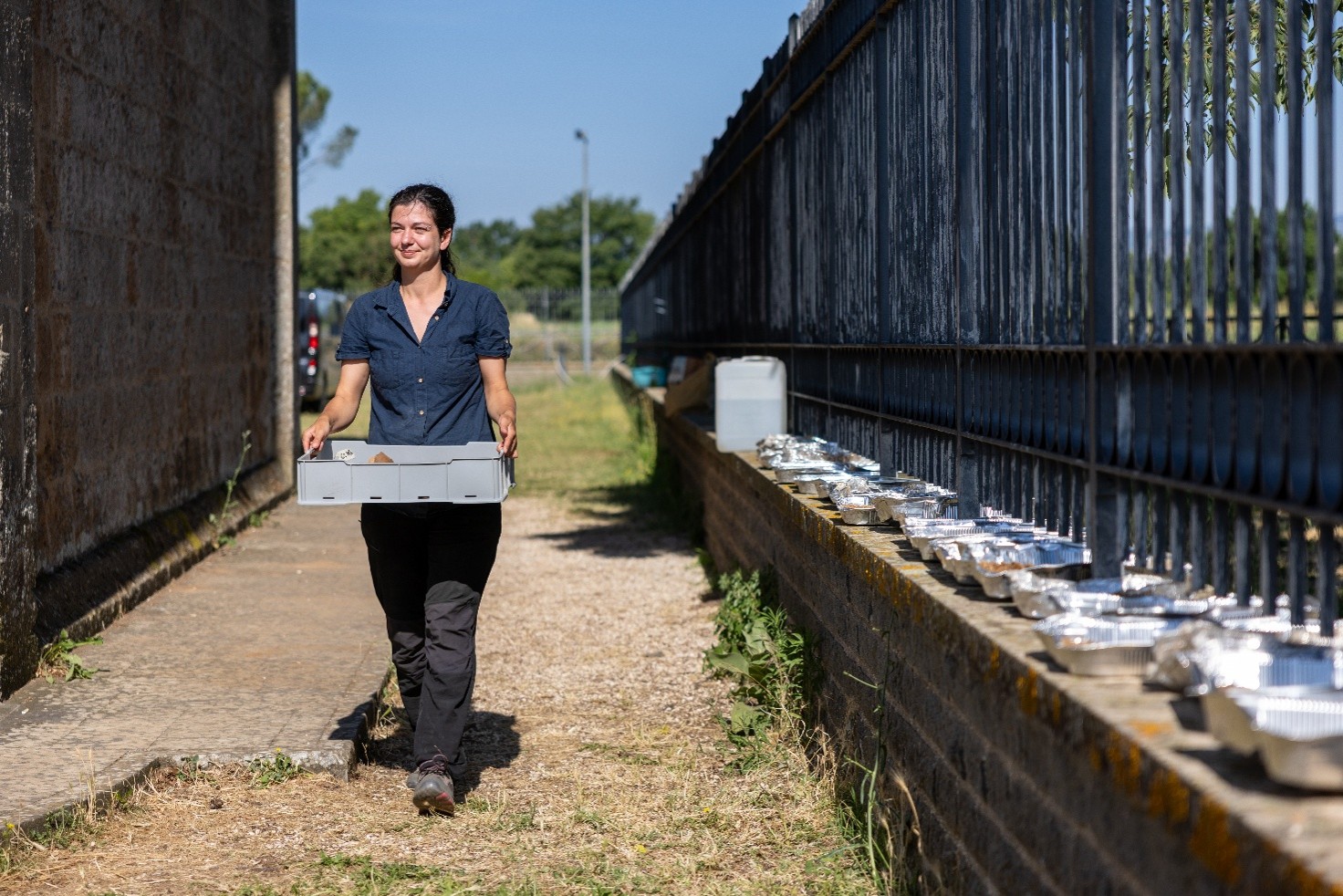
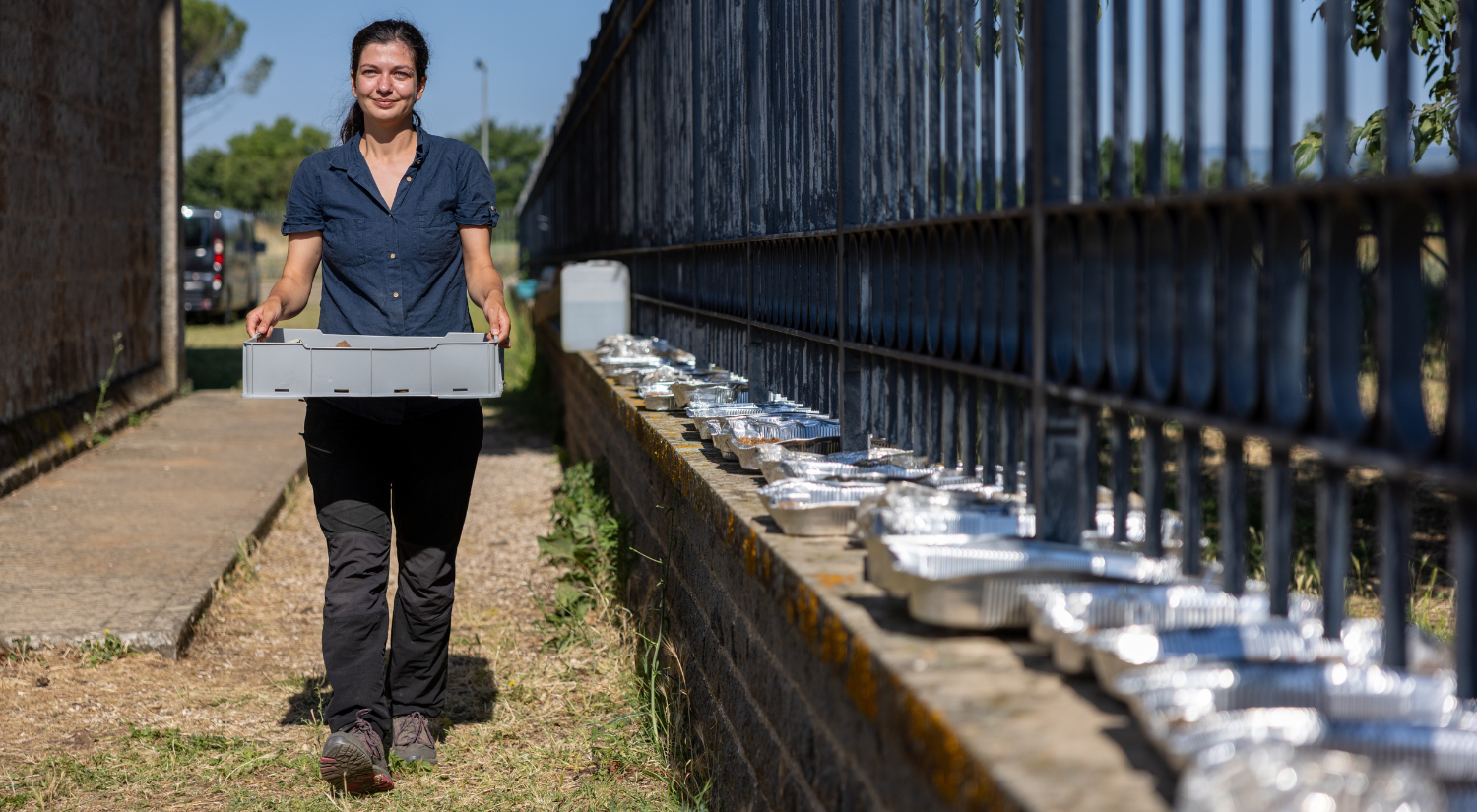
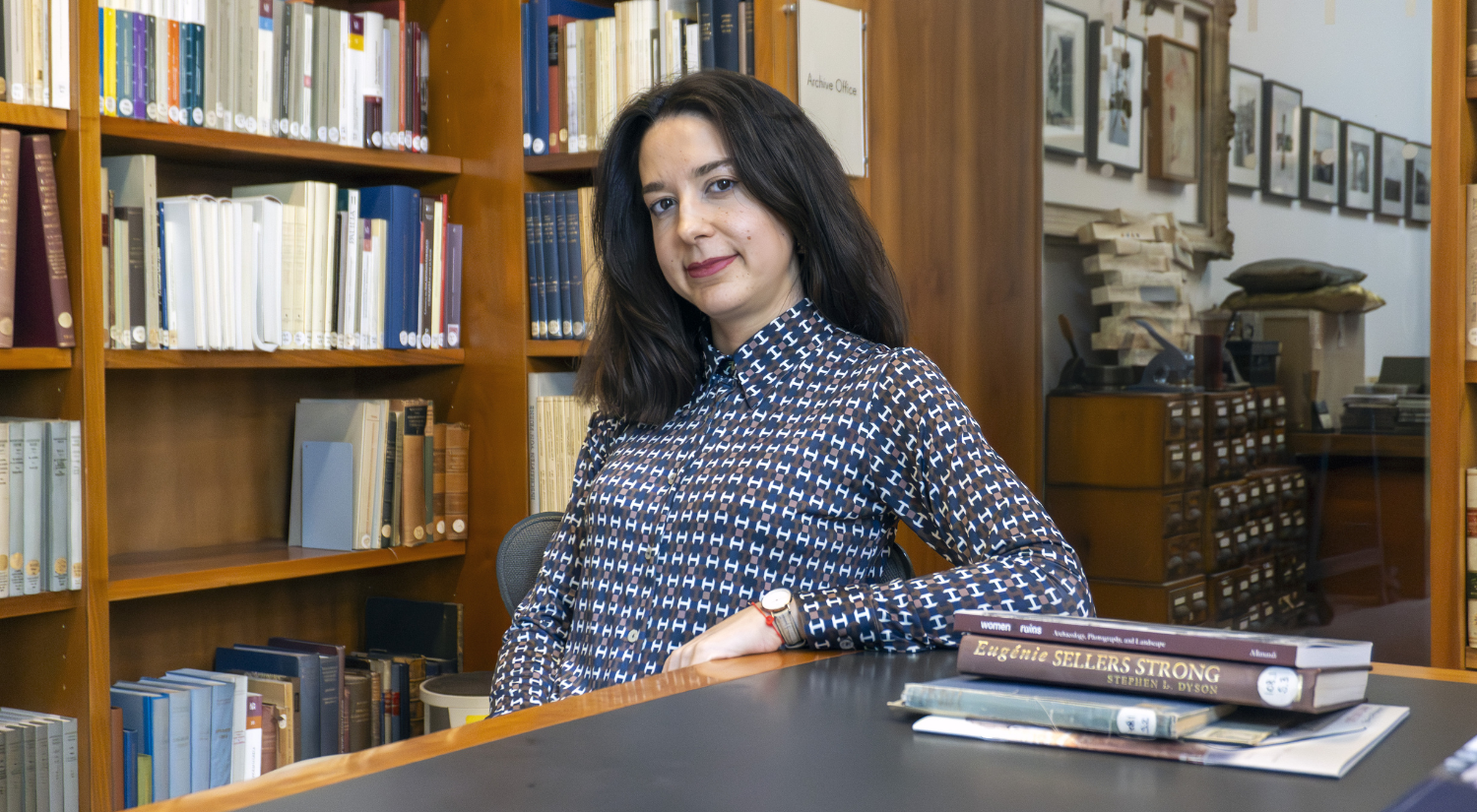
Emma Richard-Trémeau, photo by Nicholas Berardo, 2026
Emma Richard-Trémeau, photo by Nicholas Berardo, 2026
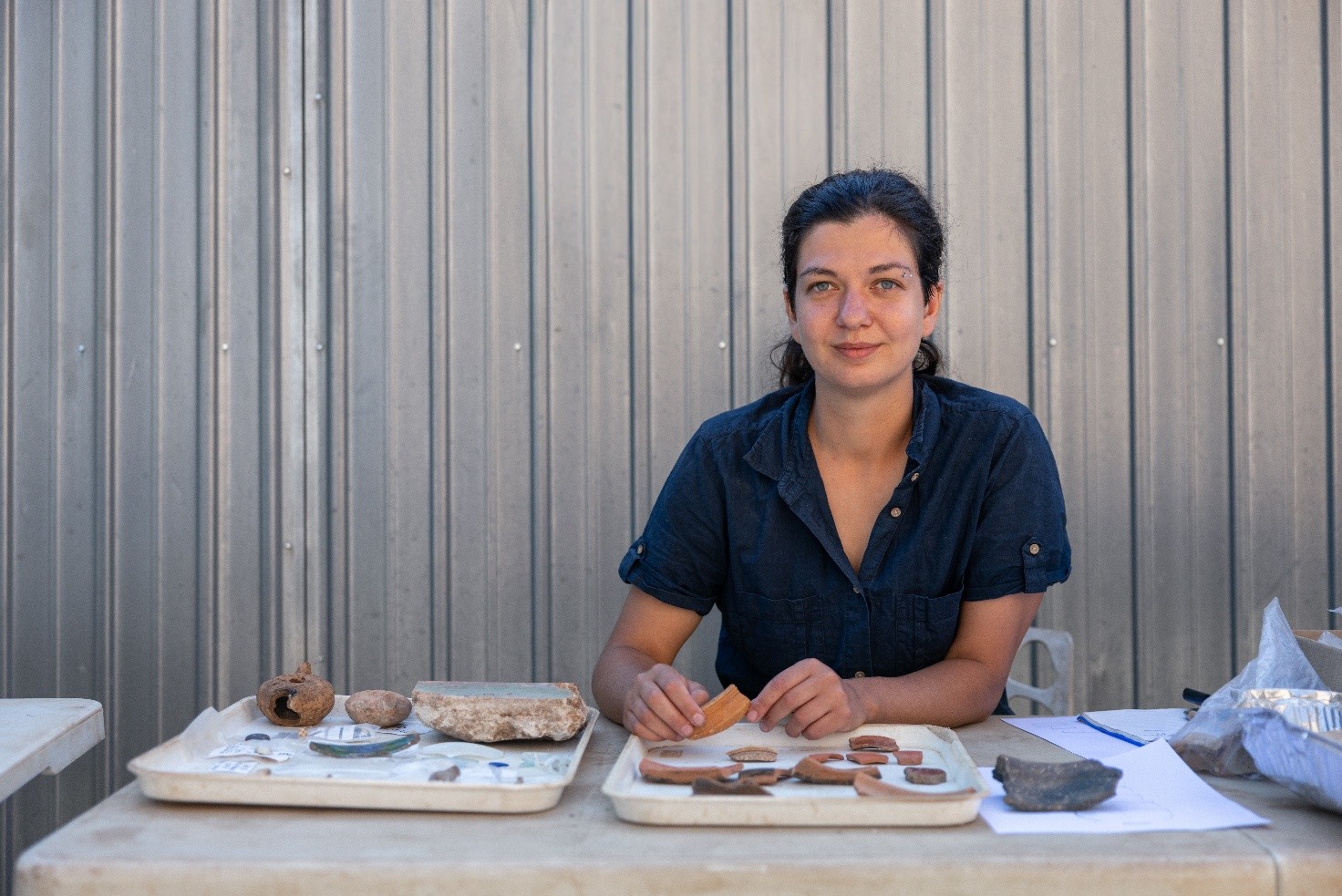
Emma Richard-Trémeau is undertaking a Collaborative Doctoral Award at the University of Durham and BSR. As part of her training, she spent a placement month at Falerii Novi, assisting with the care, washing and cataloguing of finds-and taking the opportunity to deepen her knowledge of ceramics through the specialist expertise of the team on site.
Her work offers a fascinating window into one of the most tangible aspects of Roman daily life: what people ate, how they cooked it, and how those practices changed over time.
Emma Richard-Trémeau, photo by Nicholas Berardo, 2026
Cooking in Roman Falerii Novi
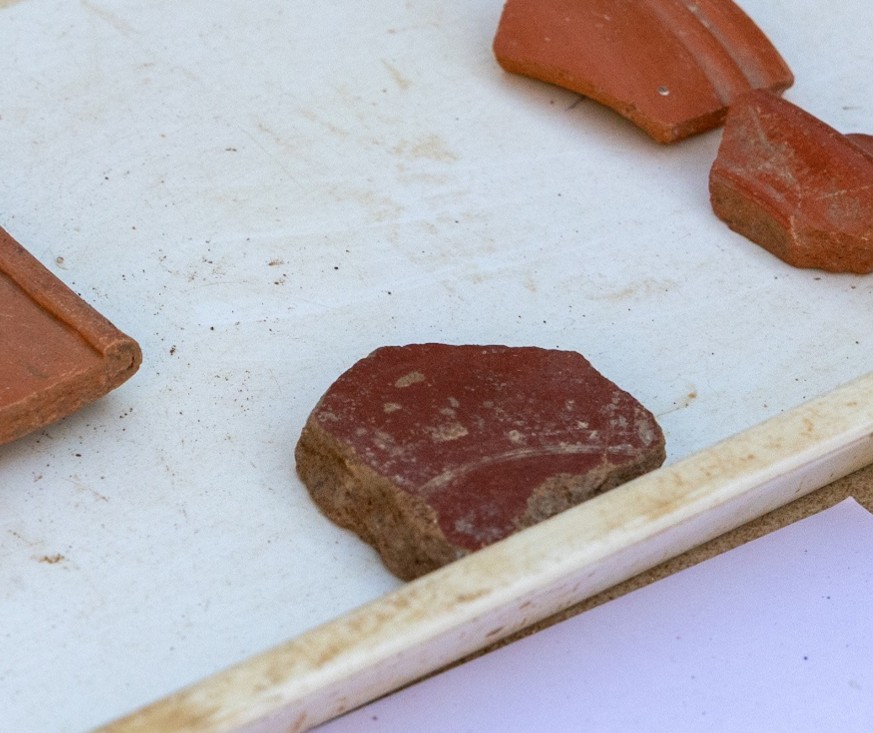
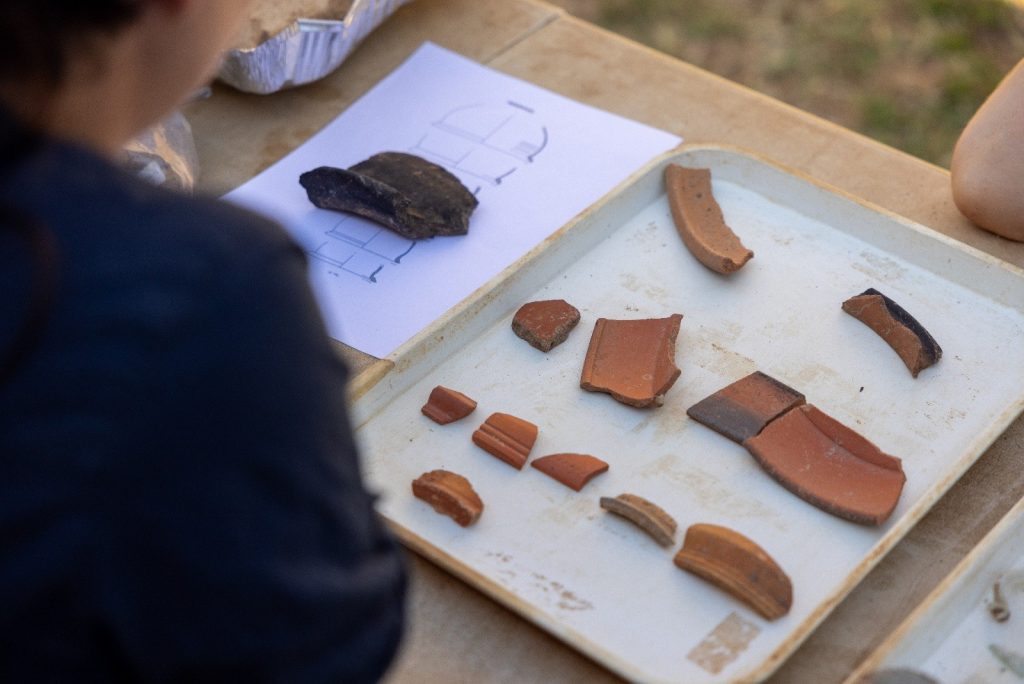
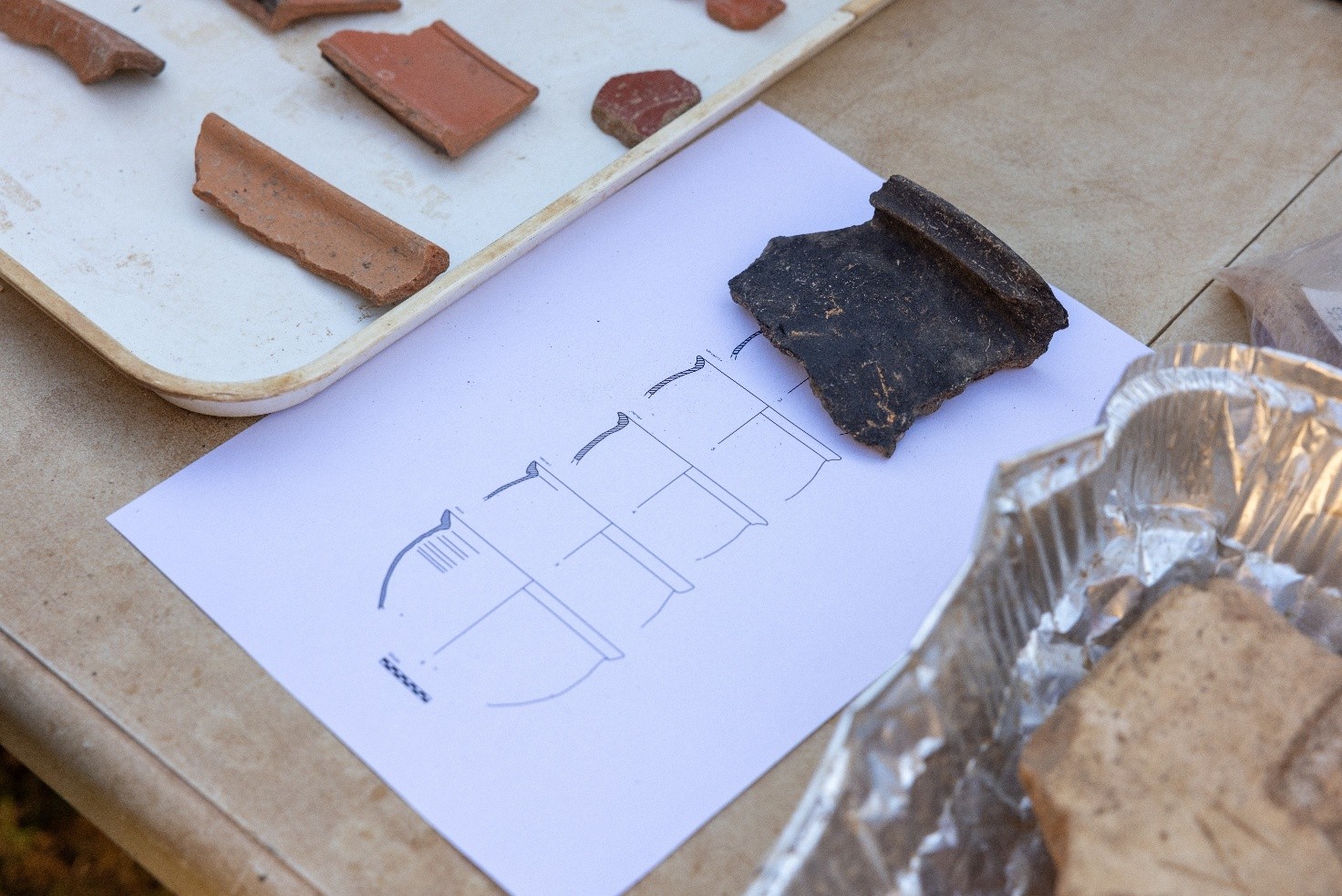
The ceramic finds from Falerii Novi tell a rich story of diet and culinary practice. During the mid-imperial period, the assemblage is dominated by shallow, wide pans, some imported from Northern Africa, others produced locally in Italy, in what has traditionally been called “Pompeian” ware, though the name is something of a misnomer, as these vessels were made locally rather than at Pompeii. Both types share a similar function: cooking rich, fatty foods, particularly meats. Notably, some of these pans feature a distinctive red-slipped interior surface that acted as a non-stick coating – a Roman equivalent, in a sense, of a modern Teflon pan.
This darker piece had a non-stick coating, photo by Nicholas Berardo, 2026
Different pieces of ceramics from frying pans, photo by Nicholas Berardo, 2026
Alongside the frying pans, deeper cooking pots were used for more liquid-based preparations, like stews, soups, and other slow-cooked dishes. Together, these vessels paint a picture of a varied and relatively rich diet among the inhabitants of Falerii Novi during the imperial period.
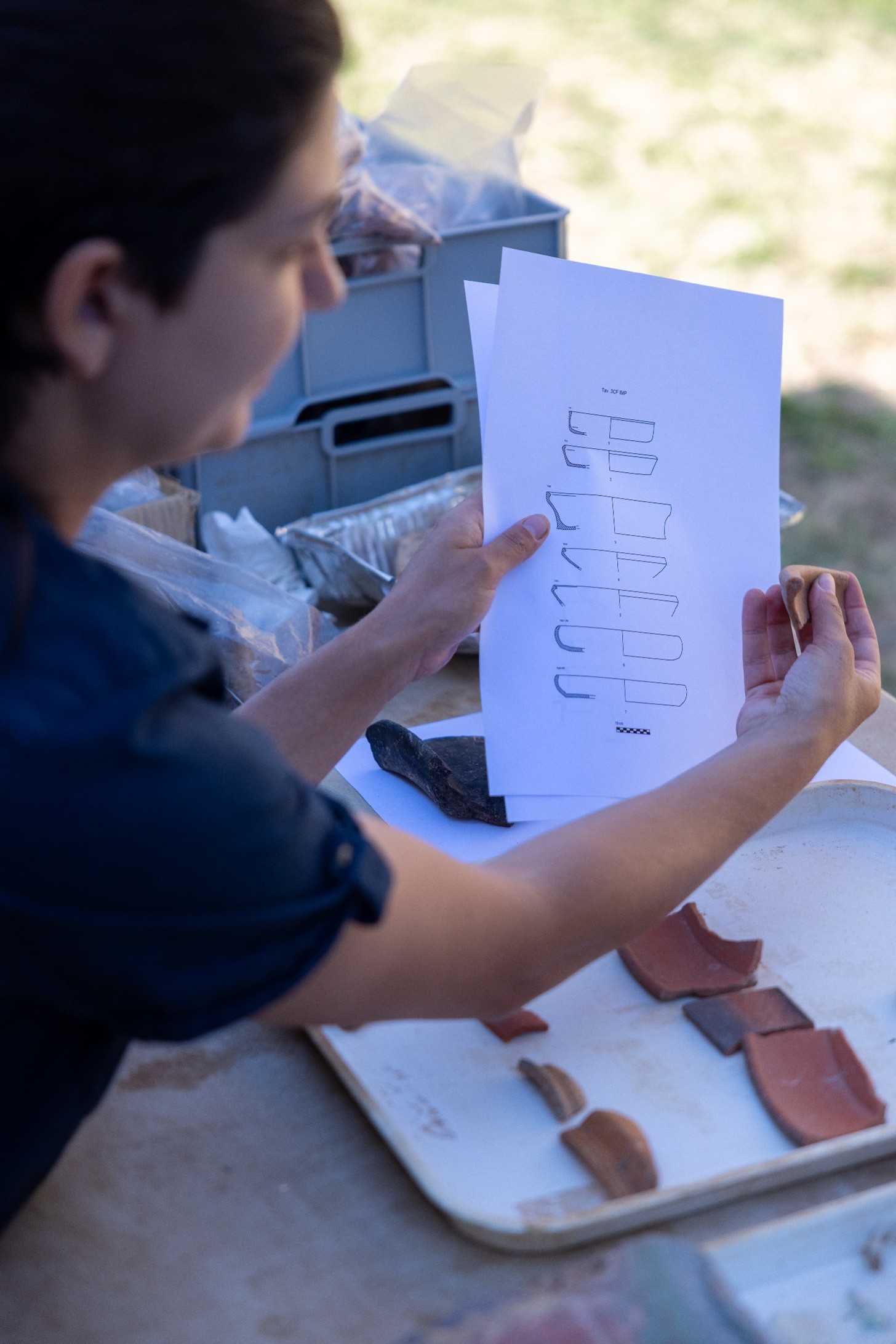
Examples of cooking pans, photo by Nicholas Berardo, 2026
A Shift in Late Antiquity
As the excavation records late antique layers, so the ceramic record reveals a striking change. The wide frying pans disappear almost entirely, replaced by deep casseroles better suited to boiling and slow cooking. This shift in vessel type points to a significant transformation in diet: away from the rich, meat-heavy meals of the earlier period, and towards stews, soups, and vegetable-based dishes in which meat, when present, was cooked slowly for a long time rather than quickly fried.
Examples of cooking pots, photo by Nicholas Berardo, 2026
The reasons for this change are likely multiple: shifts in the availability of certain foodstuffs, broader economic and social transformations, and changing culinary traditions all played a role. Evidence from the macellum at Falerii Novi suggests that meat was still being sold in the fourth century CE, but by the fifth century the deep casserole had become the dominant cooking vessel, suggesting that the way meat was prepared and consumed had fundamentally changed.
The Materials behind the vessels
The ceramics themselves also reflect significant technological diversity. Cooking wares require iron-rich clays capable of withstanding direct exposure to fire and extreme heat, and different production traditions – local and imported – used different materials and firing techniques accordingly. The African imports, fired in oxidising kilns with good airflow, tend to be fine and well-finished with a characteristic red appearance. Local coarser wares, fired in low-oxygen environments, are thicker and darker, designed for durability on the hearth. Some vessels were used directly over an open flame; others required a stove or trivet between the fire and the pan.
For consumption, the site has yielded examples of terra sigillata – the fine red-slipped tableware produced in Italy – alongside African Red Slip ware, increasingly imported from Northern Africa as the imperial period progressed. These fine wares are particularly valuable to archaeologists not only as evidence of trade and consumption patterns, but as dating tools: their well-documented typologies help establish the chronology of the contexts in which they are found.
Completing the picture are locally produced ceramic drinking cups, a more modest counterpart to the glass vessels used by the elite, made in workshops known to have operated in the surrounding area, including one identified at Sutri.
Emma working at the site, photo by Nicholas Berardo, 2026
Ethan Scanlon, Leverhulme Study Abroad Student at the British School at Rome from October 2025 to July 2026, shares insights into the development of his
Valeria Tettamanti, Ecole française de Rome (résidence scientifique jeunes chercheurs UNIONE –November 2025-July 2026) Awardee, discuss her project “Popular science in Italian feminine press at
Ethan Scanlon, Leverhulme Study Abroad Student at the British School at Rome from October 2025 to July 2026, shares insights into the development of his
Valeria Tettamanti, Ecole française de Rome (résidence scientifique jeunes chercheurs UNIONE –November 2025-July 2026) Awardee, discuss her project “Popular science in Italian feminine press at
Emlyn Dodd is former Assistant Director of the British School at Rome, an Associate Fellow of the Institute of Classical Studies at the University of
We use cookies on our website to give you the most relevant experience by remembering your preferences and repeat visits. By clicking “Accept All”, you consent to the use of ALL the cookies. However, you may visit "Cookie Settings" to provide a controlled consent.
This website uses cookies to improve your experience while you navigate through the website. Out of these, the cookies that are categorized as necessary are stored on your browser as they are essential for the working of basic functionalities of the website. We also use third-party cookies that help us analyze and understand how you use this website. These cookies will be stored in your browser only with your consent. You also have the option to opt-out of these cookies. But opting out of some of these cookies may affect your browsing experience.
Necessary cookies are absolutely essential for the website to function properly. These cookies ensure basic functionalities and security features of the website, anonymously.
Cookie
Duration
Description
cookielawinfo-checkbox-advertisement
1 year
Set by the GDPR Cookie Consent plugin, this cookie records the user consent for the cookies in the "Advertisement" category.
cookielawinfo-checkbox-analytics
11 months
This cookie is set by GDPR Cookie Consent plugin. The cookie is used to store the user consent for the cookies in the category "Analytics".
cookielawinfo-checkbox-functional
11 months
The cookie is set by GDPR cookie consent to record the user consent for the cookies in the category "Functional".
cookielawinfo-checkbox-necessary
11 months
This cookie is set by GDPR Cookie Consent plugin. The cookies is used to store the user consent for the cookies in the category "Necessary".
cookielawinfo-checkbox-others
11 months
This cookie is set by GDPR Cookie Consent plugin. The cookie is used to store the user consent for the cookies in the category "Other.
cookielawinfo-checkbox-performance
11 months
This cookie is set by GDPR Cookie Consent plugin. The cookie is used to store the user consent for the cookies in the category "Performance".
CookieLawInfoConsent
1 year
CookieYes sets this cookie to record the default button state of the corresponding category and the status of CCPA. It works only in coordination with the primary cookie.
elementor
never
The website's WordPress theme uses this cookie. It allows the website owner to implement or change the website's content in real-time.
viewed_cookie_policy
11 months
The cookie is set by the GDPR Cookie Consent plugin and is used to store whether or not user has consented to the use of cookies. It does not store any personal data.
Functional cookies help to perform certain functionalities like sharing the content of the website on social media platforms, collect feedbacks, and other third-party features.
Performance cookies are used to understand and analyze the key performance indexes of the website which helps in delivering a better user experience for the visitors.
Analytical cookies are used to understand how visitors interact with the website. These cookies help provide information on metrics the number of visitors, bounce rate, traffic source, etc.
Cookie
Duration
Description
_ga
1 year 1 month 4 days
Google Analytics sets this cookie to calculate visitor, session and campaign data and track site usage for the site's analytics report. The cookie stores information anonymously and assigns a randomly generated number to recognise unique visitors.
_ga_*
1 year 1 month 4 days
Google Analytics sets this cookie to store and count page views.
_gat_gtag_UA_*
1 minute
Google Analytics sets this cookie to store a unique user ID.
_gid
1 day
Google Analytics sets this cookie to store information on how visitors use a website while also creating an analytics report of the website's performance. Some of the collected data includes the number of visitors, their source, and the pages they visit anonymously.
CONSENT
2 years
YouTube sets this cookie via embedded YouTube videos and registers anonymous statistical data.
Advertisement cookies are used to provide visitors with relevant ads and marketing campaigns. These cookies track visitors across websites and collect information to provide customized ads.
Cookie
Duration
Description
VISITOR_INFO1_LIVE
5 months 27 days
YouTube sets this cookie to measure bandwidth, determining whether the user gets the new or old player interface.
YSC
session
Youtube sets this cookie to track the views of embedded videos on Youtube pages.