This year Falerii Novi tells the story not only of the wealthier members of society but also of the normal citizens in Roman period – their domestic lives, the games they played, the objects women used for their daily routines, and the materials and techniques behind their finely decorated homes.
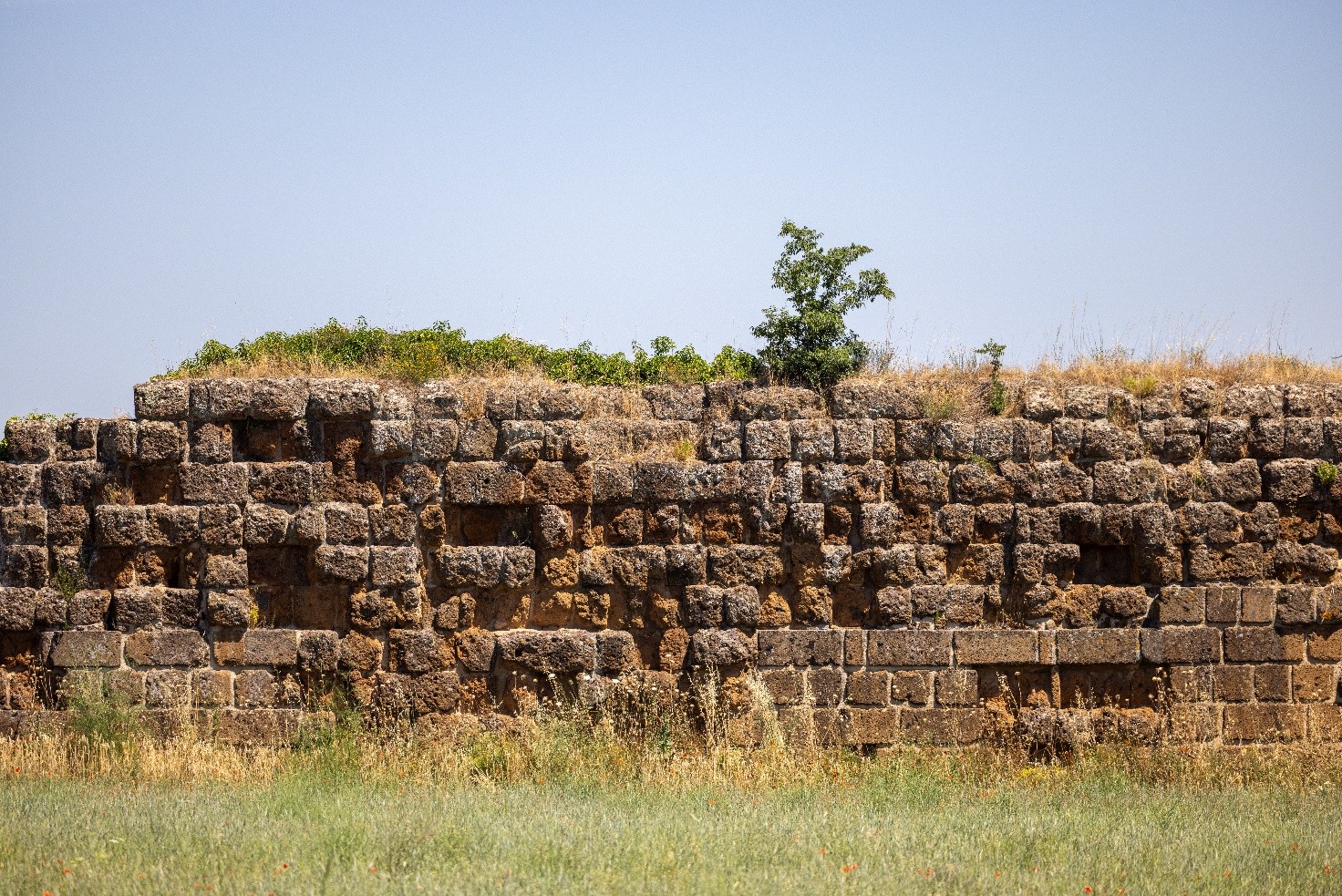
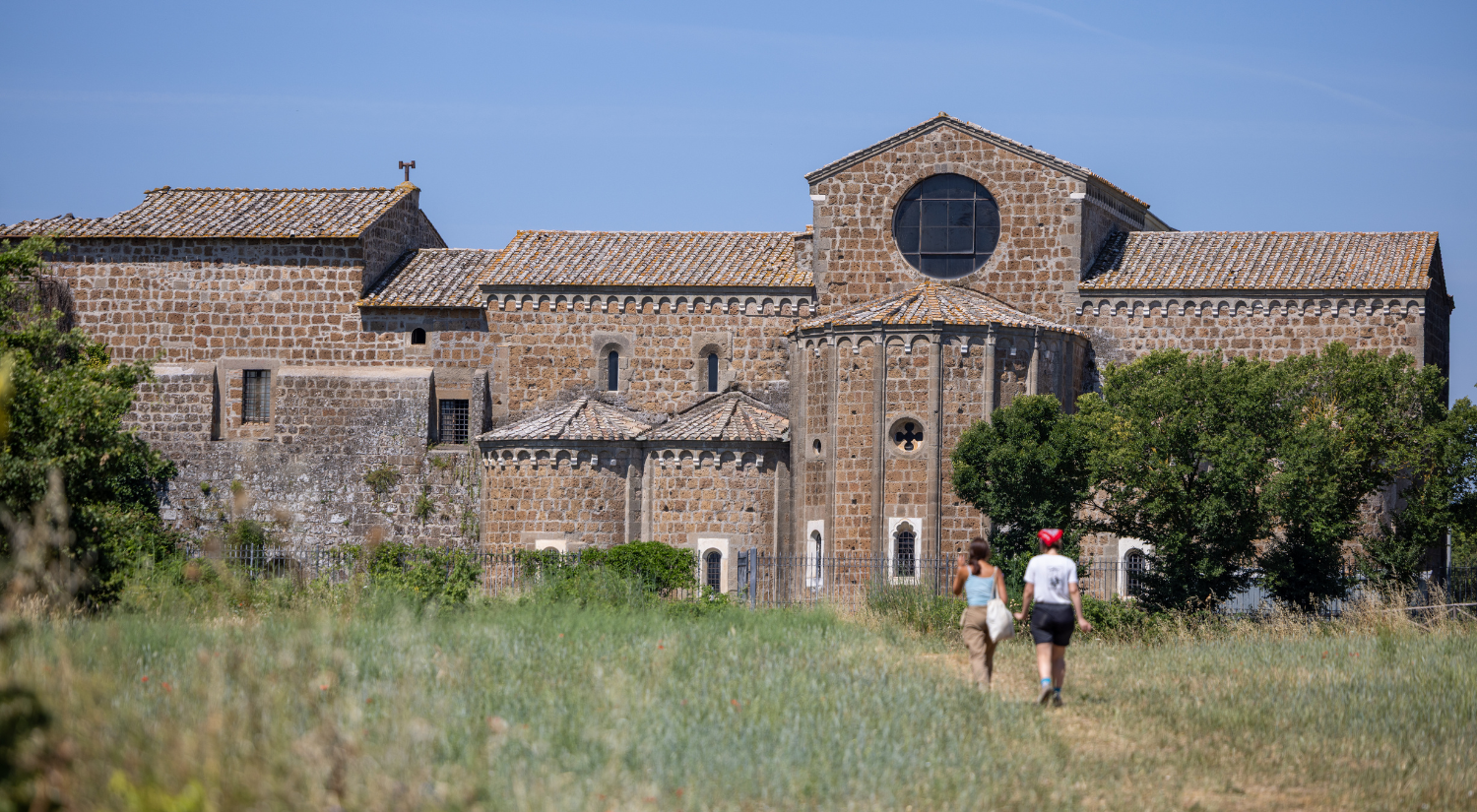
City walls of Falerii Novi, photo by Nicholas Berardo, 2026
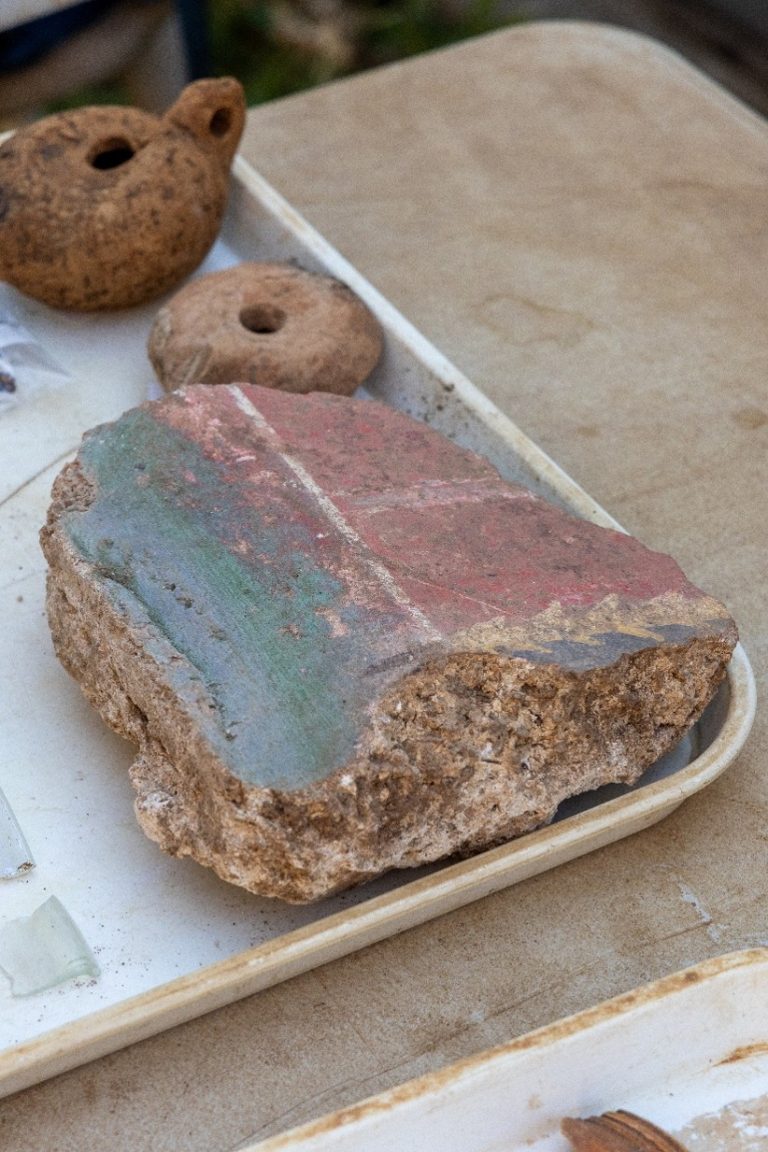
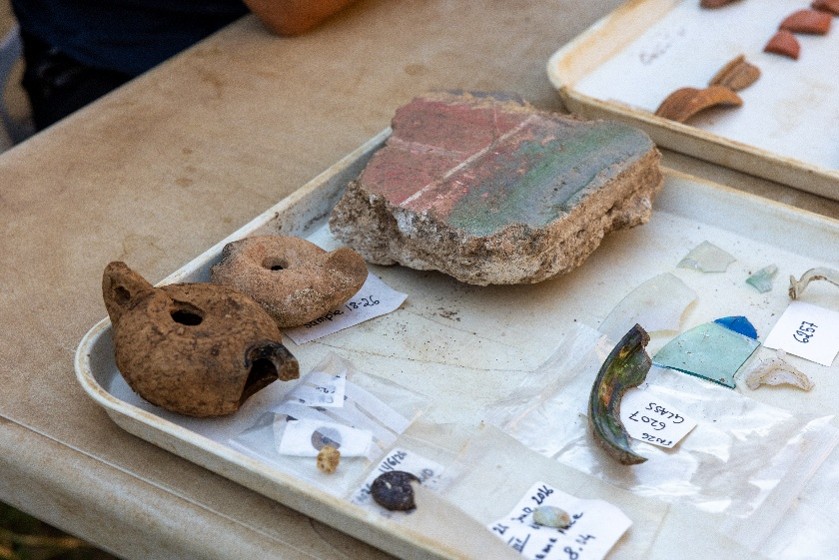
Some domus of Falerii Novi were richly decorated, and the finds emerging from the excavations confirm this with remarkable clarity. A fragment of painted plaster, recovered from a deposit of discarded material, tells far more than one might expect from a simple piece of building rubble. Analysed using portable X-ray fluorescence (pXRF), it revealed the use of high-quality pigments. The red is cinnabar, a precious mineral whose mines were located primarily in Spain, so prized that it was also used by women as a cosmetic -though, containing mercury, it was in fact toxic both for those who wore it and those who worked with it. The green, meanwhile, was obtained from a synthetic pigment known as Egyptian blue, produced by fusing sand, calcium carbonates, and copper-bearing minerals at around 1200°C until a near-vitrified slag was obtained, which was then ground down. To obtain shades of green, malachite – rich in copper- was employed. The yellow is ochre, mineralogically known as goethite – a pigment that, when exposed to temperatures above 300°C, turns red: it is precisely this phenomenon that explains why some originally yellow paintings at Pompeii turned red as a result of the pyroclastic cloud from the eruption of Vesuvius. The black, finally, is organic in origin -most likely ground charcoal – and therefore undetectable by pXRF, which reads only inorganic chemistry.
Fragment of painted plaster, decorated with precious pigments, photo by Nicholas Berardo, 2026
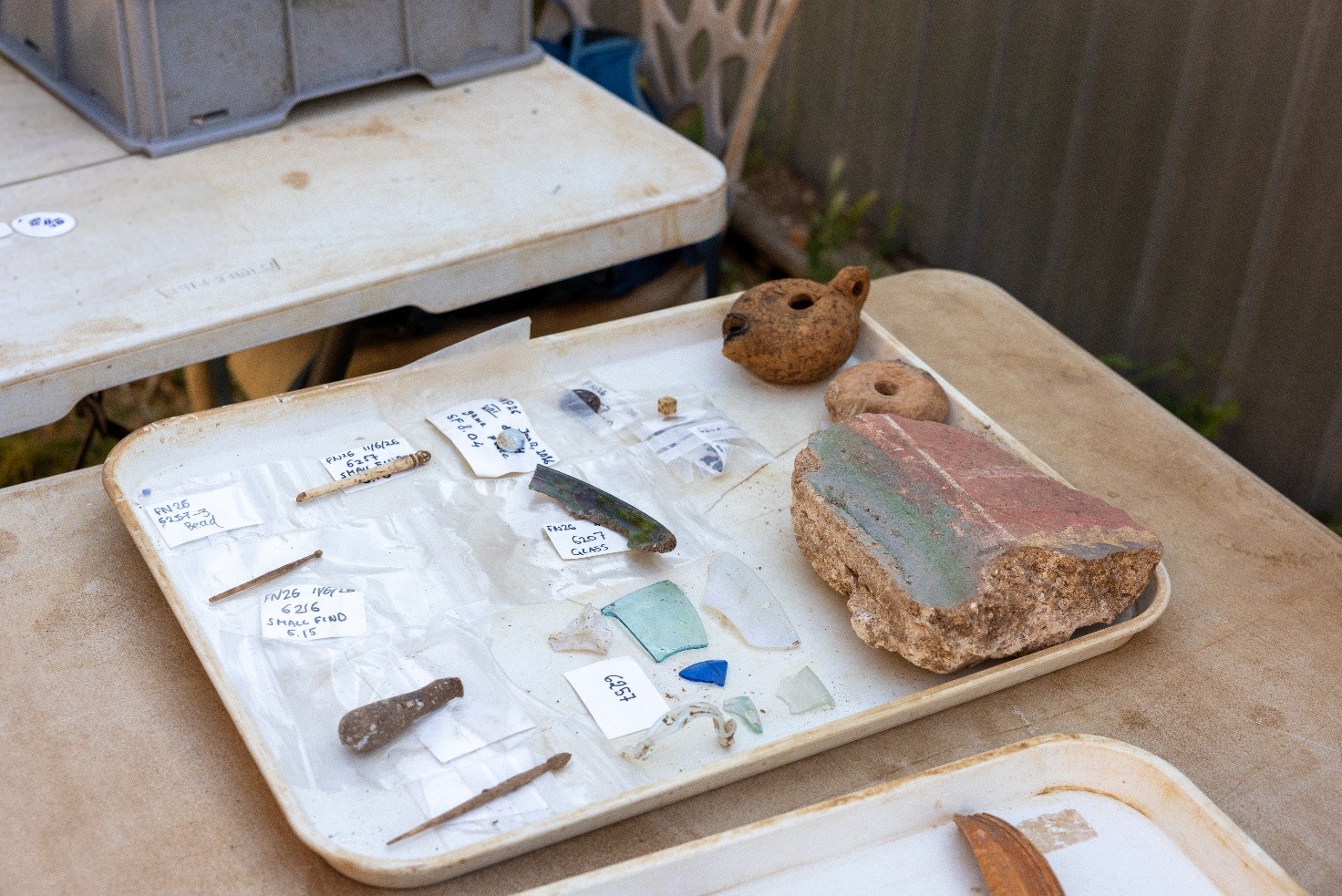
Among the finds from the excavation are numerous glass objects, a material considered precious in antiquity: whilst generally people drank from ceramic cups, glass was a luxury accessible primarily to the elite. Blue glass was obtained by adding copper to the base mixture, following the same principle as the pigment; green glass was achieved instead through the addition of lead. There are also examples of richly decorated transparent glass vessels, most likely drinking cups.
Context 6257: glass fragments, together with the other objects found in the excavations, photo by Nicholas Berardo, 2026
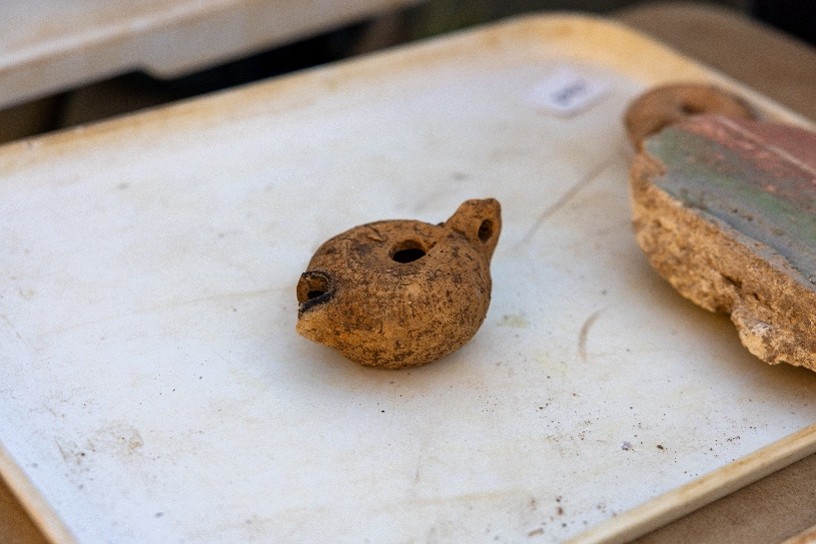
The everyday life of the citizens of Falerii Novi also emerges through other objects. Oil lamps, found almost intact, bear witness to domestic lighting practices, though those from the late antique period – from the fourth century AD onwards -show a progressive decline in quality of manufacture, often made using worn-out molds that no longer reproduced the original details.
A Late Antique oil lamp, photo by Nicholas Berardo, 2026
These oil lamps from Falerii Novi provide a compelling example of late antique ceramic production using what is known as a “secondary mold” – a mold so extensively used that it had lost most of its original detail or was made by using an existing lamp. The decorative globules, which would typically run across the entire body of the lamp, are barely visible on the central section and absent elsewhere. The surface shows considerable abrasion, consistent with the use of a worn mold. The oil inlet hole was cut by hand in a notably rough manner, further indicating a decline in manufacturing standards characteristic of the period. Despite its poor finish, the lamp was clearly functional: traces of burning around the nozzle confirm its use. The wick was placed in the nozzle, while oil was introduced through the inlet hole on the upper body. This object reflects broader trends in late antique craft production, in which the reuse of degraded molds and reduced attention to decorative finish did not necessarily compromise an object’s primary function.
Two oil lamps, on left. Photo by Nicholas Berardo, 2026
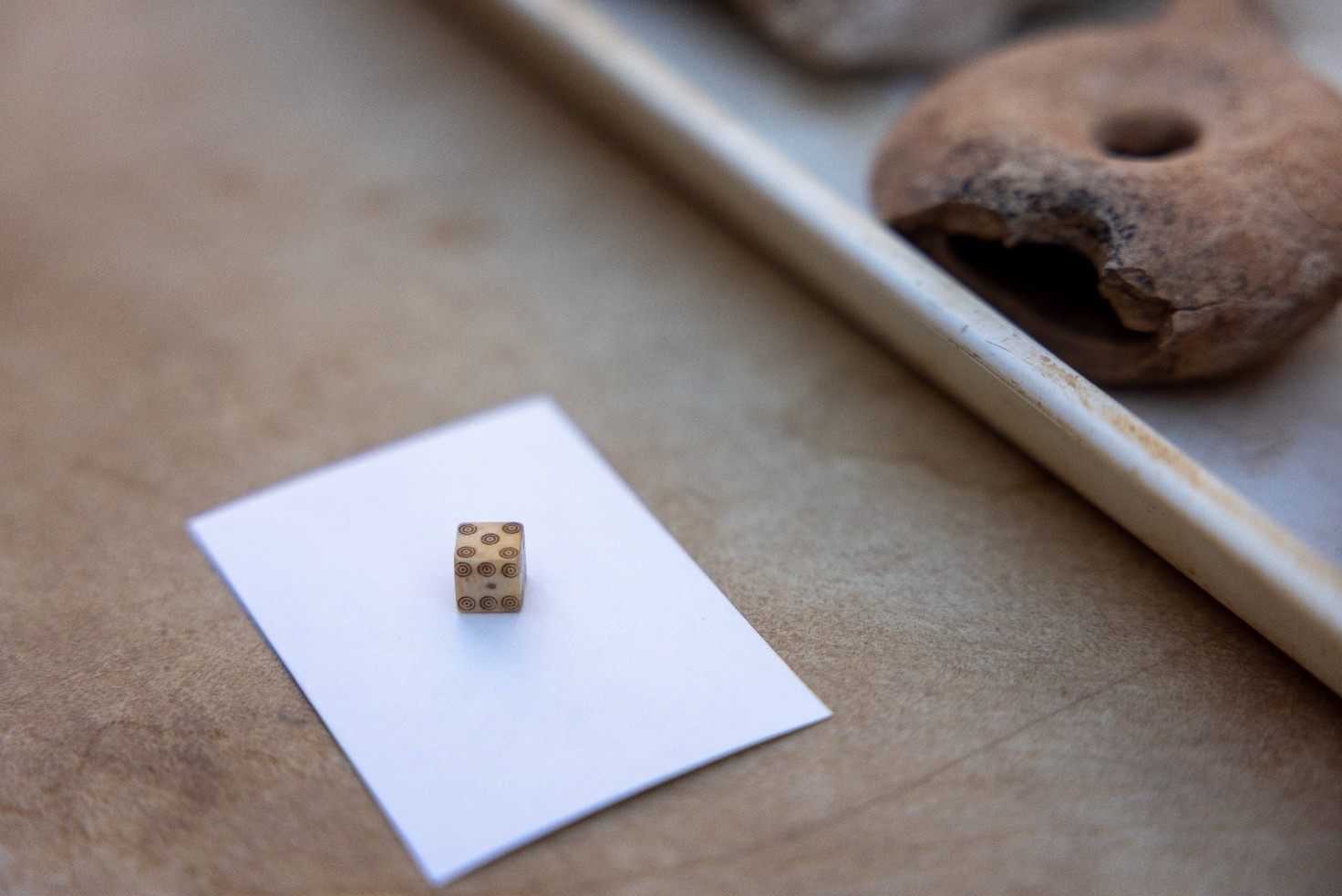
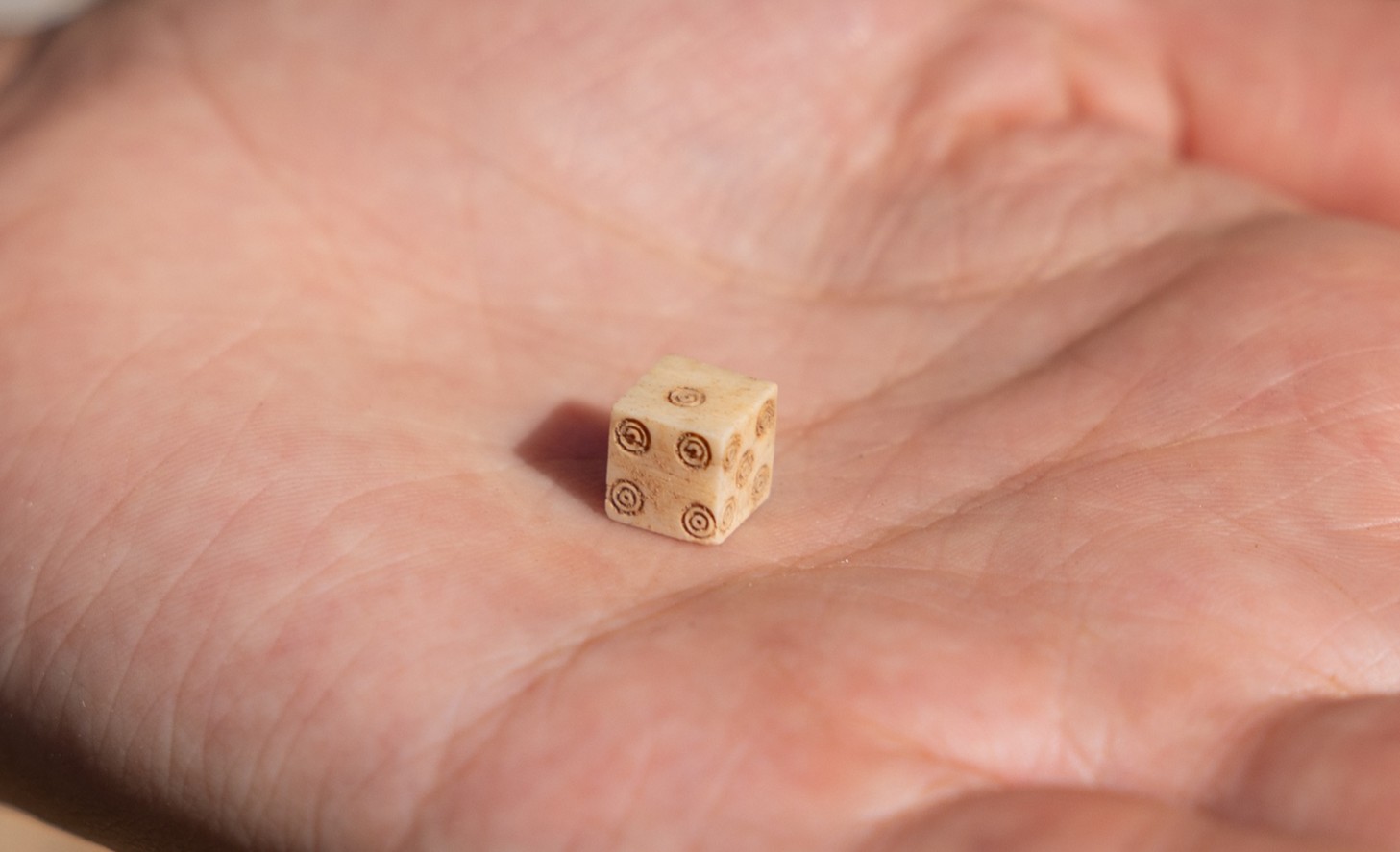
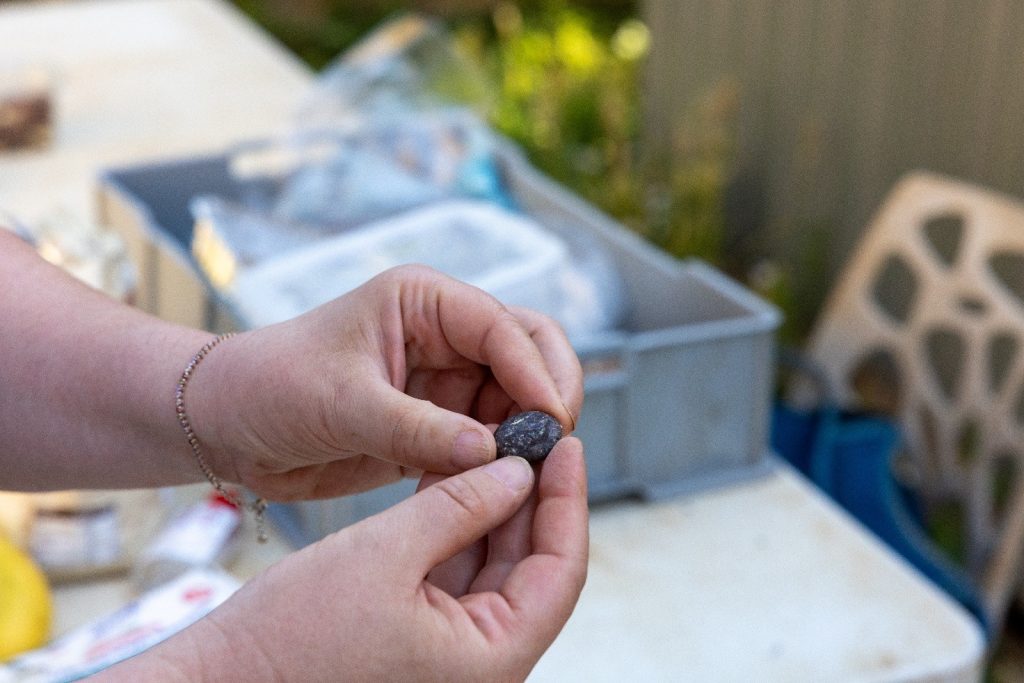
Particularly fascinating are the finds related to gaming and personal care. A perfectly intact bone die was recovered, with all faces regular and even, unlike certain loaded examples known from other contexts, such as the ships of Pisa. Alongside the die, a set of black and white glass gaming pieces were discovered, attributable to a board game similar to modern backgammon, in which pieces are moved by throwing dice.
A dice. Photo by Nicholas Berardo, 2026
A dice. Photo by Nicholas Berardo, 2026
A glass gaming piece. Photo by Nicholas Berardo, 2026
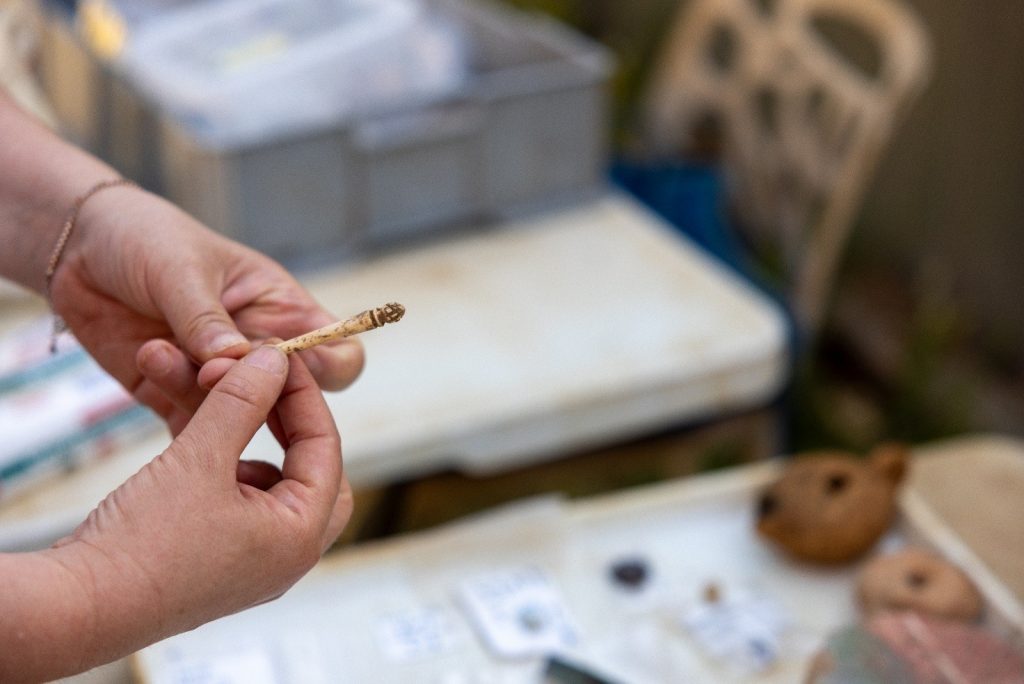
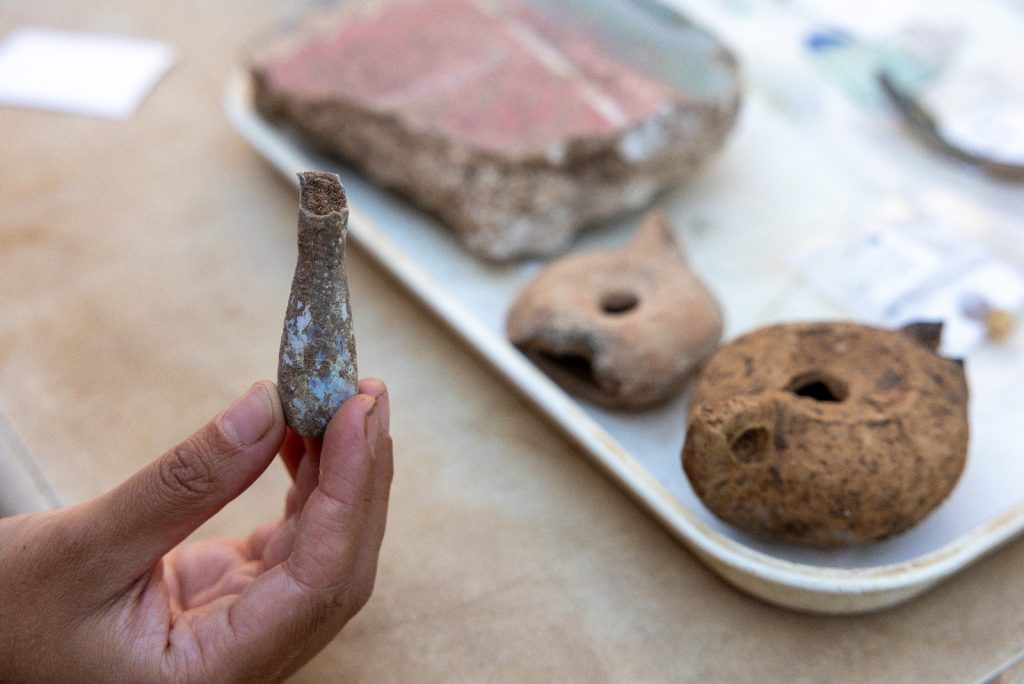
Among the female cosmetic objects, from a third-century AD layer, the bone hairpins stand out, some extremely fine, alongside a cosmetic applicator most likely used to apply make-up. Completing the picture are several small unguentaria, designed to hold oils and perfumes.
A bone hairpin. Photo by Nicholas Berardo, 2026
A glass unguentarium. Photo by Nicholas Berardo, 2026
Ethan Scanlon, Leverhulme Study Abroad Student at the British School at Rome from October 2025 to July 2026, shares insights into the development of his
Valeria Tettamanti, Ecole française de Rome (résidence scientifique jeunes chercheurs UNIONE –November 2025-July 2026) Awardee, discuss her project “Popular science in Italian feminine press at
Ethan Scanlon, Leverhulme Study Abroad Student at the British School at Rome from October 2025 to July 2026, shares insights into the development of his
Valeria Tettamanti, Ecole française de Rome (résidence scientifique jeunes chercheurs UNIONE –November 2025-July 2026) Awardee, discuss her project “Popular science in Italian feminine press at
Emlyn Dodd is former Assistant Director of the British School at Rome, an Associate Fellow of the Institute of Classical Studies at the University of
We use cookies on our website to give you the most relevant experience by remembering your preferences and repeat visits. By clicking “Accept All”, you consent to the use of ALL the cookies. However, you may visit "Cookie Settings" to provide a controlled consent.
This website uses cookies to improve your experience while you navigate through the website. Out of these, the cookies that are categorized as necessary are stored on your browser as they are essential for the working of basic functionalities of the website. We also use third-party cookies that help us analyze and understand how you use this website. These cookies will be stored in your browser only with your consent. You also have the option to opt-out of these cookies. But opting out of some of these cookies may affect your browsing experience.
Necessary cookies are absolutely essential for the website to function properly. These cookies ensure basic functionalities and security features of the website, anonymously.
Cookie
Duration
Description
cookielawinfo-checkbox-advertisement
1 year
Set by the GDPR Cookie Consent plugin, this cookie records the user consent for the cookies in the "Advertisement" category.
cookielawinfo-checkbox-analytics
11 months
This cookie is set by GDPR Cookie Consent plugin. The cookie is used to store the user consent for the cookies in the category "Analytics".
cookielawinfo-checkbox-functional
11 months
The cookie is set by GDPR cookie consent to record the user consent for the cookies in the category "Functional".
cookielawinfo-checkbox-necessary
11 months
This cookie is set by GDPR Cookie Consent plugin. The cookies is used to store the user consent for the cookies in the category "Necessary".
cookielawinfo-checkbox-others
11 months
This cookie is set by GDPR Cookie Consent plugin. The cookie is used to store the user consent for the cookies in the category "Other.
cookielawinfo-checkbox-performance
11 months
This cookie is set by GDPR Cookie Consent plugin. The cookie is used to store the user consent for the cookies in the category "Performance".
CookieLawInfoConsent
1 year
CookieYes sets this cookie to record the default button state of the corresponding category and the status of CCPA. It works only in coordination with the primary cookie.
elementor
never
The website's WordPress theme uses this cookie. It allows the website owner to implement or change the website's content in real-time.
viewed_cookie_policy
11 months
The cookie is set by the GDPR Cookie Consent plugin and is used to store whether or not user has consented to the use of cookies. It does not store any personal data.
Functional cookies help to perform certain functionalities like sharing the content of the website on social media platforms, collect feedbacks, and other third-party features.
Performance cookies are used to understand and analyze the key performance indexes of the website which helps in delivering a better user experience for the visitors.
Analytical cookies are used to understand how visitors interact with the website. These cookies help provide information on metrics the number of visitors, bounce rate, traffic source, etc.
Cookie
Duration
Description
_ga
1 year 1 month 4 days
Google Analytics sets this cookie to calculate visitor, session and campaign data and track site usage for the site's analytics report. The cookie stores information anonymously and assigns a randomly generated number to recognise unique visitors.
_ga_*
1 year 1 month 4 days
Google Analytics sets this cookie to store and count page views.
_gat_gtag_UA_*
1 minute
Google Analytics sets this cookie to store a unique user ID.
_gid
1 day
Google Analytics sets this cookie to store information on how visitors use a website while also creating an analytics report of the website's performance. Some of the collected data includes the number of visitors, their source, and the pages they visit anonymously.
CONSENT
2 years
YouTube sets this cookie via embedded YouTube videos and registers anonymous statistical data.
Advertisement cookies are used to provide visitors with relevant ads and marketing campaigns. These cookies track visitors across websites and collect information to provide customized ads.
Cookie
Duration
Description
VISITOR_INFO1_LIVE
5 months 27 days
YouTube sets this cookie to measure bandwidth, determining whether the user gets the new or old player interface.
YSC
session
Youtube sets this cookie to track the views of embedded videos on Youtube pages.