

For over thirty years the BSR has run undergraduate (Summer School) and postgraduate (City of Rome) courses on the ancient history, archaeology, and topography of Rome. In this new blog series we catch up with some of our former students, their memories of the course and where they are now.
Who are you and what do you do?
I am an archaeologist and historian who works on questions of Roman imperial coinage and political ideology, interrogating questions of audience, agency, and intent. Much of my work has also dealt with the monumental topography of the city of Rome, owing to the influence of the City of Rome course at the BSR.
After my MA, which I was working on while attending the City of Rome course at the BSR, I returned to the US for my PhD in Greek and Roman Art and Archaeology, which I completed at the University of Missouri in 2010. During the last few years of that, I worked at the Goethe Universität in Frankfurt, Germany, first supported by a DAAD fellowship in 2006-2007 and then, from 2008 to 2009, as a part-time employee for the cast collection and photo archive in the department of Roman provincial archaeology, which also carried out major research projects on numismatics. From 2009 to 2011, I was a postgraduate and postdoctoral fellow in the Department of Coins and Medals at the Yale University Art Gallery. From 2011 to 2022, I was an assistant professor and then an associate professor of Greek and Roman Art and Archaeology at Baylor University. There, I was also Director of Undergraduate Research and Scholarly Achievement from 2018 to 2020 and Director of the Allbritton Art Institute from 2020 to 2022.
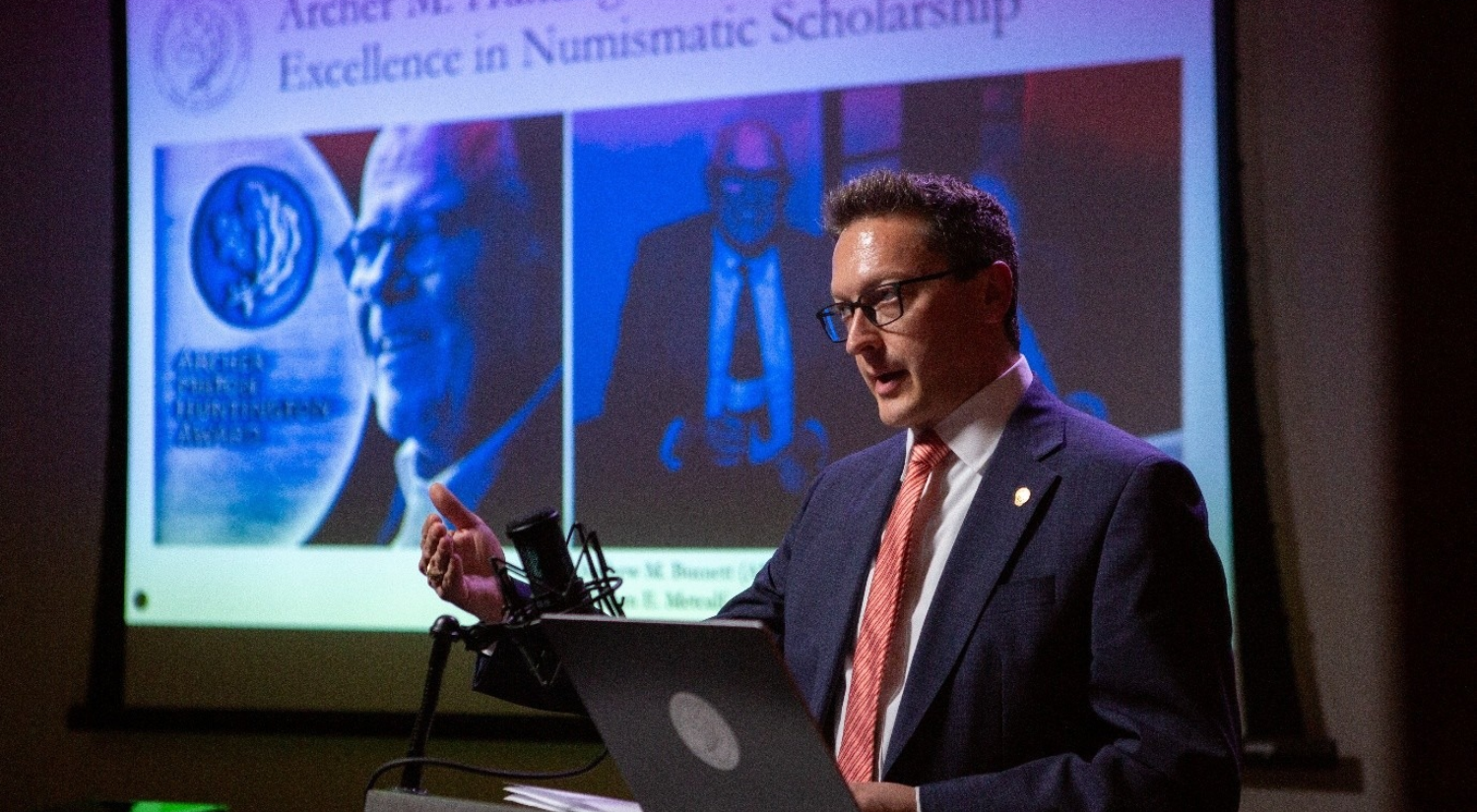
I am now the Deputy Director at the American Numismatic Society in New York, a position I’ve held since 2022. I have also served as editor for contributions on the ancient Mediterranean world Society’s peer-reviewed academic journal, the American Journal of Numismatics, since 2018.
When did you attend the City of Rome Course?
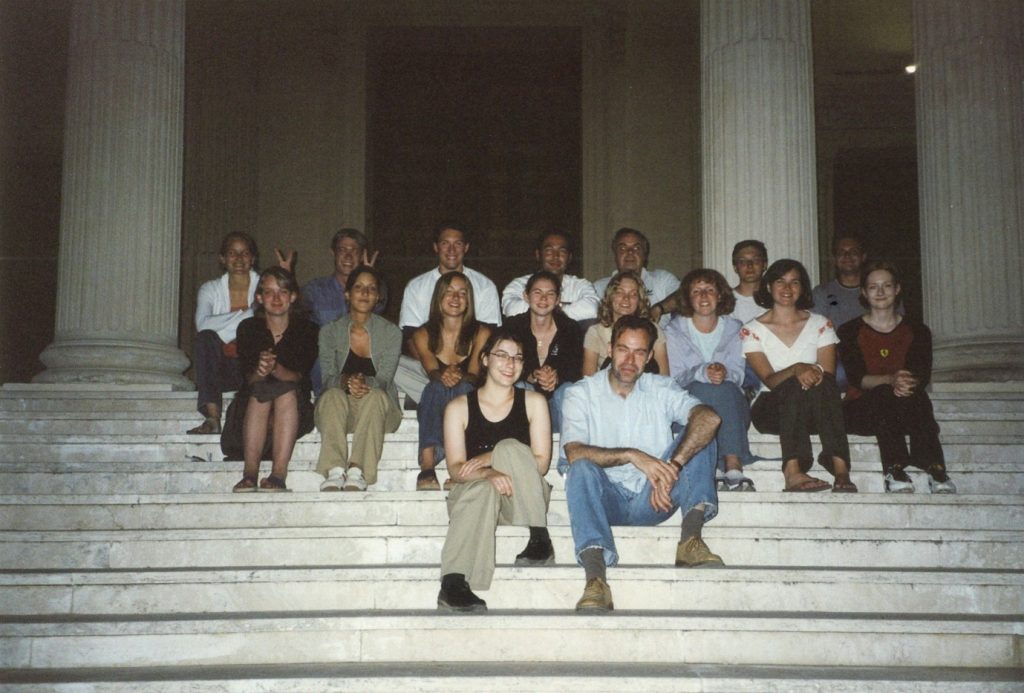
I attended the City of Rome course at the BSR in 2003, which was a required component of my MA program on the City of Rome at the University of Reading. Janet Delaine and Ray Laurence were the directors of the City of Rome program at the University of Reading, while Robert Coates-Stevens directed the City of Rome course at the BSR, with the support of Josephine Crawley Quinn. Andrew Wallace-Hadrill was the director of the BSR at the time.
Was there an activity or site visit that particularly sticks in your mind?
Every site visit was great, because we had privileged behind-the-scenes access, and got into places the general public could not. In addition to having Robert and Jo take us to these different places, we were often accompanied by many renowned experts who had specific and specialized knowledge of certain sites. For example, Roberto Meneghini accompanied us on a visit to the Forum of Trajan and shared his expertise. Some other highlights included a visit to the Vatican Museums, where we entered the labs and observed researchers studying the Augustus of Prima Porta to determine how it was originally painted. It was not on display in its usual place in the museum, because of this work. Next to it, in the lab, they were in the process of painting the now-famous cast that shows the Prima Porta was originally painted. Paolo Liverani spoke to us about this work during our visit to the Vatican Museums. Some other memorable experiences include going to the top of the Column of Trajan, exploring the inside of the Pyramid of Cestius, and Visiting Monte Testaccio. For my research project at the BSR, I was studying the location of the imperial viewing box in the Colosseum. A well-connected staff member at the BSR, whose name I unfortunately cannot remember, secured access to the subterranean areas of the Colosseum for me, as they were still closed to the public at the time. It was great to have that level of access for my research.
What did you enjoy most about the course overall?
The best part of the course was getting to see so many sites and to access areas of them, or even entirely different places, which the general public cannot. All of this was enhanced by the expertise of the BSR staff and guest specialists, who guide students through these experiences. The communal and convivial environment of the BSR leads to a great deal of camaraderie among the cohort and promotes shared academic inquiry. The library of the BSR is also an excellent resource for advanced study in support of individual research projects.
What impact did attending the course have on your rest of your studies and degree?
Although I wouldn’t have necessarily anticipated it at the time, after my MA course and the City of Rome course at the BSR, the monumental topography of Rome became an ongoing facet of much of my research. At the University of Reading, my MA dissertation was titled “Entertainment Buildings on Roman Coins and Medallions,” and so I selected a related subject for my research project at BSR, which explored the location of the imperial viewing box in the Colosseum. That research project was published as my first article: “Locating the Imperial Box in the Flavian Amphitheatre: The Numismatic Evidence,” Numismatic Chronicle 164 (2004). That project at the BSR and first article sparked a lifelong interest in various aspects of the Colosseum, which has resulted in several related publications, such as “The Flavian Colosseum Sestertii: Currency or Largess?” Numismatic Chronicle 166 (2006); “What Are They Doing Here? Flavian Colosseum Sestertii from Archaeological Contexts in Hessen and the Taunus-Wetterau Limes (with and Addendum on NC 2006),” Numismatic Chronicle 169 (2009); and “The Procession and Placement of Imperial Cult Images in the Colosseum,” Papers of the British School at Rome 82 (2014). This ongoing interest in the role of Colosseum within the monumental and ideological setting of Flavian Rome culminated in my book, A Monument to Dynasty and Death: The Story of Rome’s Colosseum and the Emperors Who Built It (Johns Hopkins University Press, 2019). This intensive exposure to the topography of Rome through the City of Rome course at Reading and at the BSR informed my doctoral dissertation back in the US, which was published as my first book: Monuments in Miniature: Architecture on Roman Coinage (American Numismatic Society, 2015). While not much can be said about changes to the topography of Rome in Nerva’s short reign, the course provided me with the knowledge and tools to survey the urban environment at time and alterations to the urban fabric of the city are noted in my book on Nerva’s political image as disseminated through coinage: The Image of Political Power in the Reign of Nerva, AD 96-98 (Oxford University Press, 2017). My most recent contribution to the scholarship on the monumental topography of Rome is “The Career of Cornutus Tertullus and the Significance of Diana Planciana and the Temple of Artemis at Perge on Nerva’s Coinage,” Memoirs of the American Academy in Rome 68 (2023). In hindsight, the City of Rome course experience had a significant and transformative impact on my research trajectory.
Do you have any advice for future participants?
It is essential to fully immerse yourself in and dedicate yourself to the course of study for its duration to reap the full benefits of this unique program. The days can be long and exhausting, and despite the level of access and unique educational experience, the constant site visits and exposure to hot weather can become a little tiring. Nonetheless, it is extremely edifying and rewarding, as I hope my reflections on my own experience convey. Even though you may be tired in the evenings after a day of lectures and site visits, do take advantage of the opportunity to work in the library to follow up on questions that arose during the day or make progress on your research. One’s time as a student is limited and precious, and it’s critical to take full advantage of it while you can.

Please get in touch with us at the BSR if you would also like to share your memories of the courses