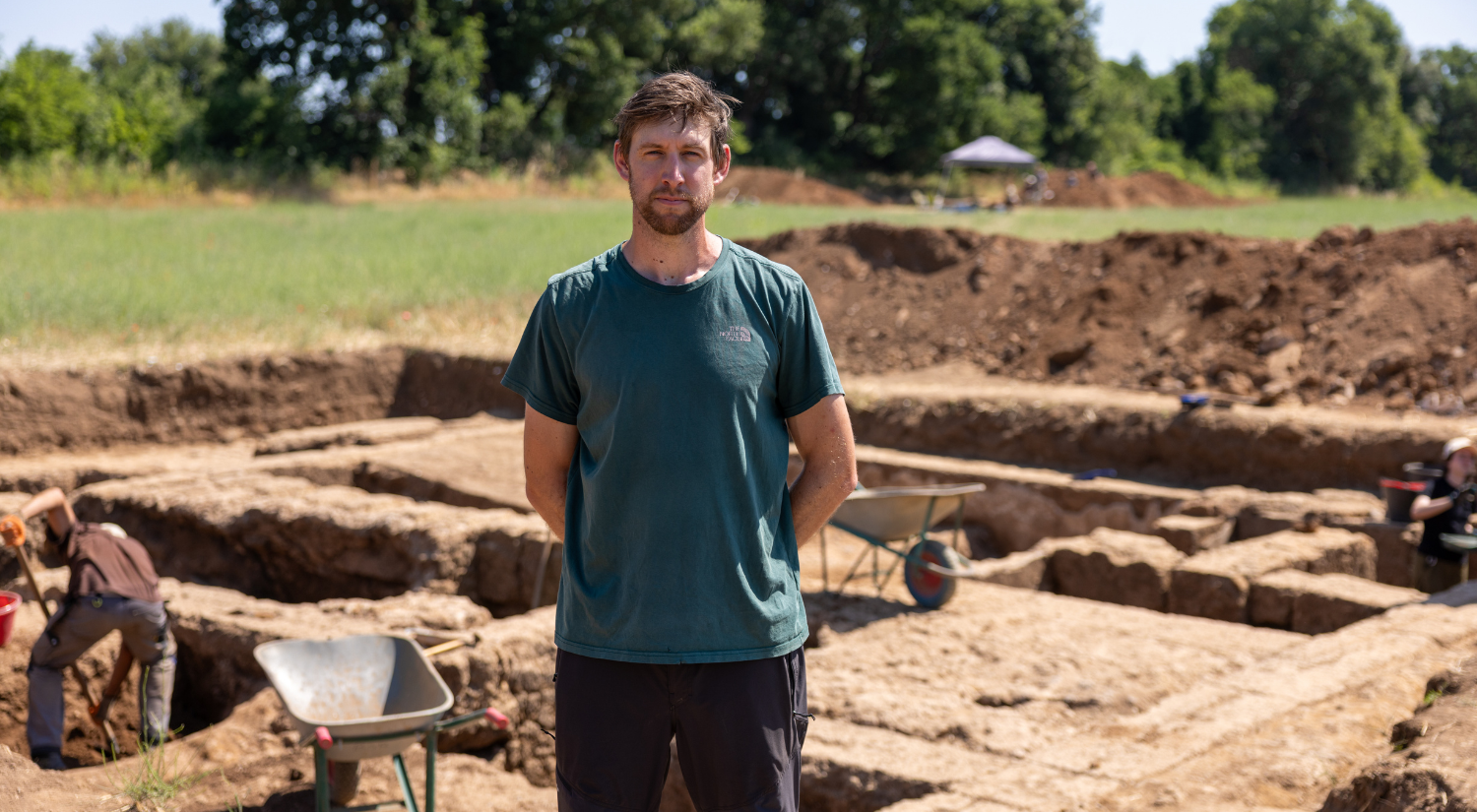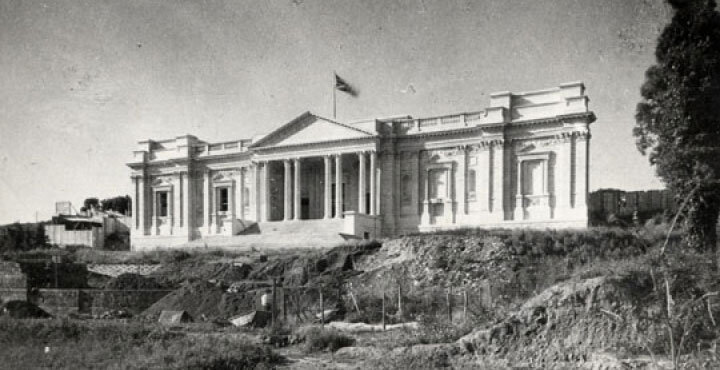


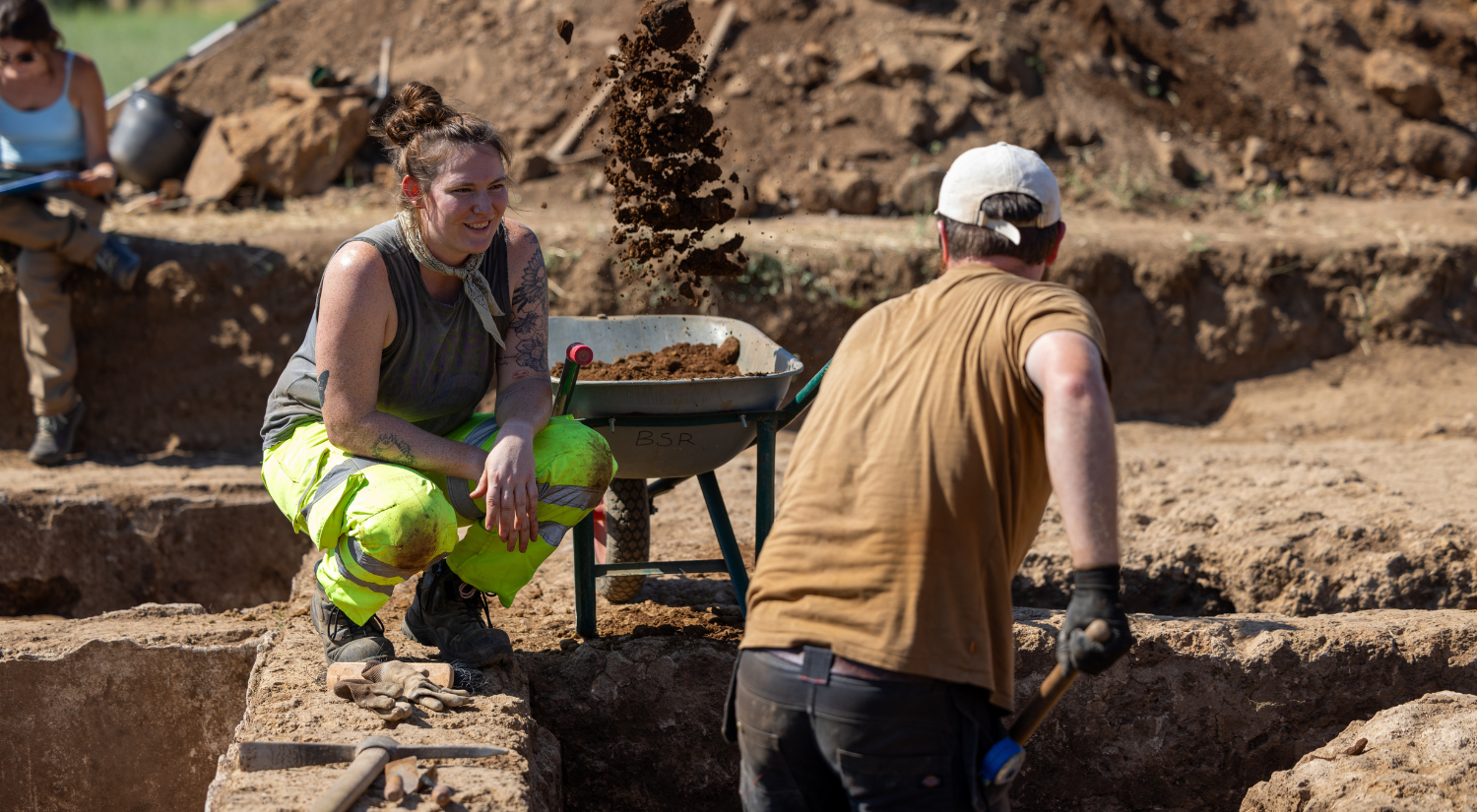
This year marks the first milestone for the excavations at Falerii Novi: after five years of excavation, work now begins on the publication. What began with a season of non-invasive survey has, over the years since, uncovered a large monumental building near the North Gate, tabernae the opened on to the forum and Via Amerina, a macellum and an ornate domus. The extraordinary range of finds have few parallels outside Rome itself.
Work on site this year brought together a team of around forty people on site, each contributing in a different way to the project. Among them are Bertie Handley and Arin Edwards whose very different routes into archaeology show just how many ways there are to end up digging in a field in central Italy.
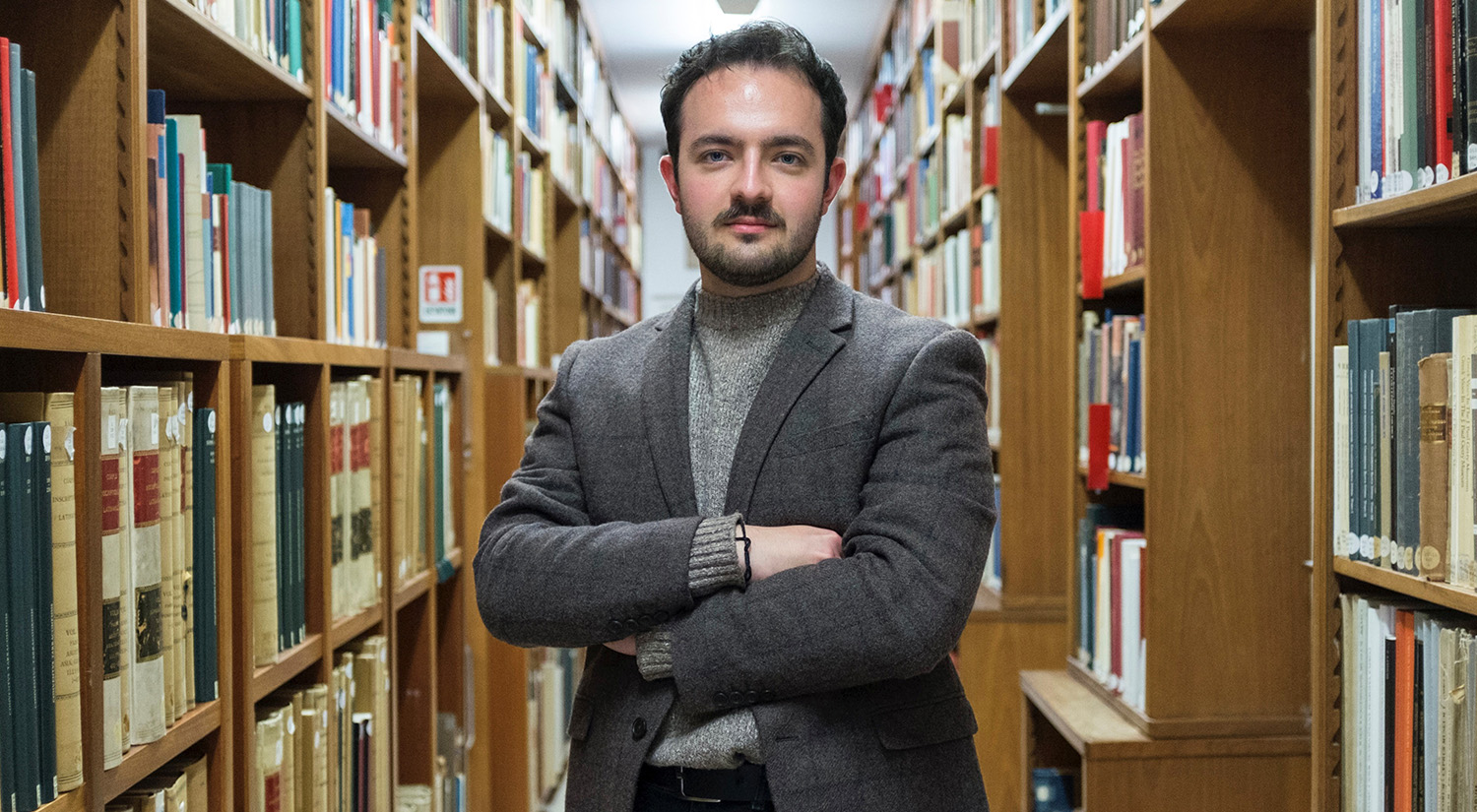
Bertie Handley: connecting life in the city to death beyond its walls
Bertie is undertaking a Collaborative Doctoral Award, a PhD split between the Institute of Classical Studies (University of London) and the British School at Rome, structured to draw on the expertise of both institutions. His research focuses on the funerary landscape around Falerii Novi: the rock-cut tombs, many still largely undocumented, that line the Via Amerina outside the city walls. The BSR’s archive has been essential to this work, holding records of past excavations that were never fully published, along with a rich photographic archive built up over decades. Alongside this archival research, Bertie has also trained with the BSR’s specialists in digital techniques, photogrammetry, and GIS.
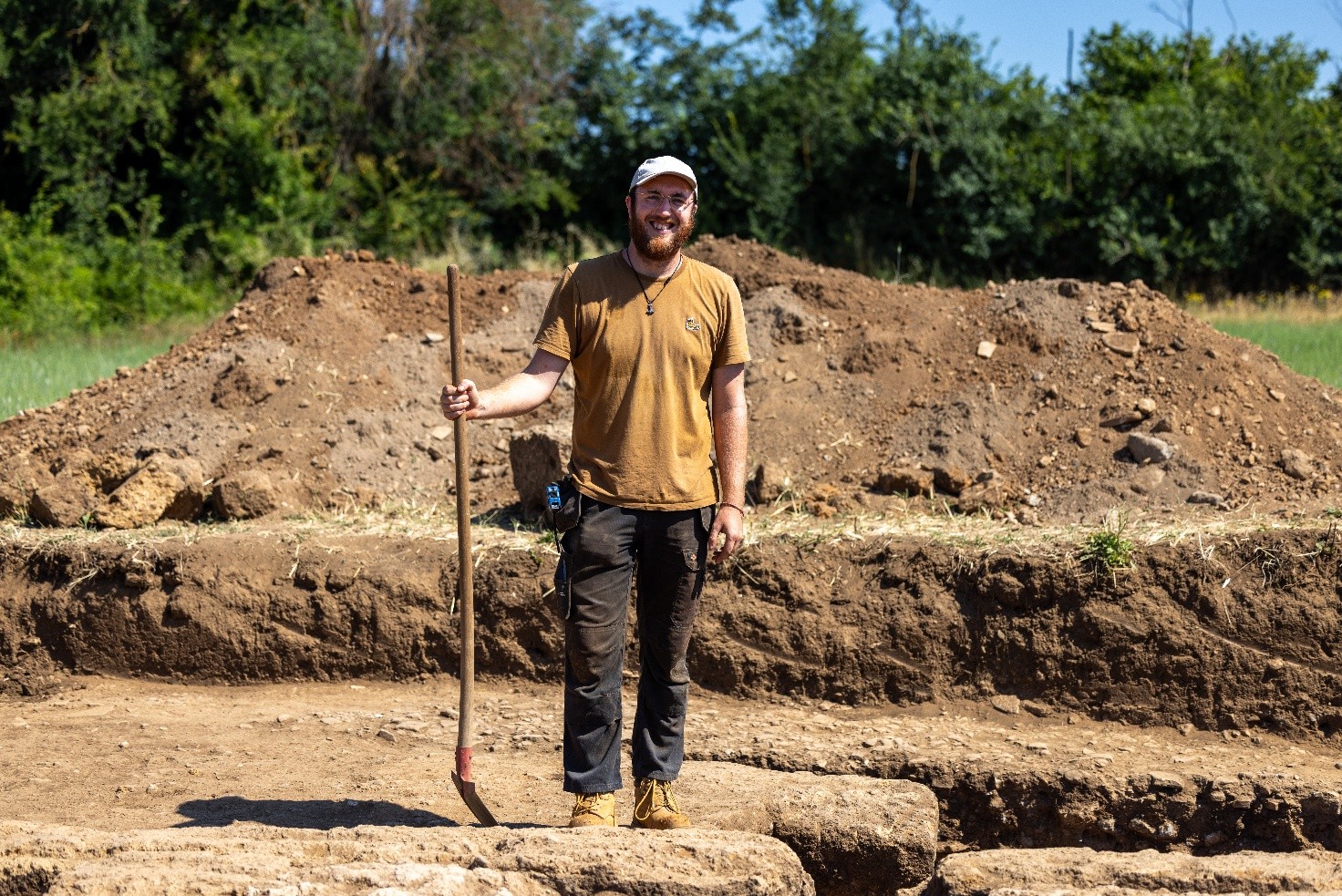
Digging at Falerii Novi connects directly to his research, letting him explore both halves of the same story: life within the city walls, and death beyond them. What makes the funerary landscape here so remarkable, he explains, is how well it survives above ground. Usually this kind of evidence has to be excavated to be found; here, the tombs are simply visible across the landscape, closely tied to the roads and villas around them. They were positioned deliberately, so that villa owners would pass their ancestors’ tombs on their way to and from the city. The Via Amerina itself runs straight through Falerii Novi and continues beyond it, lined with tombs the whole way, creating a continuous rhythm of cemetery, city, and cemetery again, stretched across the landscape. All in all, it’s an experience Bertie is deeply grateful for, one that has shaped not just his research, but how he thinks about the site as a whole.
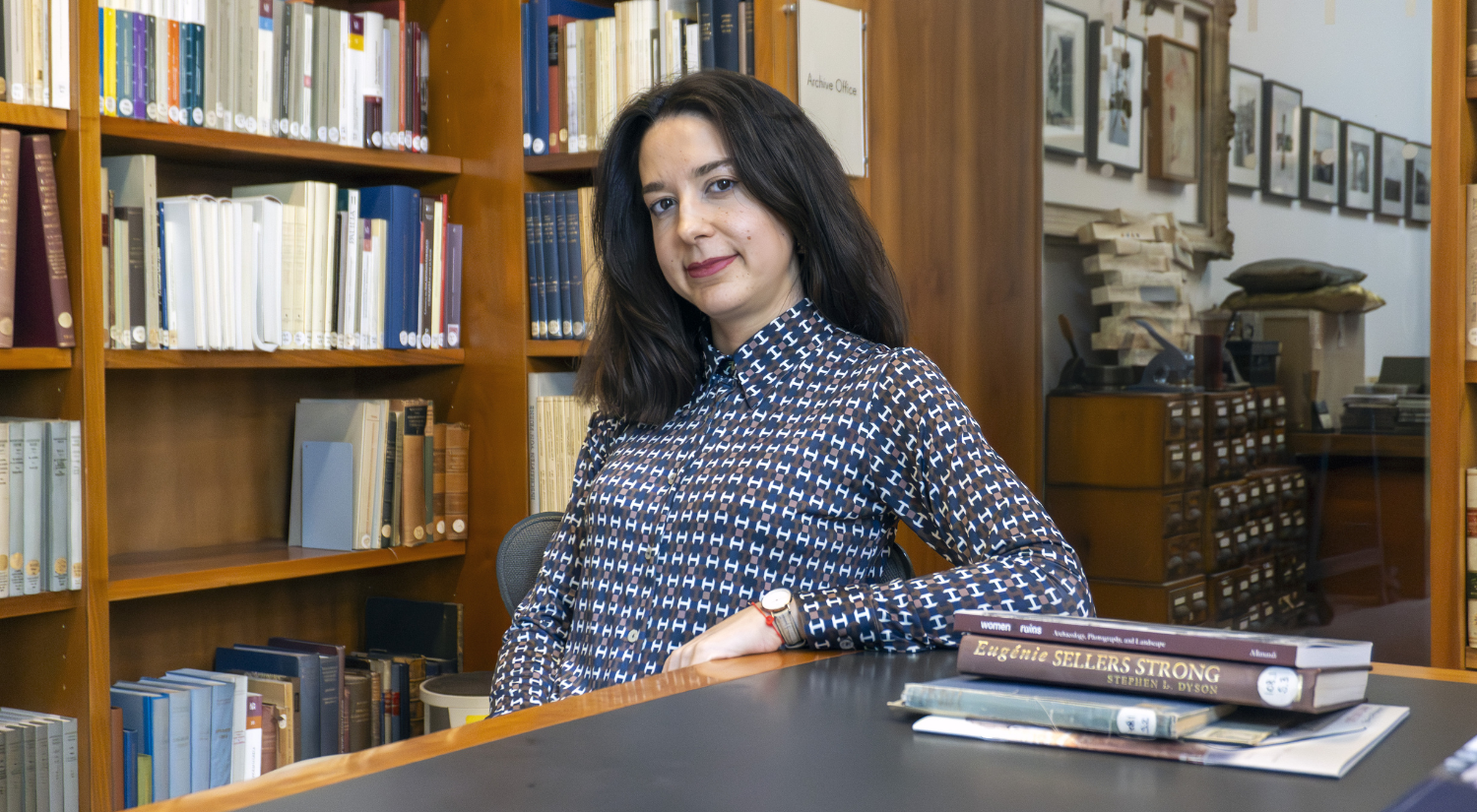
Arin Edwards: a first excavation, and an early start
Arin is studying Classics in the Ancient World at King’s College London, where he has been since 2023. He is this year’s recipient of the Roman Society Award, which each year has generously funded a student bursary to provide fieldwork training at Falerii Novi. His interest in classical archaeology started early, growing out of a fascination with the history of ancient Greece and Rome into a broader curiosity spanning the Mycenaean and Minoan Greeks all the way through to medieval Venice. Looking for ways to turn that interest into practical experience, he got involved with archaeology groups closer to home, the Surrey Archaeological Society, the Council for British Archaeology, and the Chartered Institute for Archaeologists, which gave him a sense of the wider archaeological community in the UK and pointed him towards opportunities abroad, including Falerii Novi.
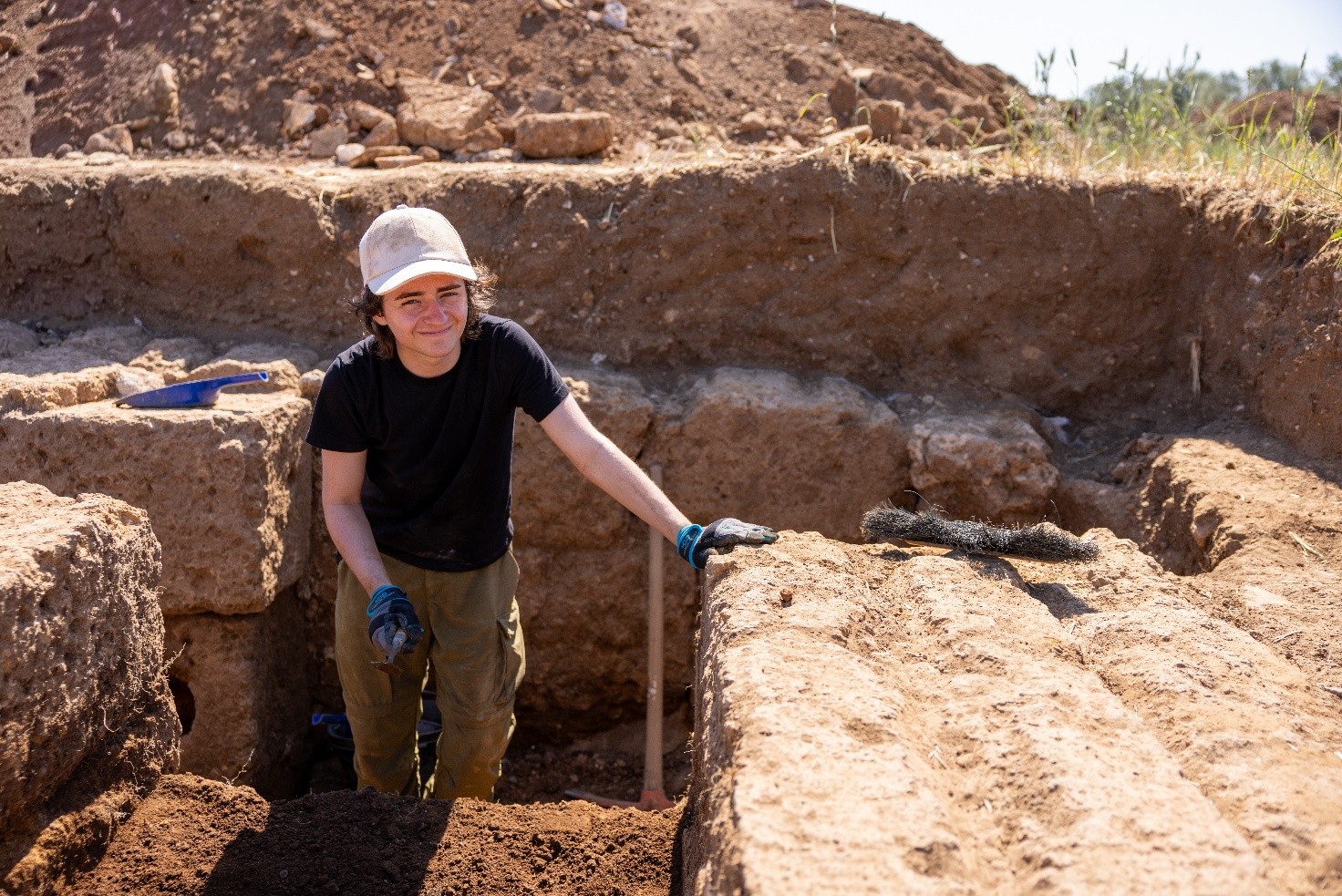
Before this season, his only fieldwork experience had been small-scale test pitting in a landscape context, where he became interested in how soil layers change over time and reflect the long relationship between people and the land they live on. Falerii Novi is his first proper excavation, made possible by the Roman Society, and one for which he is incredibly grateful.