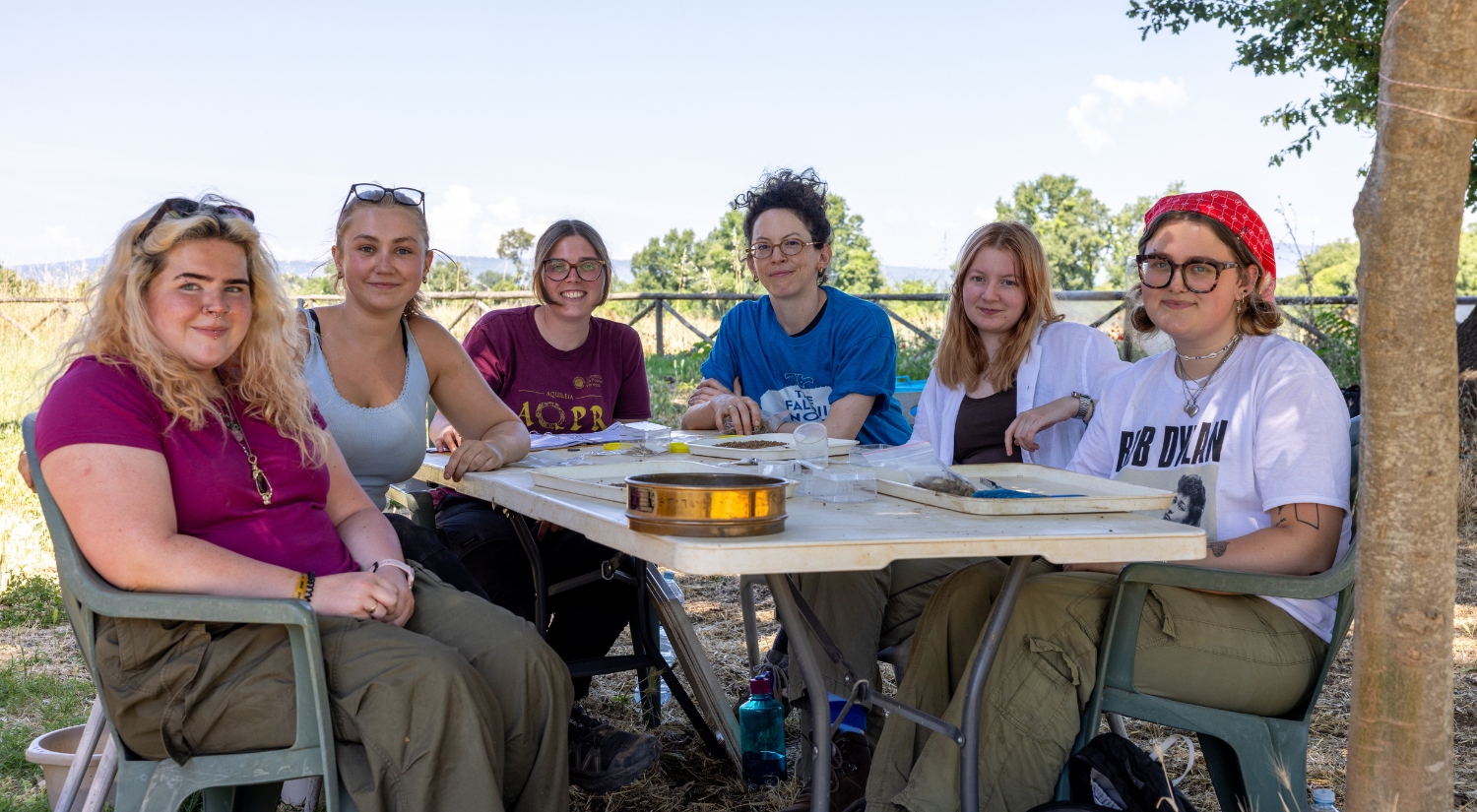
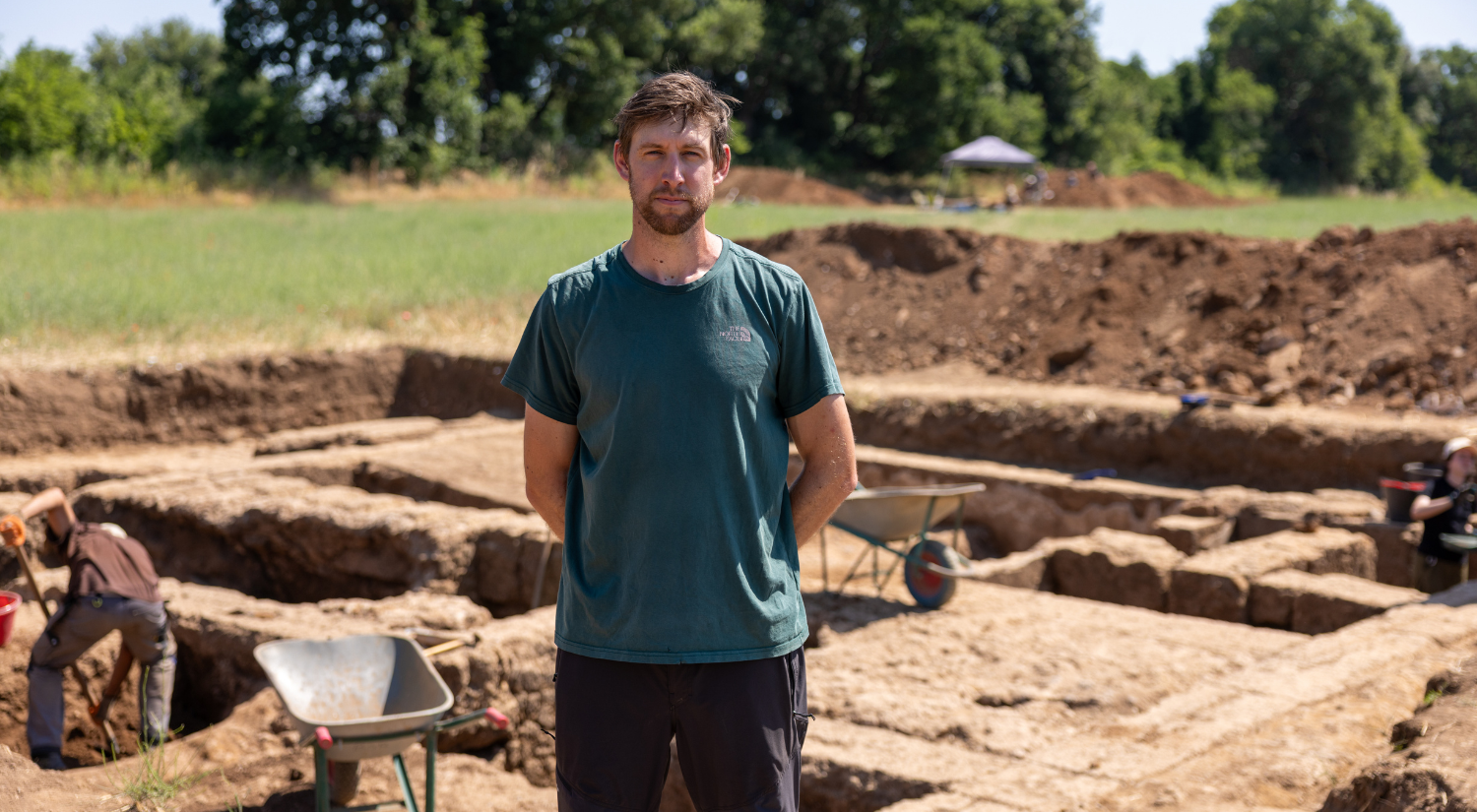
The project’s environmental team, led by Angela Trentacost, photo by Nicholas Berardo, 2026
The project’s environmental team, led by Angela Trentacost, photo by Nicholas Berardo, 2026
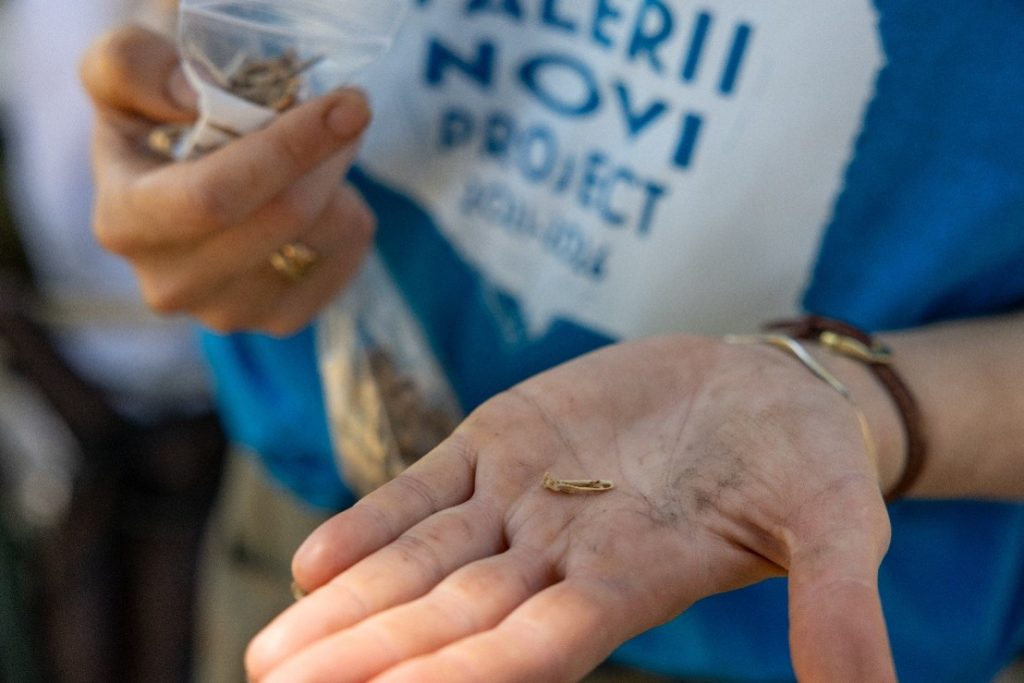
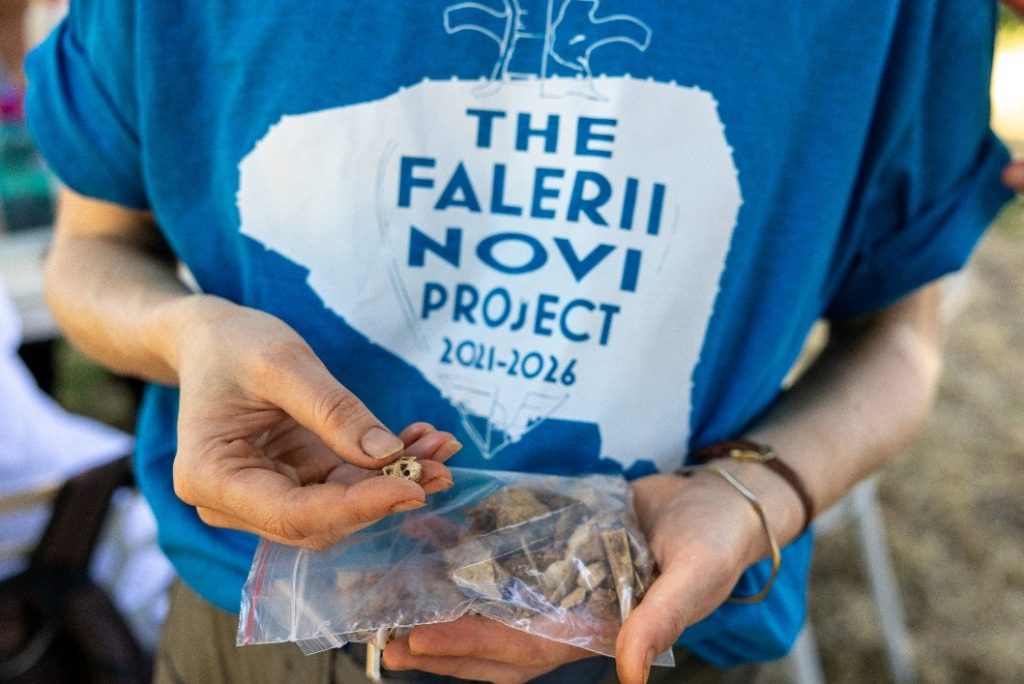
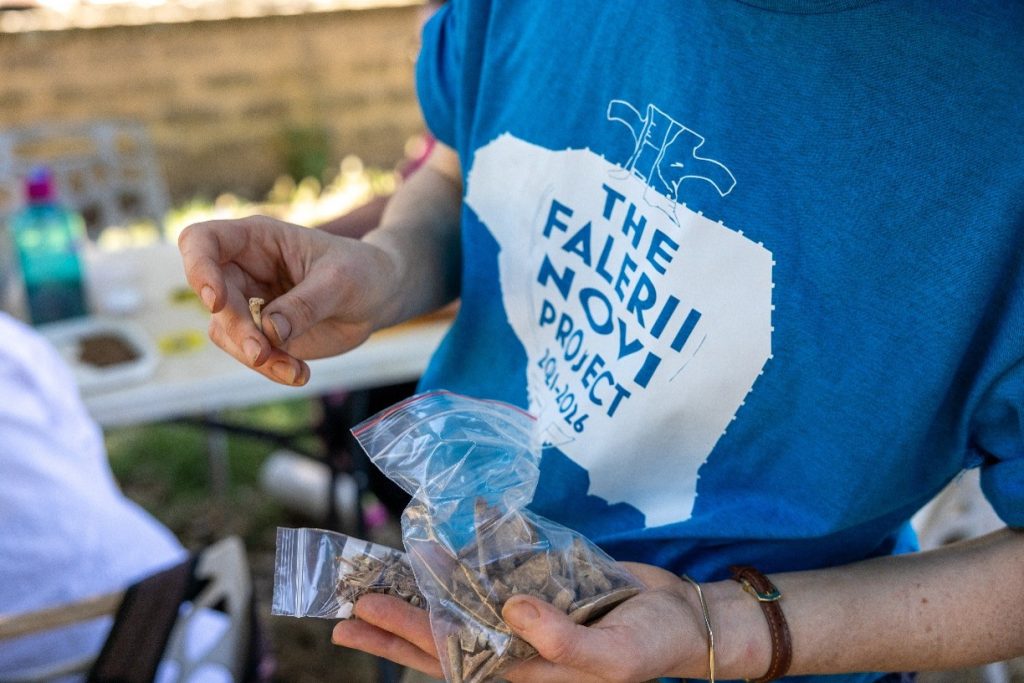
This year’s work for Angela Trentacoste has centred on bulk sampling: collecting soil samples from across the site and processing them to recover the plant, animal, and other remains that are otherwise easy to miss. It has been a particularly rich year for material. Alongside the usual carbonised plant remains like seeds, beans, cereals, olive stones, and what looks to be a pine nut, a striking amount of small bone has come out of one deposit in particular, in the trench being excavated by the BSR team: tiny bird bones, fish bones, and the remains of suckling pig, painting a picture of food waste unlike anything found elsewhere on site so far. For Angela, what makes this significant isn’t just what it reveals about Roman diet in general, but how that diet differed from one part of the ancient city to another.
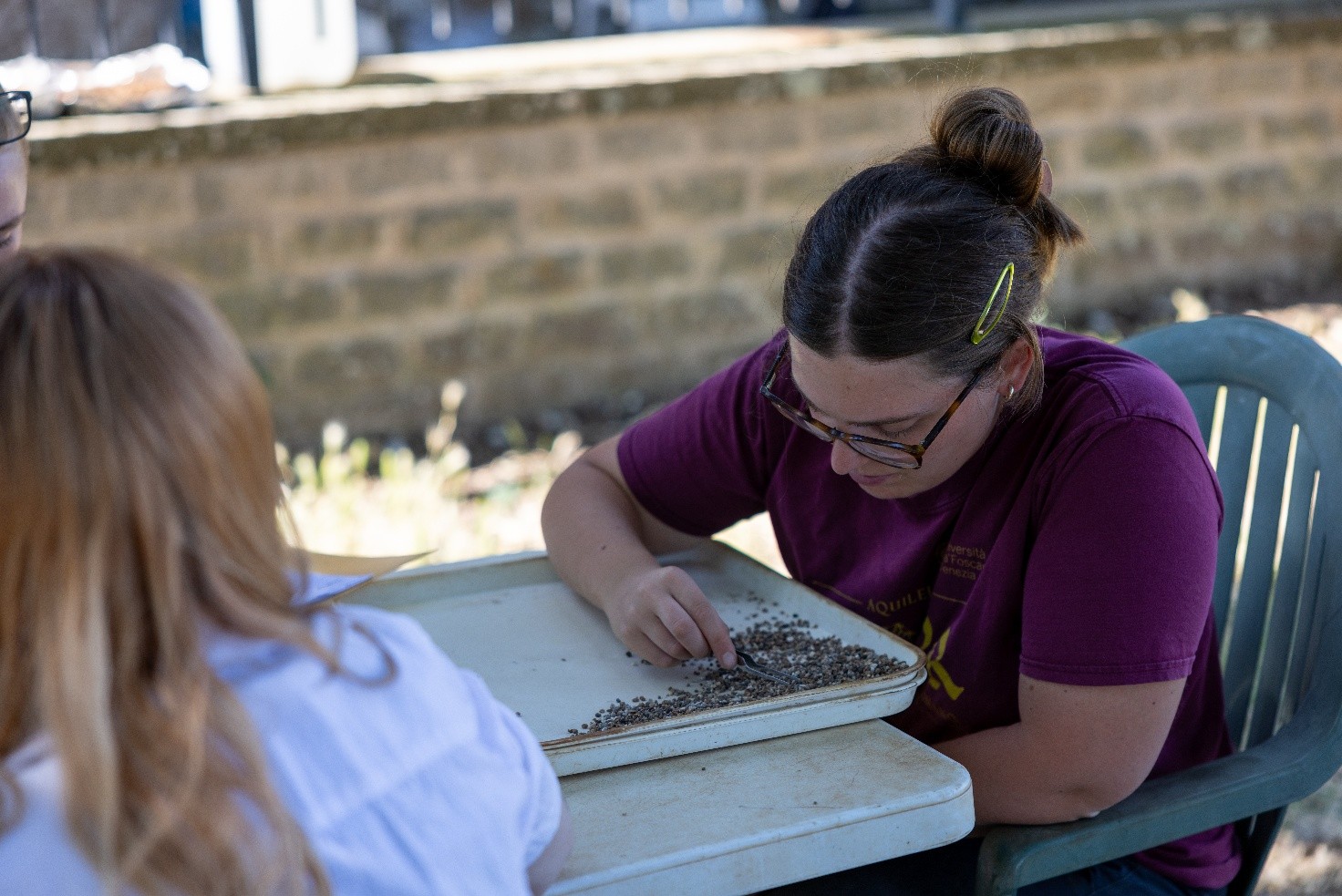
Fragments of animal bones collected from flotation
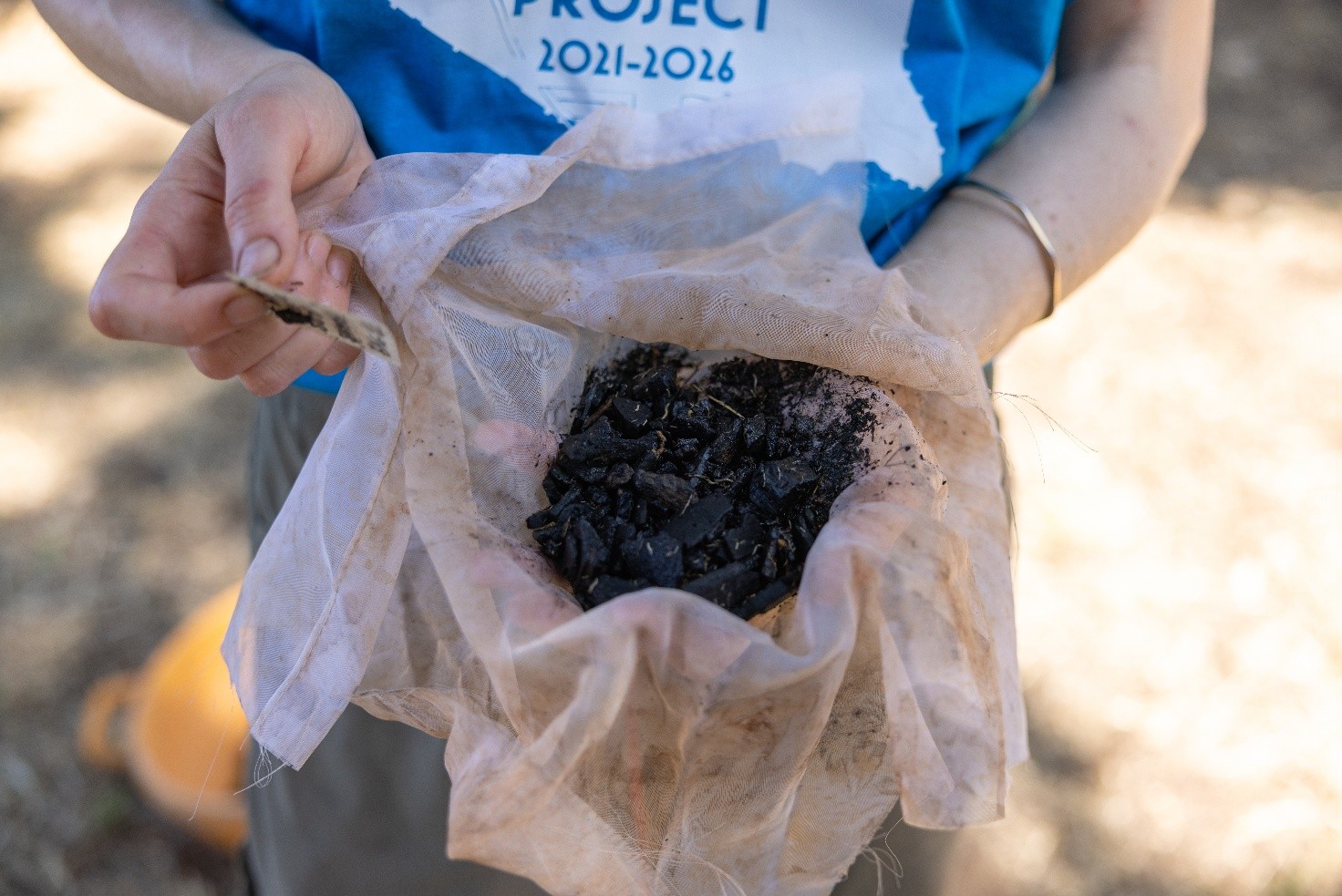
Alongside the food remains, the team has also been uncovering a series of very dark, charcoal-rich deposits, closely tied to evidence of metalworking. Hammer scale and slag point to iron production and smelting, and the charcoal itself turns out to be a valuable source of information in its own right: found in direct association with the metalworking debris, and in some cases even fused to it, the charcoal was clearly the fuel used in the iron production process. Studying which wood species were used, research being led by the projects specialist Koen Deforce (Ghent University) opens a window not only onto how woodland resources around Falerii Novi were exploited, but potentially onto the different materials chosen to build and fuel these fires.
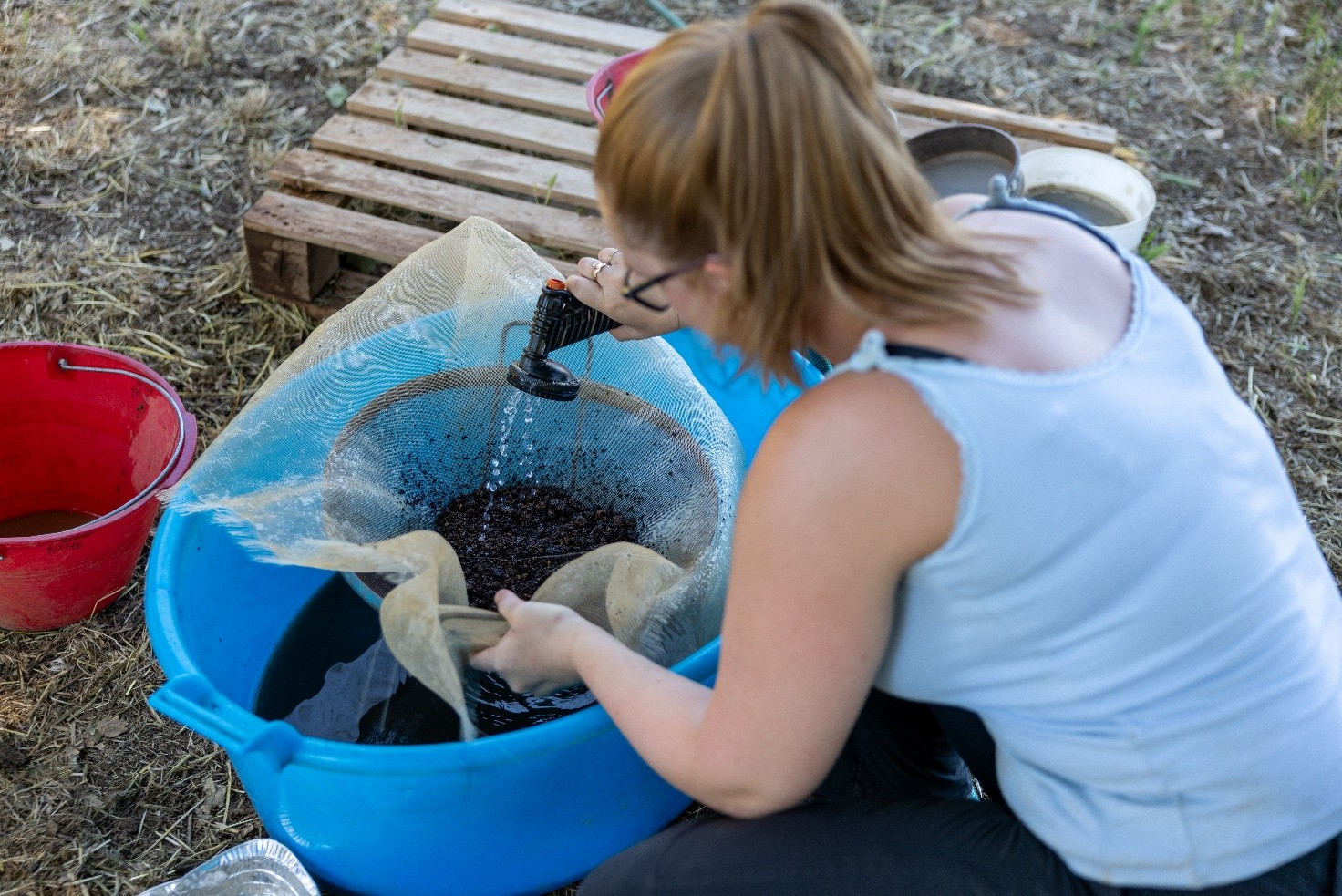
Initial cleaning phase of the soil sample, photo by Nicholas Berardo, 2026
Charcoal fragments captured through flotation, photo by Nicholas Berardo, 2026
The tiny fragments of iron recovered from the same debris add another layer, offering insight into the type and development of the iron production technology in use at the time.
Together, these two kinds of deposit tell very different stories from the same excavation: one of metallurgy and fuel use, the other of dining habits and, perhaps, luxury foods. The small finds recovered alongside them add a further dimension, two bone dice, several glass beads, including a delicate bead in blue glass likely from a necklace, hint at the everyday objects found in these deposits.
Careful analysis of the residues from flotations, photo by Nicholas Berardo, 2026
One of the more intriguing questions to come out of this material concerns a possible shift in cuisine. In this blog, we discussed about two very different types of cooking vessel, one suited to long boiling, the other to frying, raising the question of when, and why, this kind of culinary shift might have taken place. It is after the excavation season is over that the real work of material study begins in earnest back at the BSR: alongside colleagues studying the pottery, glass and other materials recovered this season, detailed cross-referenced will allow for the full picture to emerge.
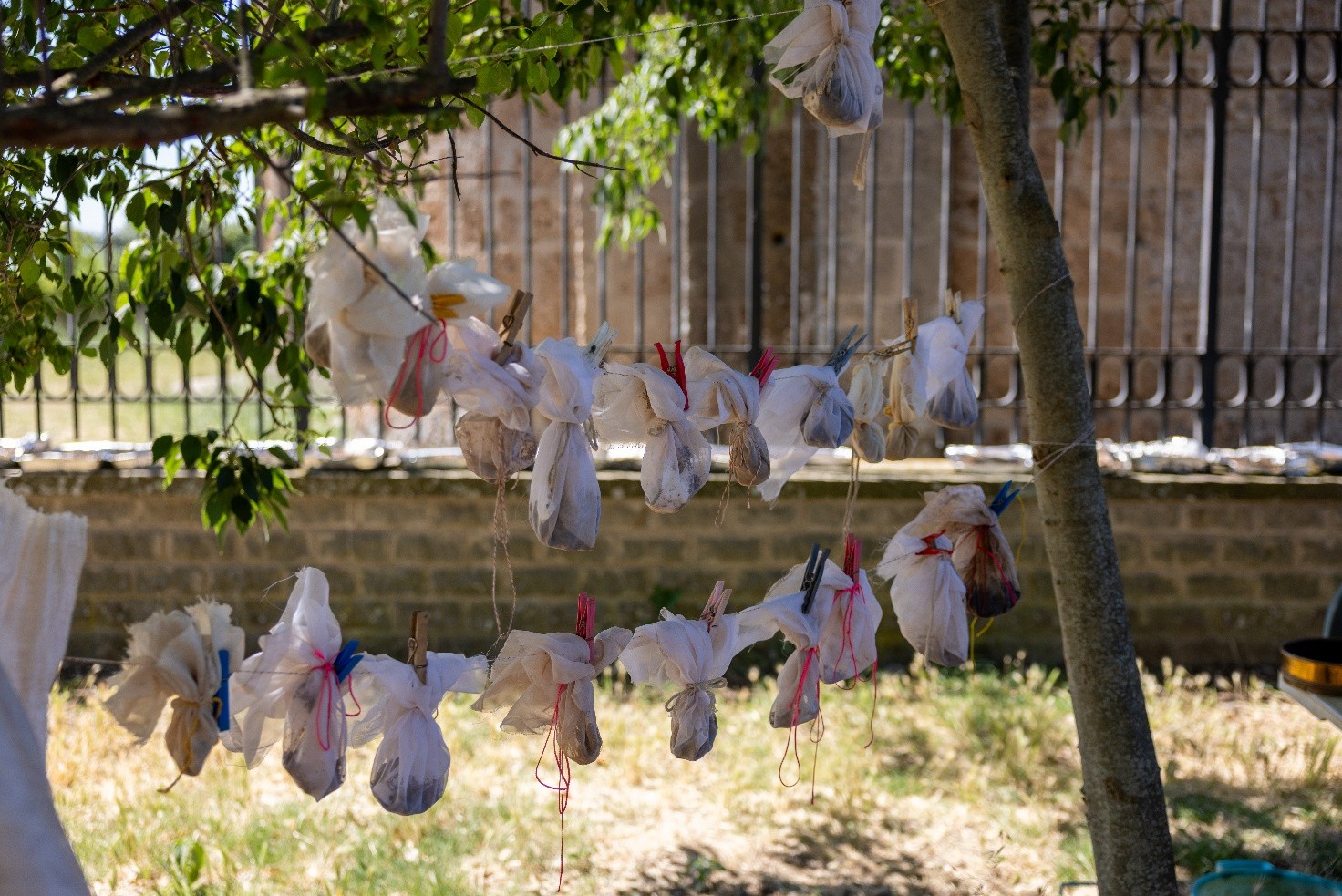
Drying soil flotation samples, photo by Nicholas Berardo, 2026
One of this year’s trenches has produced what looks like an elite consumption dump, while other areas excavated in previous years appeared more industrial in character. The open question is whether this represents change over time, or simply different activities happening in different parts of the ancient city in the same period, much as different neighbourhoods in a modern city serve different purposes today. A similar question surrounds the animal bone: previous seasons produced a notable amount of cattle bone, unusual for this part of Italy, while this year’s consumption deposit has produced far more pig. Whether this points to a genuine shift in diet from beef to pork, or simply reflects a different type of deposit and different food processing practices, is one of the questions the post-excavation study will aim to resolve.
STAY TUNED!
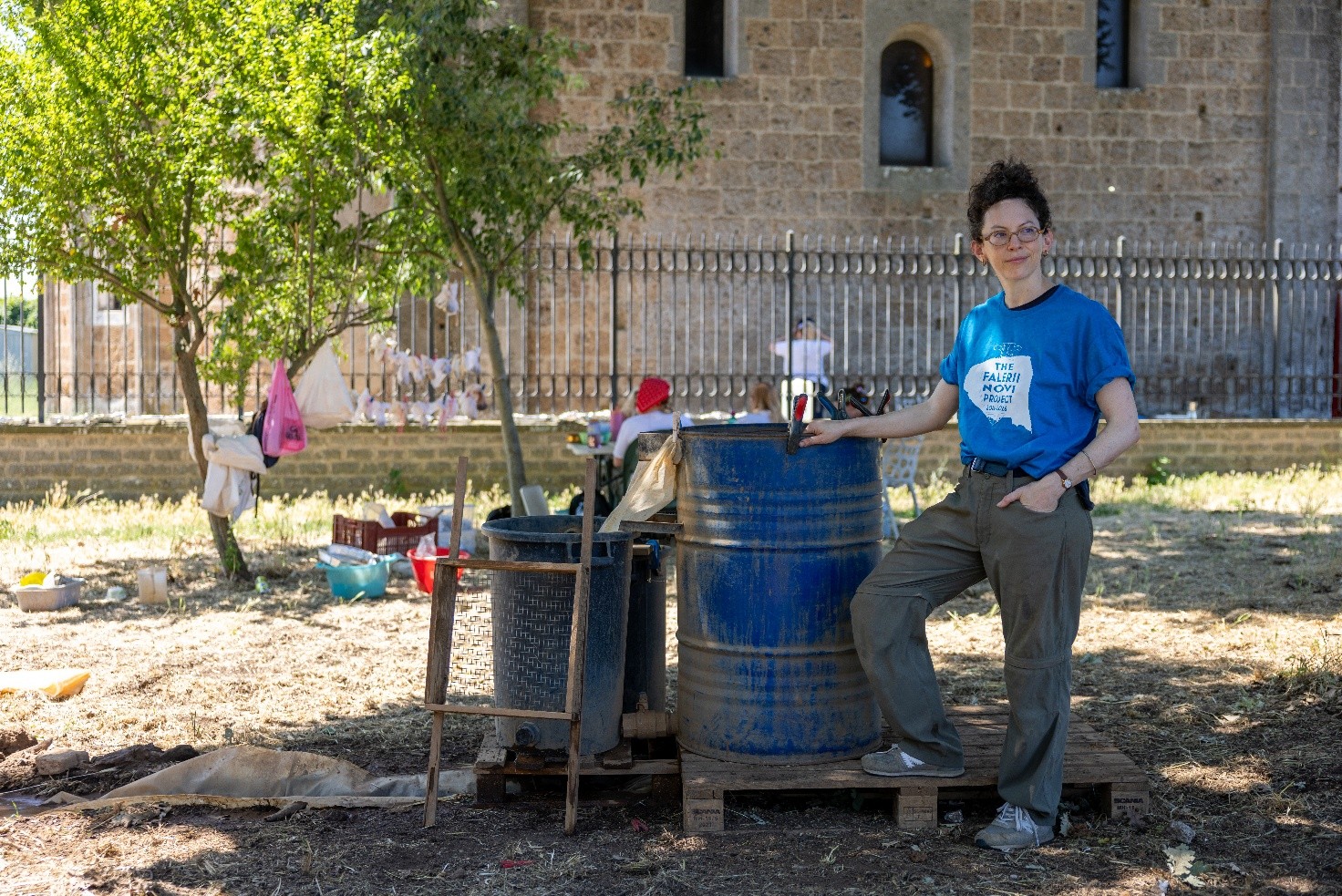
Angela Trentacosta with one of the environmental flotation tanks, photo by Nicholas Berardo, 2026
Ethan Scanlon, Leverhulme Study Abroad Student at the British School at Rome from October 2025 to July 2026, shares insights into the development of his
Valeria Tettamanti, Ecole française de Rome (résidence scientifique jeunes chercheurs UNIONE –November 2025-July 2026) Awardee, discuss her project “Popular science in Italian feminine press at
Ethan Scanlon, Leverhulme Study Abroad Student at the British School at Rome from October 2025 to July 2026, shares insights into the development of his
Valeria Tettamanti, Ecole française de Rome (résidence scientifique jeunes chercheurs UNIONE –November 2025-July 2026) Awardee, discuss her project “Popular science in Italian feminine press at
Emlyn Dodd is former Assistant Director of the British School at Rome, an Associate Fellow of the Institute of Classical Studies at the University of
We use cookies on our website to give you the most relevant experience by remembering your preferences and repeat visits. By clicking “Accept All”, you consent to the use of ALL the cookies. However, you may visit "Cookie Settings" to provide a controlled consent.
This website uses cookies to improve your experience while you navigate through the website. Out of these, the cookies that are categorized as necessary are stored on your browser as they are essential for the working of basic functionalities of the website. We also use third-party cookies that help us analyze and understand how you use this website. These cookies will be stored in your browser only with your consent. You also have the option to opt-out of these cookies. But opting out of some of these cookies may affect your browsing experience.
Necessary cookies are absolutely essential for the website to function properly. These cookies ensure basic functionalities and security features of the website, anonymously.
Cookie
Duration
Description
cookielawinfo-checkbox-advertisement
1 year
Set by the GDPR Cookie Consent plugin, this cookie records the user consent for the cookies in the "Advertisement" category.
cookielawinfo-checkbox-analytics
11 months
This cookie is set by GDPR Cookie Consent plugin. The cookie is used to store the user consent for the cookies in the category "Analytics".
cookielawinfo-checkbox-functional
11 months
The cookie is set by GDPR cookie consent to record the user consent for the cookies in the category "Functional".
cookielawinfo-checkbox-necessary
11 months
This cookie is set by GDPR Cookie Consent plugin. The cookies is used to store the user consent for the cookies in the category "Necessary".
cookielawinfo-checkbox-others
11 months
This cookie is set by GDPR Cookie Consent plugin. The cookie is used to store the user consent for the cookies in the category "Other.
cookielawinfo-checkbox-performance
11 months
This cookie is set by GDPR Cookie Consent plugin. The cookie is used to store the user consent for the cookies in the category "Performance".
CookieLawInfoConsent
1 year
CookieYes sets this cookie to record the default button state of the corresponding category and the status of CCPA. It works only in coordination with the primary cookie.
elementor
never
The website's WordPress theme uses this cookie. It allows the website owner to implement or change the website's content in real-time.
viewed_cookie_policy
11 months
The cookie is set by the GDPR Cookie Consent plugin and is used to store whether or not user has consented to the use of cookies. It does not store any personal data.
Functional cookies help to perform certain functionalities like sharing the content of the website on social media platforms, collect feedbacks, and other third-party features.
Performance cookies are used to understand and analyze the key performance indexes of the website which helps in delivering a better user experience for the visitors.
Analytical cookies are used to understand how visitors interact with the website. These cookies help provide information on metrics the number of visitors, bounce rate, traffic source, etc.
Cookie
Duration
Description
_ga
1 year 1 month 4 days
Google Analytics sets this cookie to calculate visitor, session and campaign data and track site usage for the site's analytics report. The cookie stores information anonymously and assigns a randomly generated number to recognise unique visitors.
_ga_*
1 year 1 month 4 days
Google Analytics sets this cookie to store and count page views.
_gat_gtag_UA_*
1 minute
Google Analytics sets this cookie to store a unique user ID.
_gid
1 day
Google Analytics sets this cookie to store information on how visitors use a website while also creating an analytics report of the website's performance. Some of the collected data includes the number of visitors, their source, and the pages they visit anonymously.
CONSENT
2 years
YouTube sets this cookie via embedded YouTube videos and registers anonymous statistical data.
Advertisement cookies are used to provide visitors with relevant ads and marketing campaigns. These cookies track visitors across websites and collect information to provide customized ads.
Cookie
Duration
Description
VISITOR_INFO1_LIVE
5 months 27 days
YouTube sets this cookie to measure bandwidth, determining whether the user gets the new or old player interface.
YSC
session
Youtube sets this cookie to track the views of embedded videos on Youtube pages.