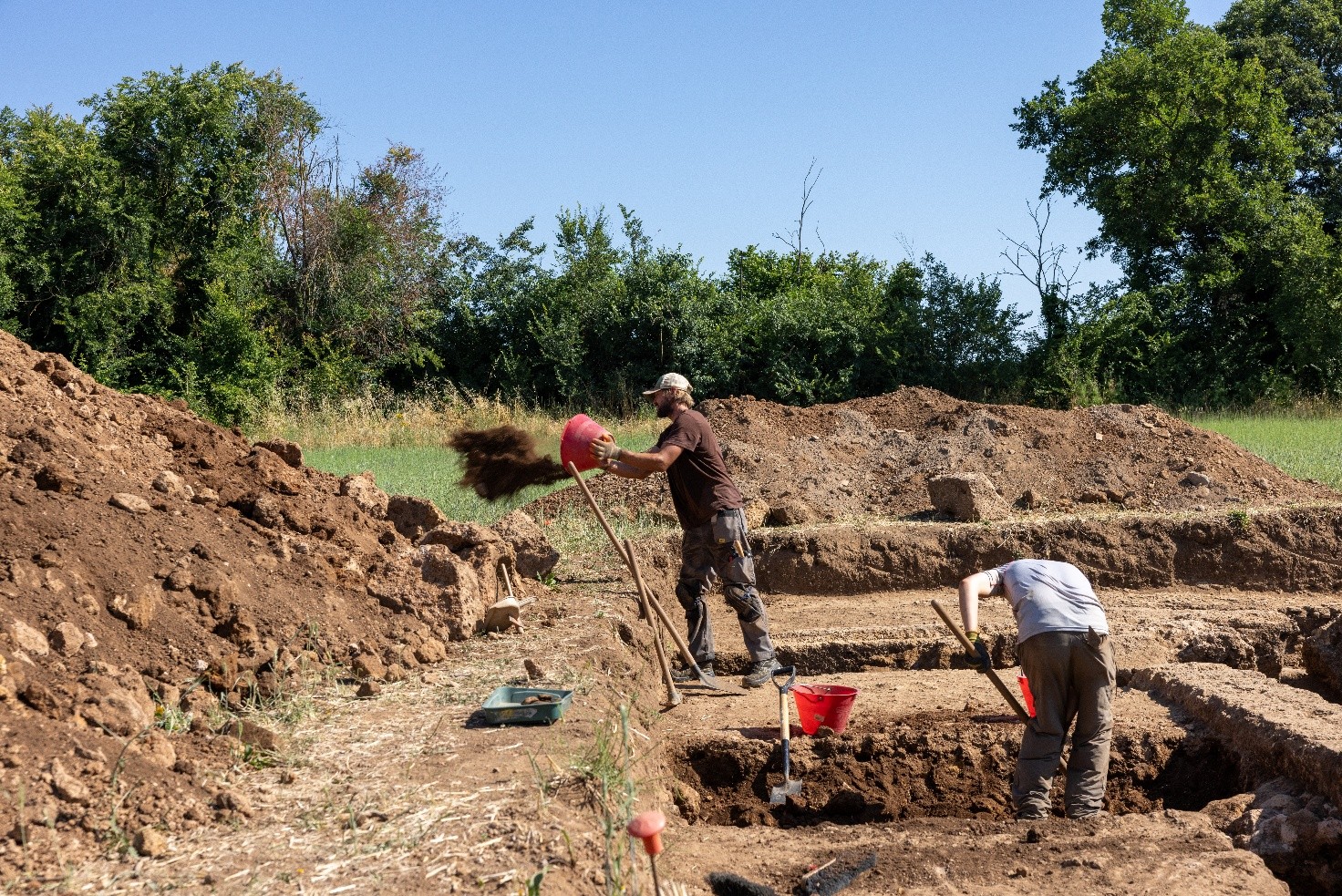
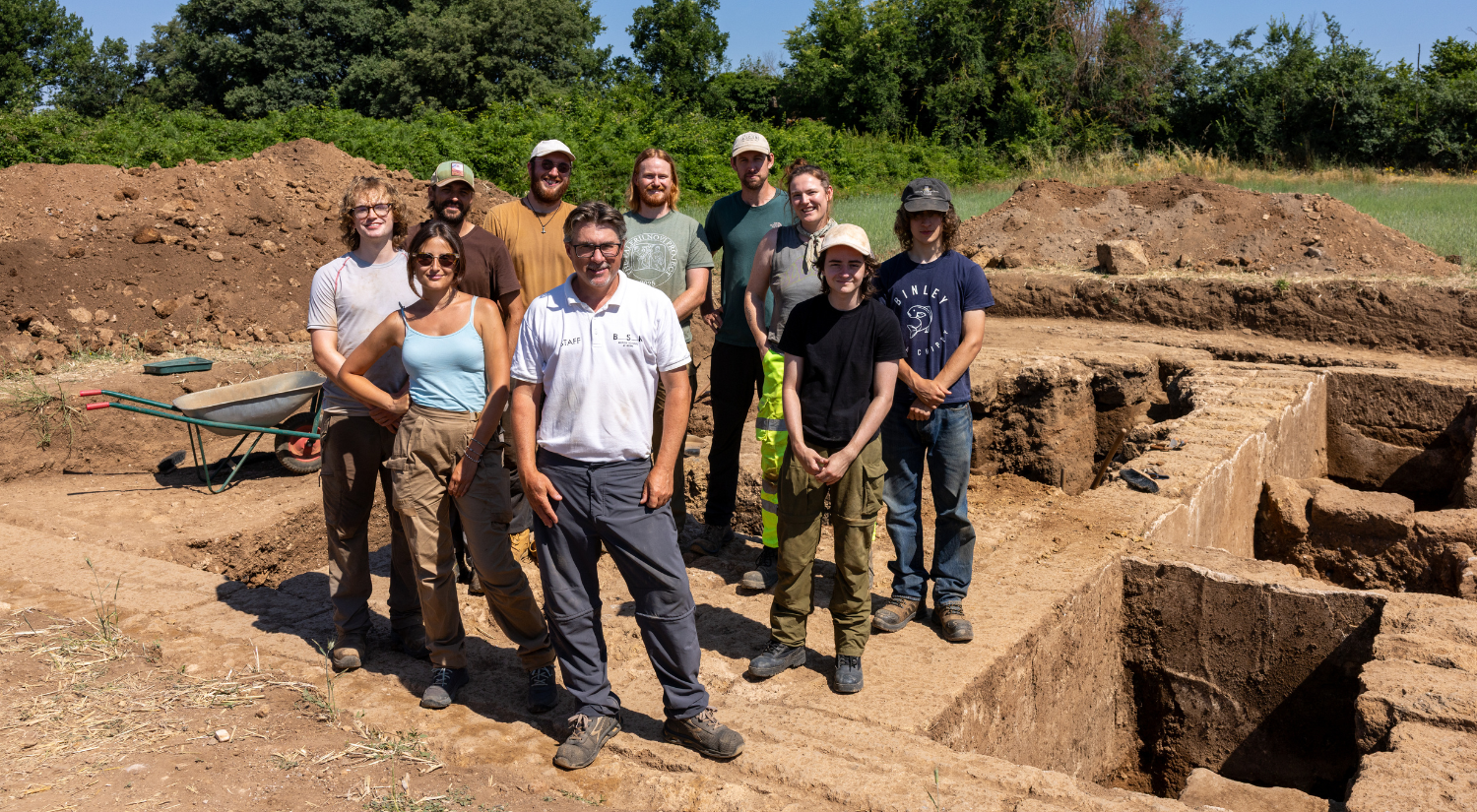
BSR team excavating Falerii Novi, photo by Nicholas Berardo, 2026
BSR team excavating Falerii Novi, photo by Nicholas Berardo, 2026
This season picks up where 2025 left off, continuing the excavation of the large, monumental building uncovered last year, a structure that saw successive phases of reuse after its construction in the 3rd century BCE into the imperial period before its eventual abandonment in late antiquity. Last year’s excavation revealed that the building extended further west, so this season the team, led by Stephen Kay (BSR Archaeology Manager) and Emlyn Dodd (Adelaide University / Institute of Classical Studies), opened a new trench alongside that of the previous season.
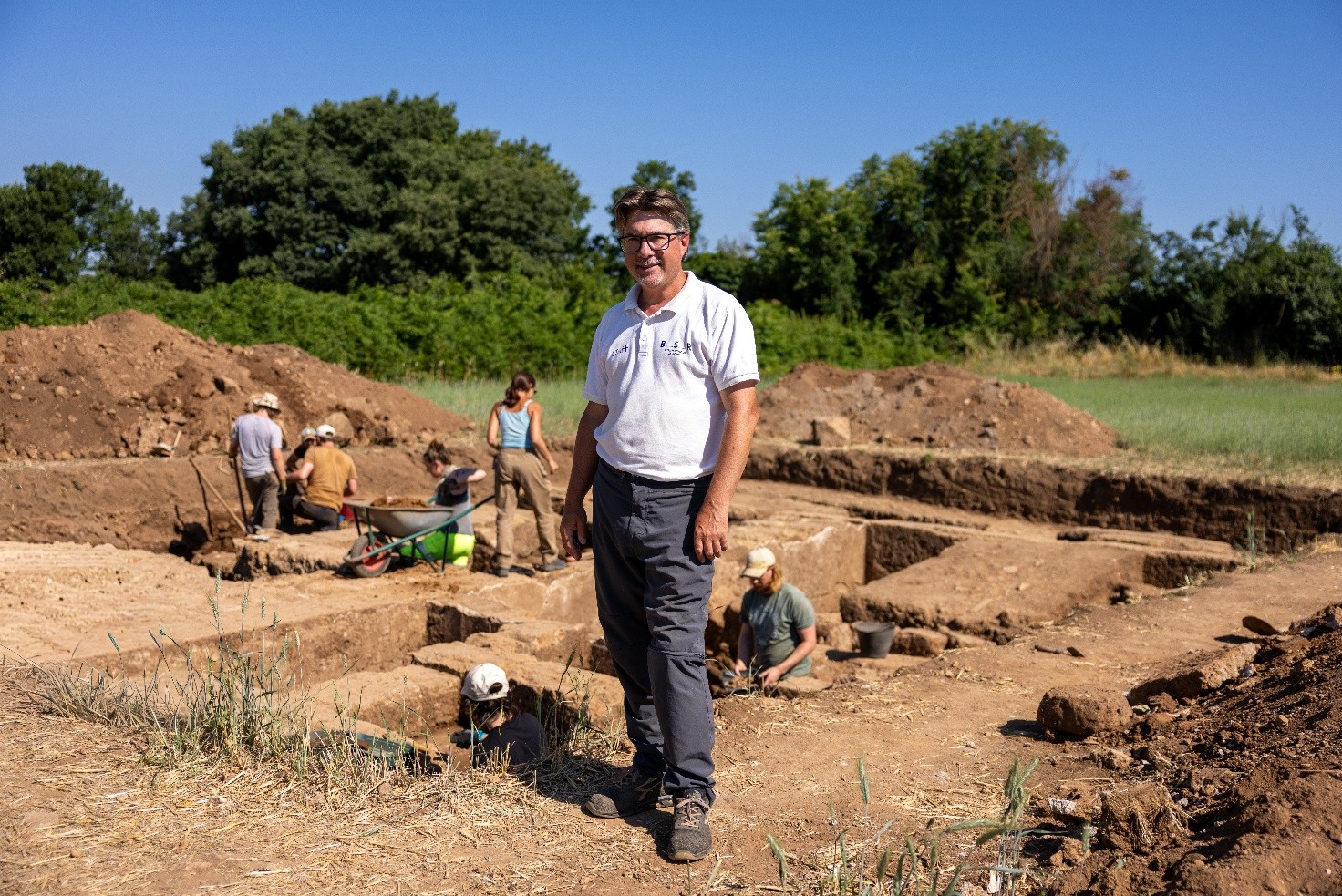
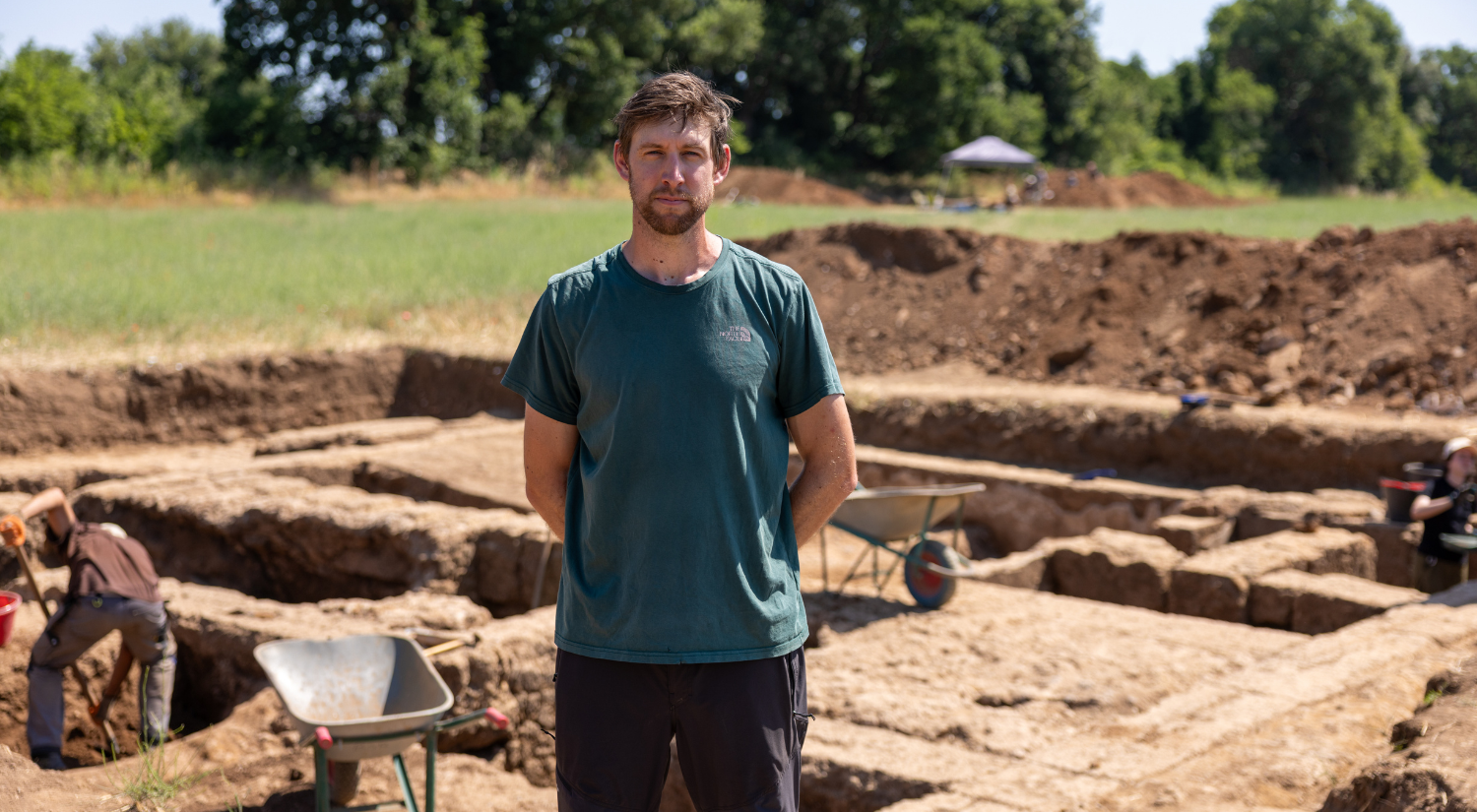
Stephen Kay beside the exaction trench, photo by Nicholas Berardo, 2026
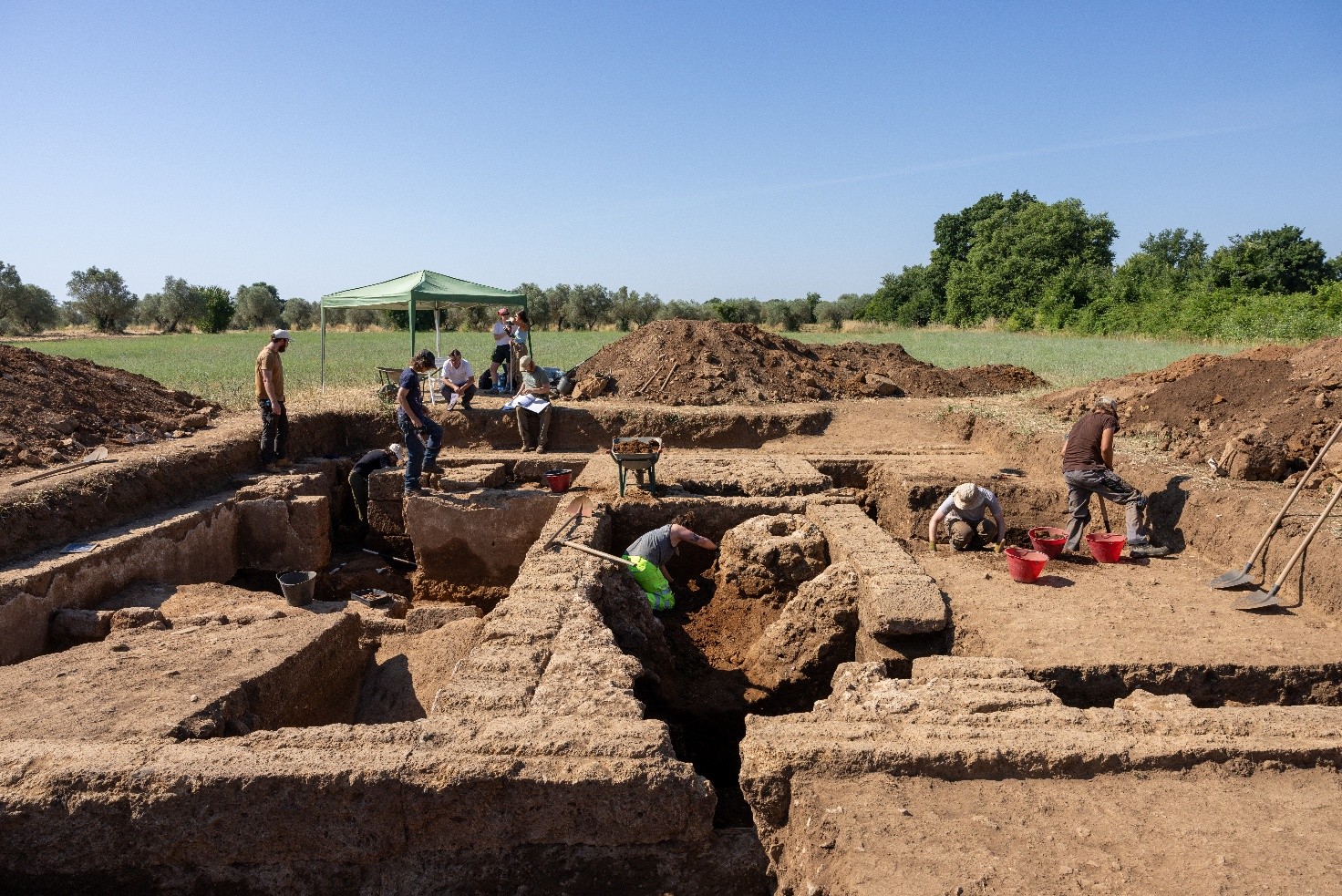
This year’s trench has revealed the continuation of the large building: a series of regular rooms have been discovered, but with clear evidence though of different construction phases. The main building is defined by several well-built walls built using carefully cut locally quarried tufo blocks, some measuring 1.5m in length. In its earliest phase the building appears to face to the west, as several doorways have been found in the North-South walls, some of which were subsequently blocked.
A view across the excavation, with the small window opening to provide light to the lower rooms, photo by Nicholas Berardo, 2026
In the centre of the building lie two vaulted spaces, one of which had collapsed. The rooms appear to have been at least partly below ground, semi-basement spaces, with what may be a small window opening for light into one of them from the road alongside. The function of these vaulted rooms is still not entirely clear, perhaps cool storage spaces or rooms to escape the heat in the summer, these are the questions the team will work to answer during the next phase of the research.
A Roman road and traces of metalworking
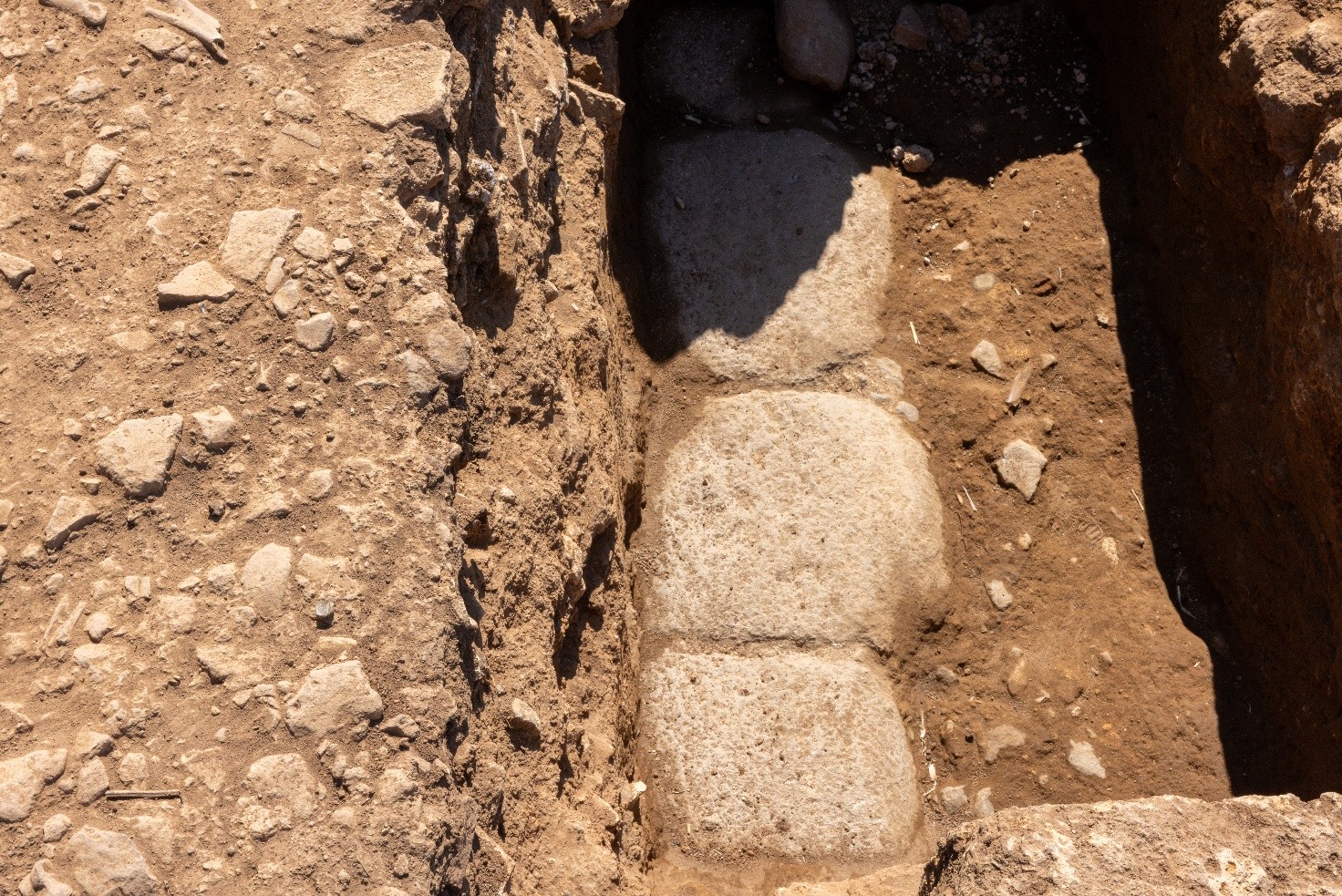
At the northern limit of the excavation a stretch of road has come to light, but not the one the team expected. What first appeared was a carefully constructed surface, made reusing broken tiles and pottery, on which was scattered a large amount of animal bone. The pottery indicated a medieval date, not the paved road the geophysics had suggested. However, in continuing the excavation, the original Roman road came to light at a depth of almost 2m.
Basalt paving blocks of a road within the city, photo by Nicholas Berardo, 2026
Finding the original road level outside the building was important to the team, as it helps establish the floor levels and access to the building and clarify how each space was accessed.
In a separate part of the site, the team has found clear evidence of metalworking. Whilst the furnace appears not to have survived, the surrounding layers are rich in the tell-tale by-products of metal production: heavily burnt, blackened soil and fragments of the fired clay structure, simple in construction rather than built of brick or stone, which is consistent with the light, makeshift furnaces used for smithing rather than smelting. Notably, this metalworking evidence appears in the same phase as similar production traces recorded in other areas of the projects excavations, suggesting significant amounts of forging in this northern part of the city.
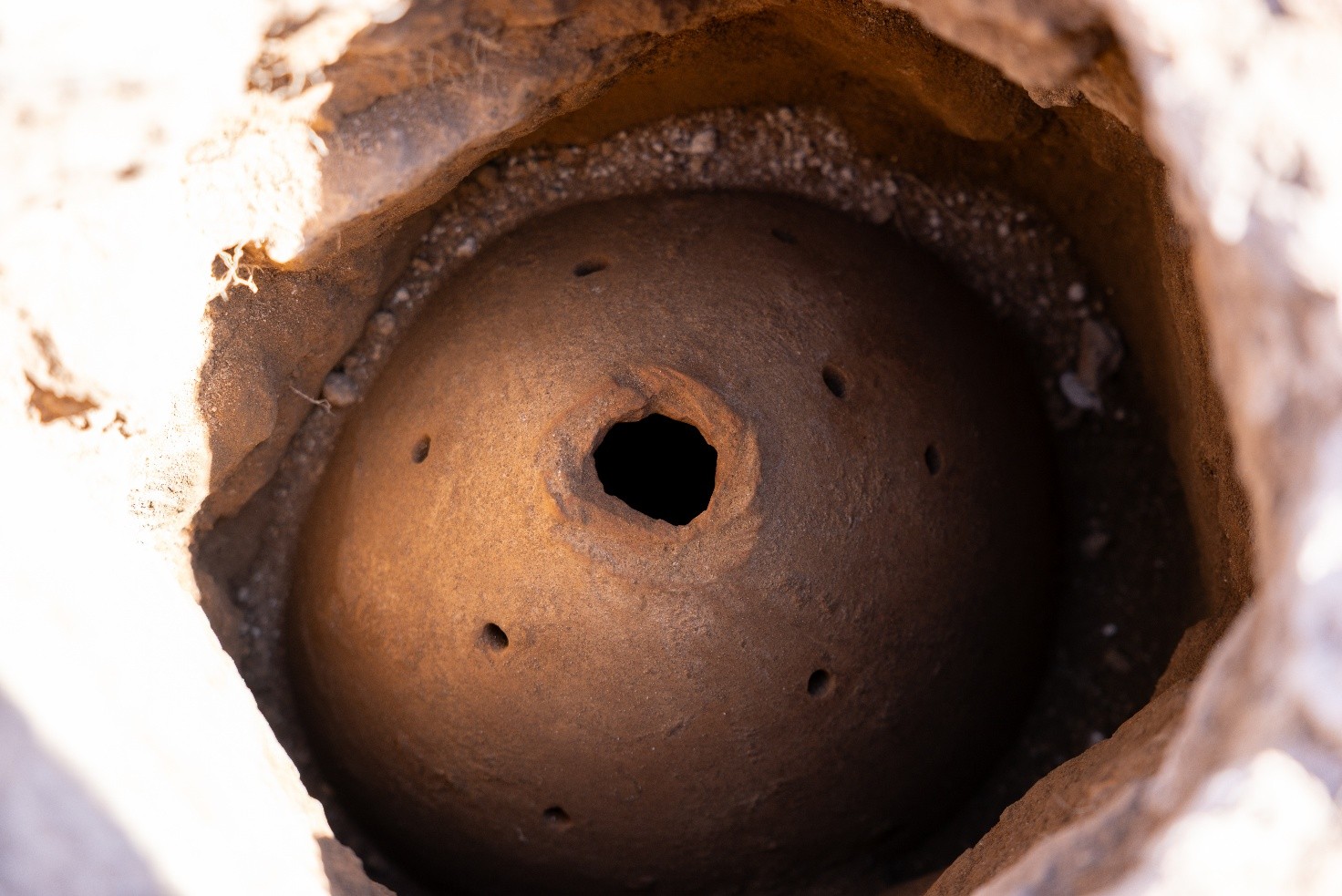
A upturned reused amphora with drilled holes inserted into a drain, perhaps used to filter waste from production activity in the building, photo by Nicholas Berardo, 2026
What’s Next: Moving from Excavation to Publication
This year marks the end of this first phase of the project, as work now focuses on the publication of these important excavations. Over the past five years the team has investigated five different areas within the city, allowing it to build up a fascinating picture of the city, from its foundation in the 3rd century BCE through to its later flourishing as an important town in late antiquity.
However, research on site won’t stop entirely. With the permission of the Soprintendenza and landowner, the team plans to continue with other activity: small, targeted excavations, further non-invasive survey and further geological work to better understand the formation of the site.
Students at work, photo by Nicholas Berardo, 2026
The real focus now turns to publication. Several articles have already been published by the project as well as regular reports in the Papers of the British School at Rome. The proceedings of a conference held at the BSR in 2024, presenting the results of the first 3 seasons alongside Rome La Sapienza’s excavations at Falerii Veteres is now in preparation with Archaeopress, publishers of the BSR’s new archaeology series.
The project directors, supervisors and many specialists will now dedicate their time to bringing this incredible site to publication. The discoveries promise to both shed light on the history of Falerii Novi as well as its connectivity and trade with Rome and the broader Mediterranean.
Ethan Scanlon, Leverhulme Study Abroad Student at the British School at Rome from October 2025 to July 2026, shares insights into the development of his
Valeria Tettamanti, Ecole française de Rome (résidence scientifique jeunes chercheurs UNIONE –November 2025-July 2026) Awardee, discuss her project “Popular science in Italian feminine press at
Ethan Scanlon, Leverhulme Study Abroad Student at the British School at Rome from October 2025 to July 2026, shares insights into the development of his
Valeria Tettamanti, Ecole française de Rome (résidence scientifique jeunes chercheurs UNIONE –November 2025-July 2026) Awardee, discuss her project “Popular science in Italian feminine press at
Emlyn Dodd is former Assistant Director of the British School at Rome, an Associate Fellow of the Institute of Classical Studies at the University of
We use cookies on our website to give you the most relevant experience by remembering your preferences and repeat visits. By clicking “Accept All”, you consent to the use of ALL the cookies. However, you may visit "Cookie Settings" to provide a controlled consent.
This website uses cookies to improve your experience while you navigate through the website. Out of these, the cookies that are categorized as necessary are stored on your browser as they are essential for the working of basic functionalities of the website. We also use third-party cookies that help us analyze and understand how you use this website. These cookies will be stored in your browser only with your consent. You also have the option to opt-out of these cookies. But opting out of some of these cookies may affect your browsing experience.
Necessary cookies are absolutely essential for the website to function properly. These cookies ensure basic functionalities and security features of the website, anonymously.
Cookie
Duration
Description
cookielawinfo-checkbox-advertisement
1 year
Set by the GDPR Cookie Consent plugin, this cookie records the user consent for the cookies in the "Advertisement" category.
cookielawinfo-checkbox-analytics
11 months
This cookie is set by GDPR Cookie Consent plugin. The cookie is used to store the user consent for the cookies in the category "Analytics".
cookielawinfo-checkbox-functional
11 months
The cookie is set by GDPR cookie consent to record the user consent for the cookies in the category "Functional".
cookielawinfo-checkbox-necessary
11 months
This cookie is set by GDPR Cookie Consent plugin. The cookies is used to store the user consent for the cookies in the category "Necessary".
cookielawinfo-checkbox-others
11 months
This cookie is set by GDPR Cookie Consent plugin. The cookie is used to store the user consent for the cookies in the category "Other.
cookielawinfo-checkbox-performance
11 months
This cookie is set by GDPR Cookie Consent plugin. The cookie is used to store the user consent for the cookies in the category "Performance".
CookieLawInfoConsent
1 year
CookieYes sets this cookie to record the default button state of the corresponding category and the status of CCPA. It works only in coordination with the primary cookie.
elementor
never
The website's WordPress theme uses this cookie. It allows the website owner to implement or change the website's content in real-time.
viewed_cookie_policy
11 months
The cookie is set by the GDPR Cookie Consent plugin and is used to store whether or not user has consented to the use of cookies. It does not store any personal data.
Functional cookies help to perform certain functionalities like sharing the content of the website on social media platforms, collect feedbacks, and other third-party features.
Performance cookies are used to understand and analyze the key performance indexes of the website which helps in delivering a better user experience for the visitors.
Analytical cookies are used to understand how visitors interact with the website. These cookies help provide information on metrics the number of visitors, bounce rate, traffic source, etc.
Cookie
Duration
Description
_ga
1 year 1 month 4 days
Google Analytics sets this cookie to calculate visitor, session and campaign data and track site usage for the site's analytics report. The cookie stores information anonymously and assigns a randomly generated number to recognise unique visitors.
_ga_*
1 year 1 month 4 days
Google Analytics sets this cookie to store and count page views.
_gat_gtag_UA_*
1 minute
Google Analytics sets this cookie to store a unique user ID.
_gid
1 day
Google Analytics sets this cookie to store information on how visitors use a website while also creating an analytics report of the website's performance. Some of the collected data includes the number of visitors, their source, and the pages they visit anonymously.
CONSENT
2 years
YouTube sets this cookie via embedded YouTube videos and registers anonymous statistical data.
Advertisement cookies are used to provide visitors with relevant ads and marketing campaigns. These cookies track visitors across websites and collect information to provide customized ads.
Cookie
Duration
Description
VISITOR_INFO1_LIVE
5 months 27 days
YouTube sets this cookie to measure bandwidth, determining whether the user gets the new or old player interface.
YSC
session
Youtube sets this cookie to track the views of embedded videos on Youtube pages.