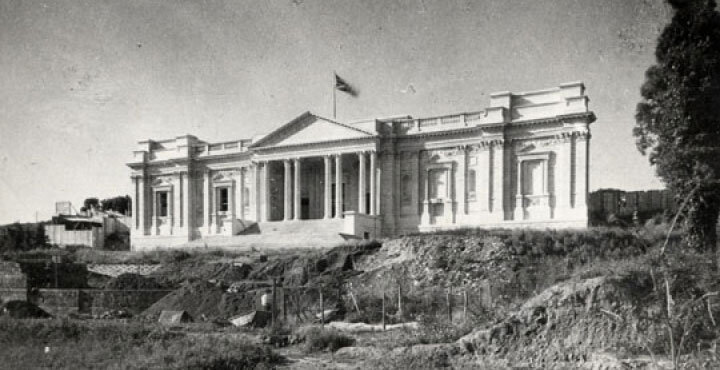



Phaedra Criaco, Macquarie Gale Rome Scholar at the British School at Rome from January to June 2026, shares insights into the development of her research project, “The Material Development of Roads in the Roman Hinterland (300 BCE-500 CE)”
Have you ever wondered how long it would take to walk the Via Appia Antica all the way from Rome to Brindisi? No? Well, fear not, I have the answer for you anyway. If you walked at 5.5km/h for 8 hours a day without any pit stops, it would take you a mere 12 days.
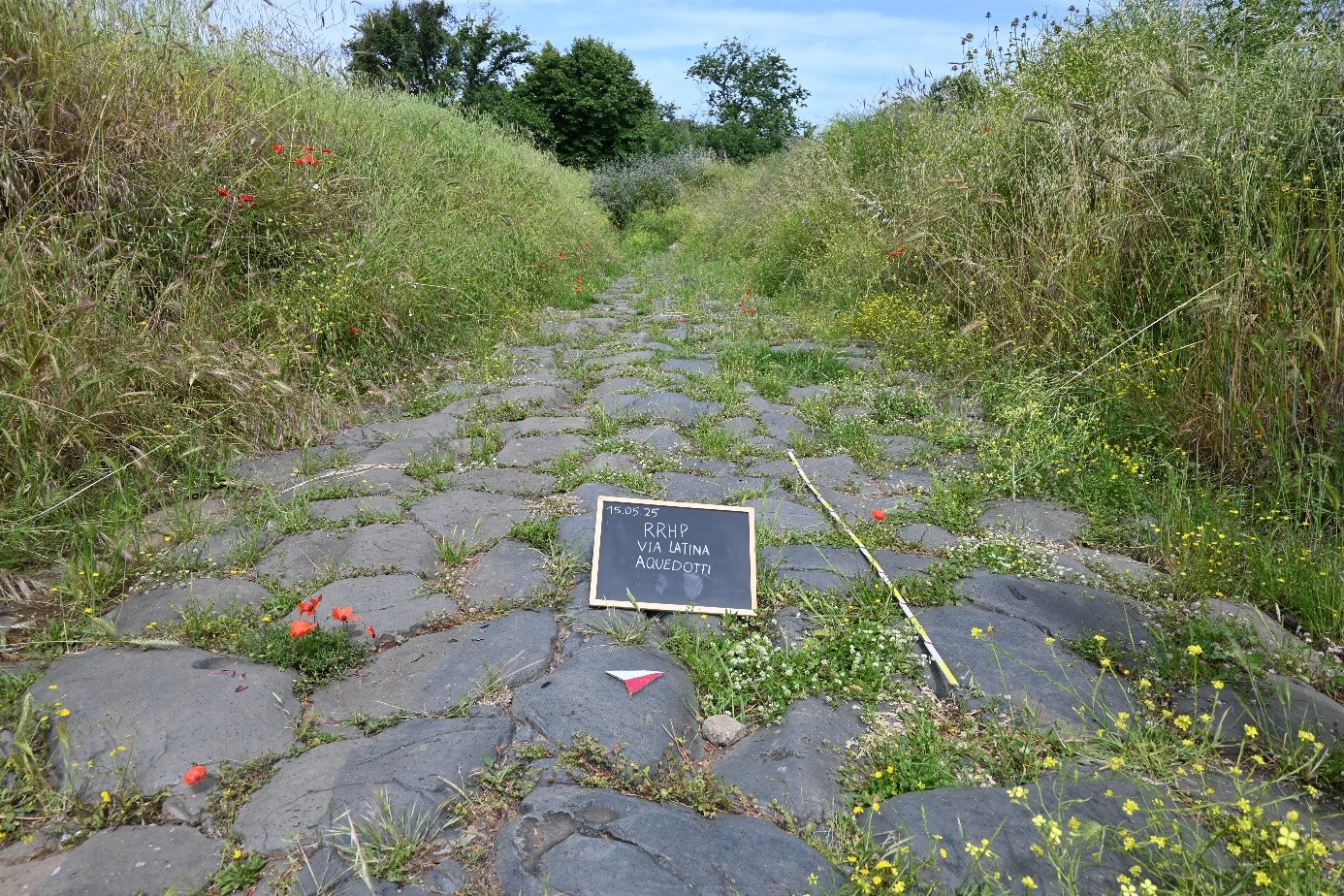
Now you may ask, why would you calculate this? This is the result of daydreaming in the beautiful BSR library while working on my actual PhD project about Roman roads. My goal is not actually to calculate these distances, but to find out more about the construction of the road and the impact this massive undertaking had on ancient Rome and its surrounding. More specifically, I use non-invasive techniques to find out what quarries were used to pave roads like the Via Appia Antica or the Via Flaminia. Based on this data I will calculate how much energy, people and money was needed for the construction and how this was organised.
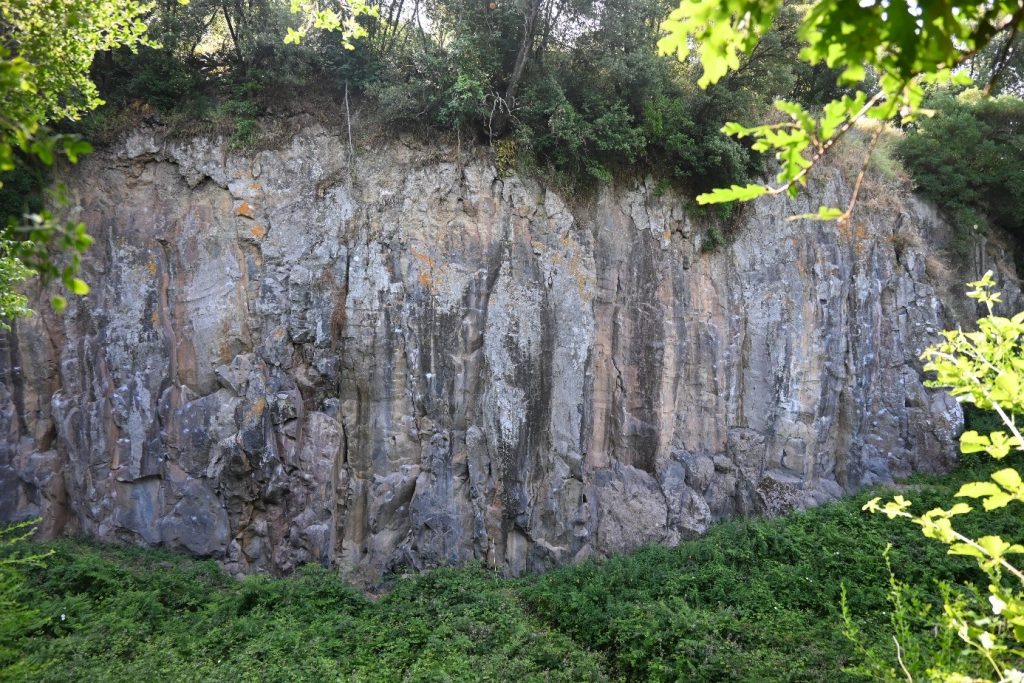
Driving through the green, luscious landscapes of Lazio, it is easy to forget that the lakes and hills are actually the result of ancient volcanic activity. These volcanoes provided different building materials for ancient Rome. One of those is the leucitic lava, sometimes called basalt, that give Roman roads their characteristic look. This black stone is used to this day in the city centre of Rome, known as Sampietrini.
My time in Rome was spent looking for this stone, both in written accounts and out in the field. From tracing the lava on geological maps to surveying the areas, cutting through dense thickets of shrubbery to collect samples of this lava. I compare this data to measurements taken on the roads using portable x-ray fluorescence (p-XRF), a technique to reconstruct the geochemical composition of the stone Driving around in the Sabatini mountains, I also look at the landscape and the quality of the stone to ask why Roman road-builders may have chosen a particular quarry.
Most of the archaeological research, however, happens in a library and not in the field. I thus spend much of my time in the different libraries Rome and its international institutes have to offer. I try to find ancient written records about leucitic lava and reconstructing different stages of road construction—from the quarrying process, to the transport and organisation of people and materials, to the actual construction of the roads. Strangely, there is scarcely a trace of ancient road construction taking place. But why might this be? Just think of the last time you complained to friends about roadworks changing your route to the supermarket or work. It was probably not that long ago, right?
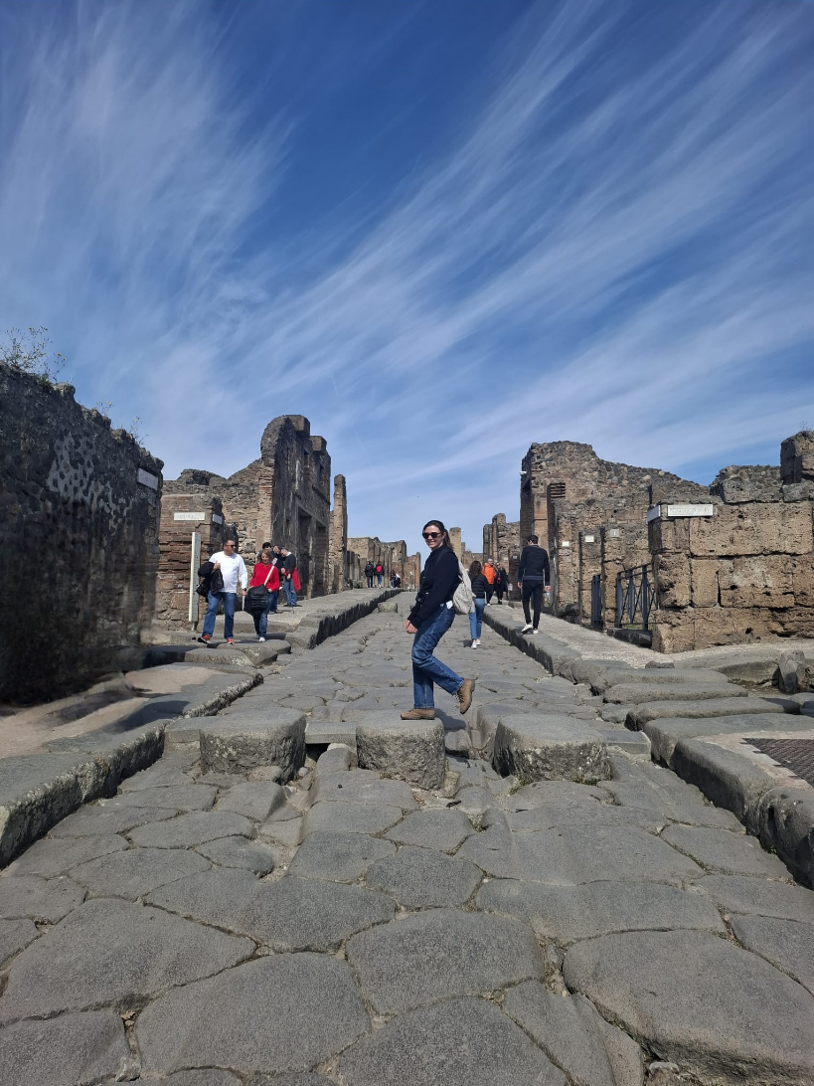
Some things never change: throughout history, people have moaned about the state of the roads. So, I leave you with an account from Tacitus’ Annals (L3.31): “Idem Corbulo, plurima per Italiam itinera fraude mancipum et incuria magistratuum interrupta et impervia clamitando…” , “Again, it was Corbulo who would cry out that so many roads across Italy were blocked and broken because of the contractors’ lies and the magistrates’ carelessness.”