

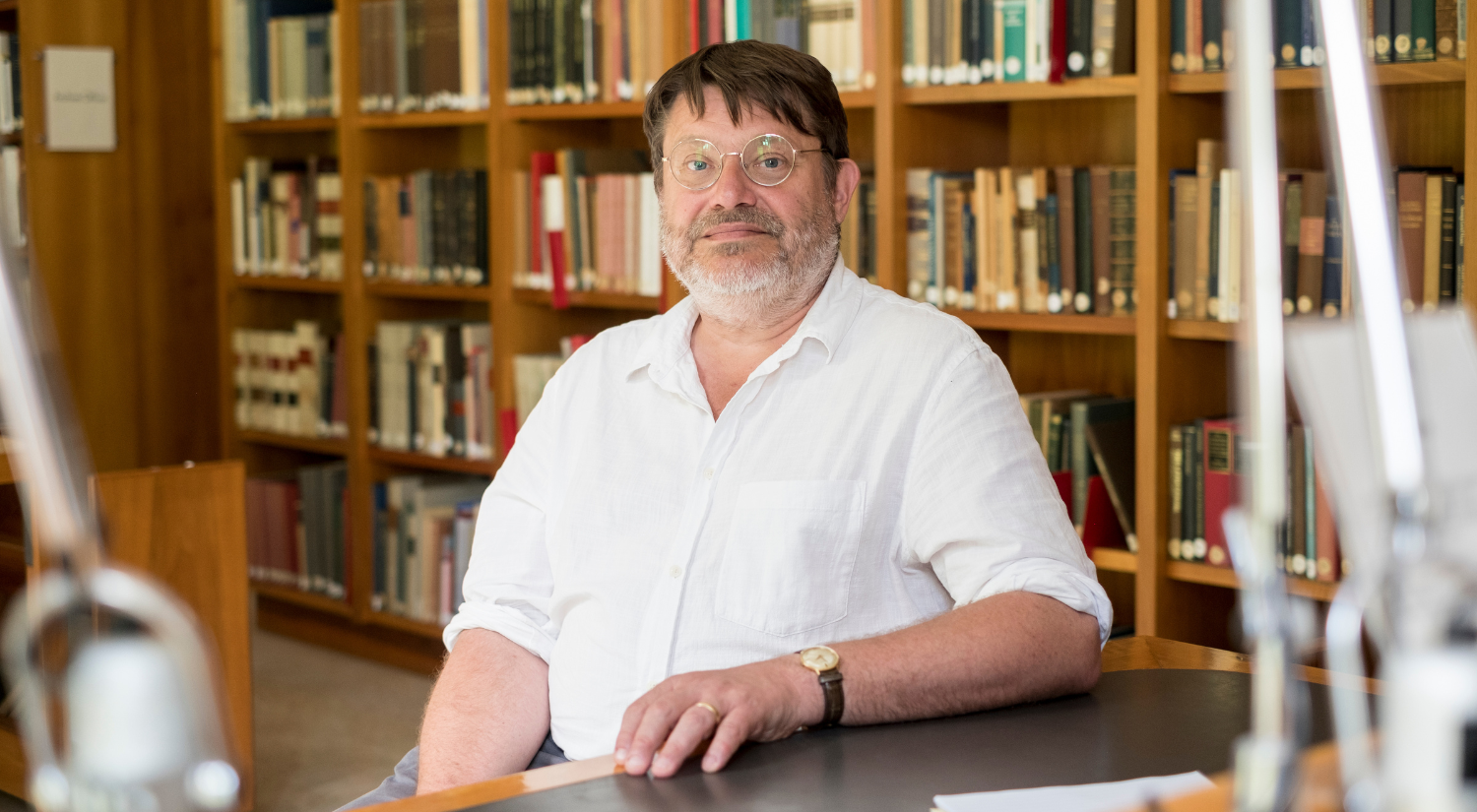
Peter Agócs, Hugh Last Fellow at the British School at Rome from April to June 2026, shares insights into the development of his research project, “Heracles in Italy: A Study of Religion, Society and Cultural Exchange in Southern and Central Italy from the Archaic Period to the Consolidation of Roman Power”.
Long, long ago, before the bustling crowds on the Roman Forum, before the huge temple on the Capitoline, and even before Romulus’ first foundation of the City, a tiny rustic settlement stood amid the tall virgin forest that covered the Palatine hill and extended downward towards the marshes along the Tiber river. It was home to a colony of Arcadian Greeks led by Euander. Hercules, the son of Zeus, who just happened to be returning from his quest to steal the cattle of Geryon, the three-headed, three-bodied warrior who lived in the far West where the inner sea meets broad Ocean, visited and rested in this place.
Cacus, the terrible fire-breathing son of Vulcan who lived in a cave on the Aventine, hatched a plot to lift part of the sacred herd. Hercules, seeing through his schemes, pursued and killed the villain. Euander’s Greeks, grateful to be freed from the tyrannical monster, befriended the hero and recognised his imminent translation from mortal man to divinity by founding the cult at the Ara Maxima, Rome’s oldest, which is still to this day celebrated according to the Greek rite (with the head uncovered) rather the Roman one. Cacus’ name is preserved in the Scalae Caci, the steep stairs linking the Cermalus (the southwest ridge of the Palatine) with the busy Cattle Market (Forum Boarium) below.
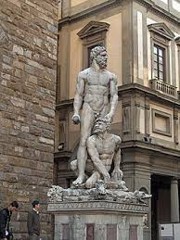
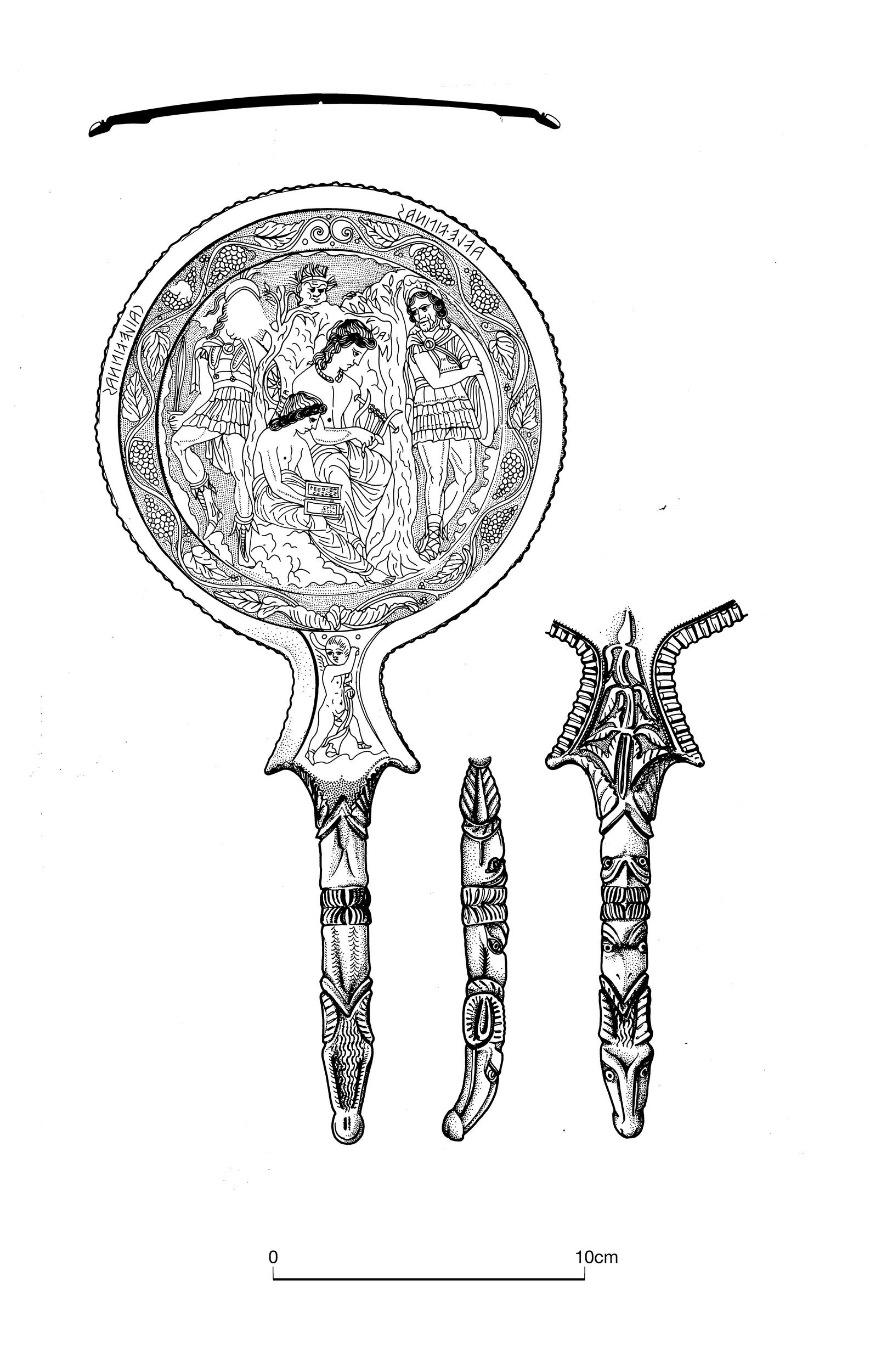
This is the myth as told by the Roman poets Vergil, Propertius and Ovid. It received its decisive literary form in the eighth book of the Aeneid, where Euander, now an old man, tells it to the Trojan hero Aeneas as he unwittingly pays a visit to the place where the City will one day rise, and indeed to the very spot where his distant descendant Augustus Caesar established his shining palace as the power-centre of a world empire. In its Vergilian form, the story is very Roman and Augustan: it seeks to find the roots of the golden present in the primordial past. But the story of Hercules and Cacus existed and was open to creative elaboration even before Vergil. The oldest written source, a fragment of the historian Gnaeus Gellius, an annalistic historian active in the second half of the second century BCE whose version of the myth was cited in the fourth-century CE antiquarian and paradoxographer Caius Iulius Solinus, takes us back to the time of the high Roman Republic. It is hard to know what to make of the fragmentary remains of these earlier sources. Do they reflect authentic preliterary traditions, or are they themselves, like Vergil’s narrative, largely autonomous creations? What is certain is that Cacus himself appears on an Etruscan mirror of the third/second century BC (as well as on several later funerary urns) as Cacu, a handsome Apollo-like seer who seems to have played an important, if different role in the Etruscans’ conception of their own early history.
It is at least certain that the Vergilian myth of Hercules and Cacus is an instance of a larger pattern of Hercules-tales that is ubiquitous from the Archaic period across the pre-Roman Western Mediterranean, and especially in Italy and Sicily. Visiting a place and responding usually to the theft of his cattle, Hercules (Herakles in Greek-speaking parts of the peninsula, and Hercle in Etruria from at least the 6th century onward) kills a Geryon-like monster or villain and is rewarded with the foundation of a cult.
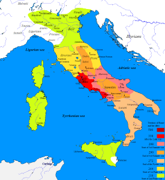
These myths, as a crucial element of social and political discourse in ancient societies, were constantly reinvented according to the needs of the day. But in Italy, Gaul and Iberia alike, Hercules bridges cultures and mythologies. For the Greeks who settled there, his mythical journey functioned as a charter-myth, explaining how they came to be there, while the Italic (and Italiot) Herakles is partly based on Greek traditional models, but has many unique characteristics of his own. A protector of herds (transhumant stockraising dominated the economy of southern and central Italy down to the Roman conquest), he is also associated with hot springs, healing, oracles and with natural sources of water and salt, as well (like in Greece) as with warfare and warrior masculinity. In early Latium as well as Umbria and the Sabellic regions to the south, Hercules was an immensely popular deity in his own right, as is confirmed by the countless small bronzes found across the zone that lay between the cities of Magna Graecia to the south, and expanding Rome to the northwest. Nor should one ignore the strong Phoenician strand in this Italic Hercules.
Italic Hercules is not a Greek cultural import, but rather a creative and constantly – evolving personality with myriad local forms rooted in many cultural traditions, none of which are detached from the others. Much of this story is accessible only through archaeology and iconography, which frequently allow us to go where the texts (for whatever reason) don’t take us.
My BSR project aims to tell the story of this complex divine and heroic figure not so much in its origins as in its development over the period from the earliest Greek settlements in Iron Age Italy down to the Roman conquest, in a series of studies of local contexts and locales, one of which is certainly Hercules’ cult at the Forum Boarium in Rome, and especially in his capacity as a bridge or transmitter of knowledge and cultural forms between the peoples of the peninsula. The main focus of is on iconography and material culture, making use of the literary record where it raises questions or helps to provide some context to the archaeological finds. I am grateful to the BSR for the time and support it gave me in beginning this fascinating project.