


Frances Myatt, Rome Awardee at the British School at Rome from April to June 2026, shares insights into the development of her research project, “Lady in a Landscape: Imagining Livia in Elizabeth Bowen’s ‘A Time in Rome’”
If you’ve heard of Livia, wife of Augustus and first empress of Rome, you likely know her from Robert Graves’ I, Claudius (1934). In this classic historical novel, Livia is the wicked stepmother to end all wicked stepmothers. Graves here draws on the Roman historian Tacitus, one of the first to paint Livia as a villain who would stop at nothing to ensure her son became emperor. But is there another story that could be told about Livia?
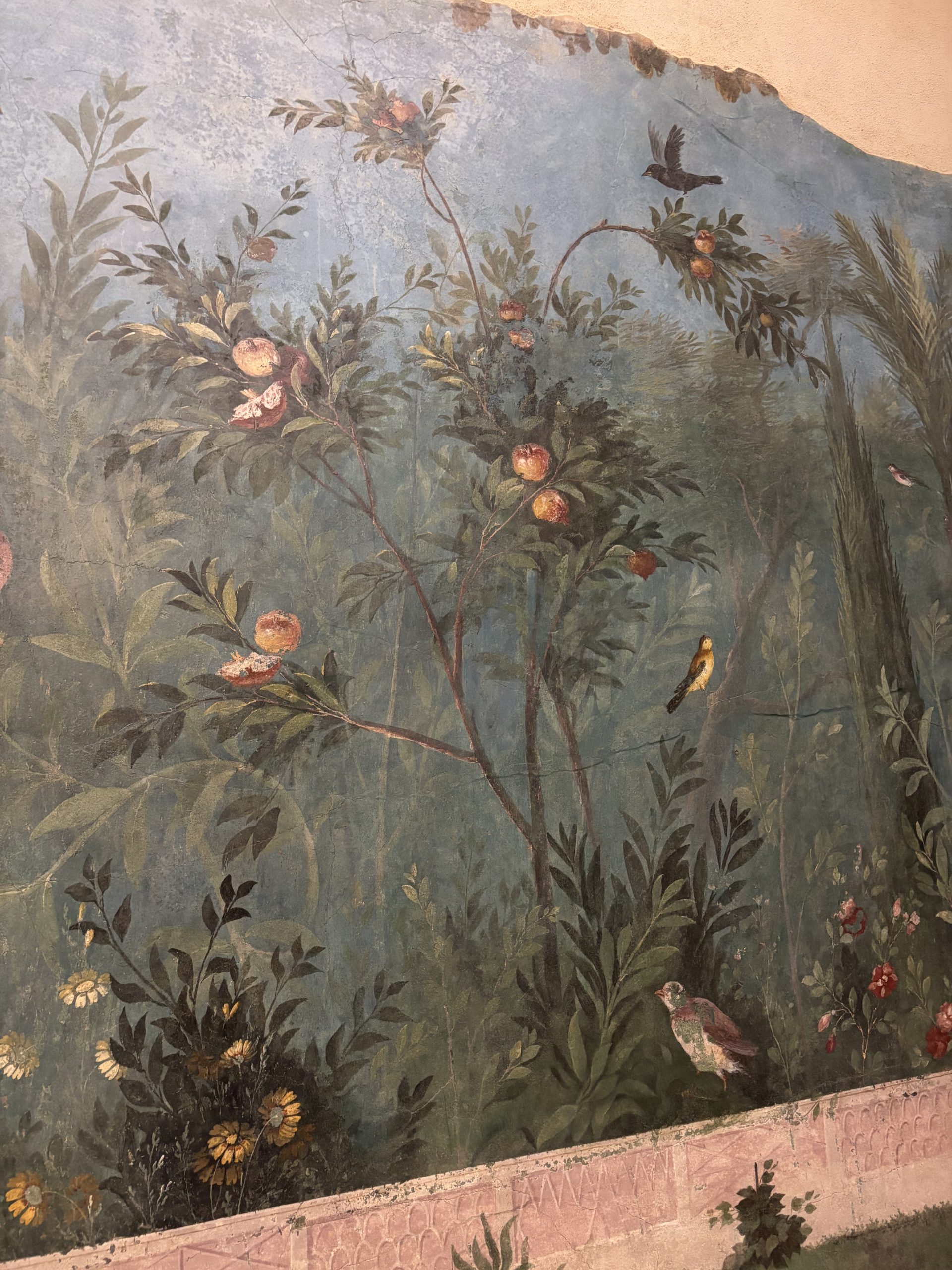
In 1959, the Anglo-Irish novelist Elizabeth Bowen came to Rome as a writer-in-residence at the American Academy. Her book about her year here – called, simply, A Time in Rome – was published in 1960, but largely forgotten until its republication by Vintage in 2010. Yet this exquisite account of her travels around the city is remarkable not only for the beauty of its prose, or for its witty and perceptive observations on Roman life, but also for offering a very different take on the Empress Livia. It is this Livia that I have been trying to track down during my own ‘time in Rome’, as I retrace Bowen’s footsteps around the city.
Bowen describes going with a friend to Livia’s villa on the Via Flaminia, on the outskirts of Rome – ‘two women paying a morning call on a third’. When I make a similar visit with my mother, the third woman is, alas, not at home – her villa is shut for restoration. We can hear among the pines, though, the rumble of traffic that Bowen heard, as she mused on how living so close to the Via Flaminia must ‘have been like living over a main railway-line’. Bowen’s Rome is a city of the senses, of sound, smell, colour and light. Following her to the Museo Nazionale, where the famous ‘garden of Livia’ fresco from her villa is now housed, I notice with Bowen ‘the veining of leaves, corollas’ uneven or dinted petals, the moulded, tipped and directed feathers composing the characteristic plumage of each bird’. The brushwork seems effortless – although, as I find when I join a fresco workshop back at the BSR, it is more difficult than it looks!
Bowen imagines Livia siting in her villa, head in her hands, caught between the demands of her son Tiberius and her husband Augustus, dreaming of the ‘Elsewhere’ of an enchanted garden. Of course, this empathetic depiction of Livia is pure imagination – the concoction of a novelist. But why should it not be? Graves was likewise a novelist, and, while he boasted of his close reliance on writers like Tacitus, we must remember that ancient historians were in many ways closer to historical novelists than what we would consider rigorous historical scholarship – particularly when it comes to their portrayals of powerful women.
As part of her imaginative interpretation, Bowen links Livia to another powerful woman – the empress Joséphine, wife of Napoleon. Looking round Rome’s Napoleonic museum, I can see the resemblance. In my PhD, I explored how Augustus used images of his family in public artwork, and women and children are equally prominent in the Napoleonic museum. Both men strove to refashion republics into new, hereditary dynasties – and, as Bowen rightly observes, both struggled, for neither Livia nor Joséphine had children by their imperial husbands.
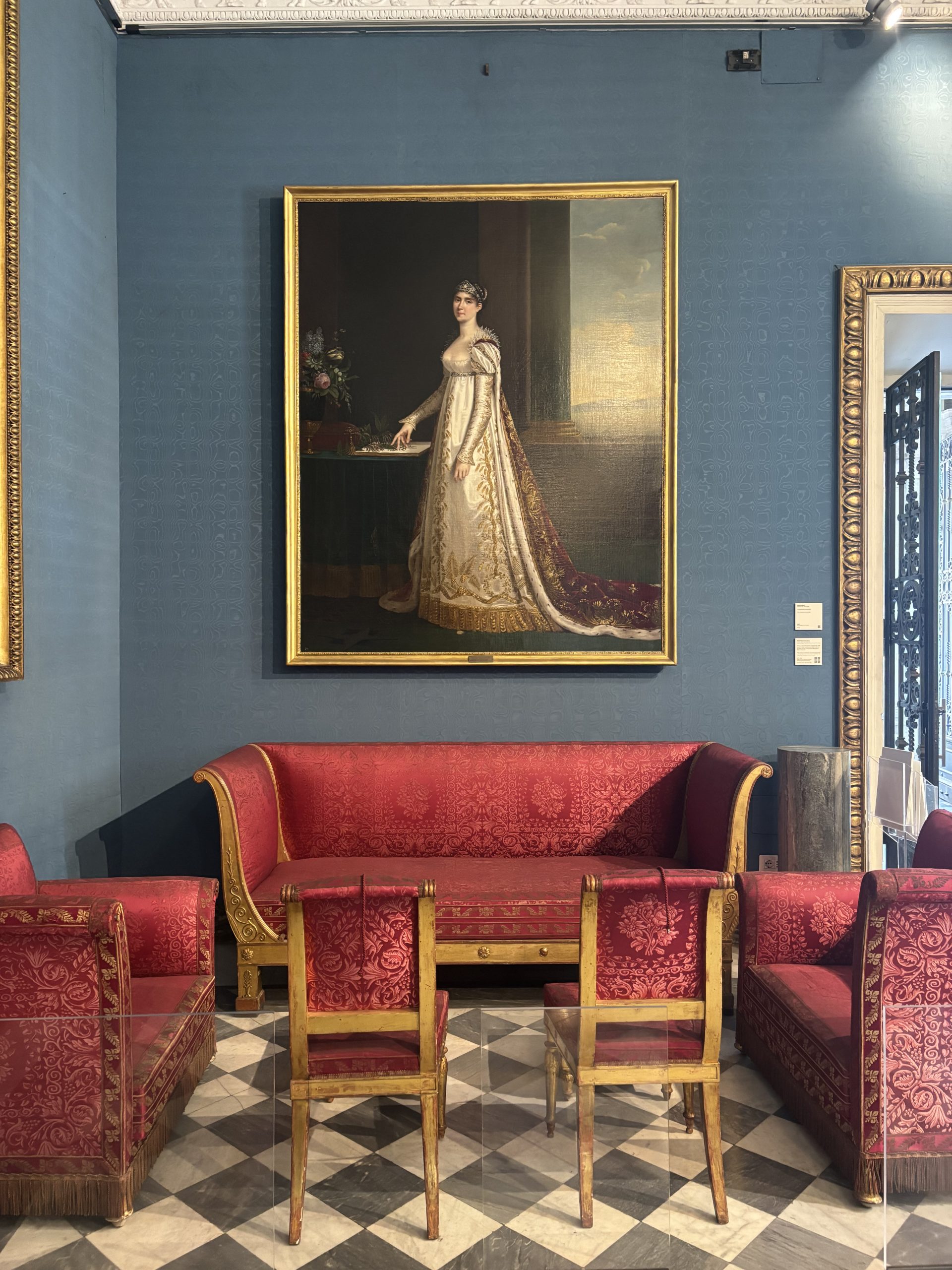
The mix of fact and fiction in A Time in Rome – creative non-fiction, we would call it now – reflects how Rome itself is a blend of story and history, that almost exists out of time, as different eras are enmeshed within the fabric of the city. A Time in Rome thus follows no simple chronology, but is a maze of fragments and impressions, as Bowen roams through the streets of many Romes, past and present. Yet, within this chaotic symphony, Livia is an unmistakable keynote. The end of the third chapter, titled ‘The Smile’, imagines Livia taking her place in the world of 20th-century fashion, as Bowen wanders along the Via Condotti, bewitched by the jewels shimmering in shop windows. She finally concludes: ‘Ensnare Rome must: it has an aspect – this – which I find myself calling “the smile of Livia”.’