

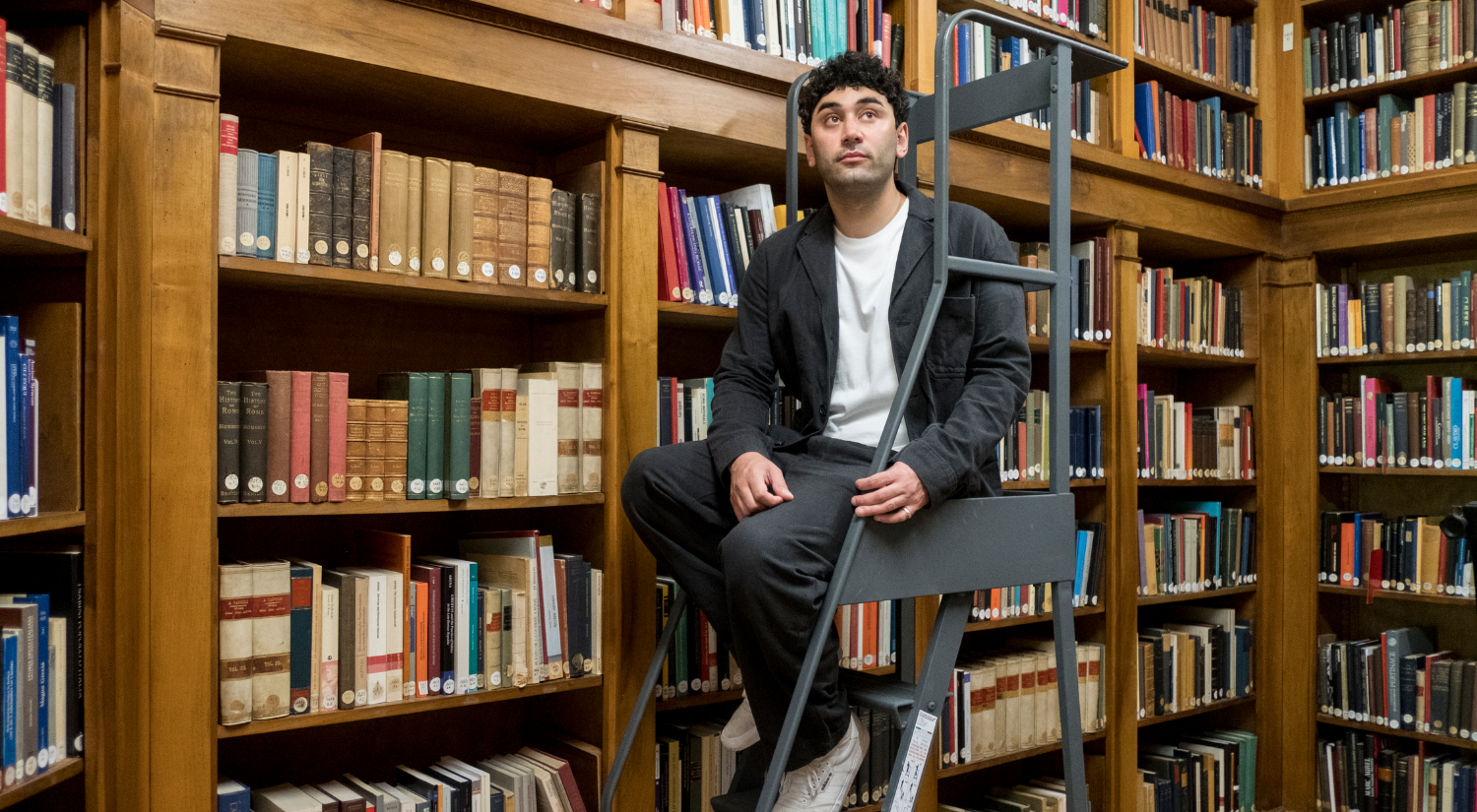
In this blog, Mark Farid, Rome Research Fellow from April to June 2026, reflects on his residency experience and the research he presented at the Summer Open Studios in June 2026.
At a Crossroads
What does the act of crossing the road reveal about how we are governed? This is the question behind my research at the British School at Rome.
At a Crossroads examines pedestrian crossings as everyday sites where the state, governance, and the body intersect. The project argues that crossings are not neutral traffic infrastructure but governance environments: sites where political assumptions about authority, responsibility, and collective conduct become embedded in movement and reproduced through habitual behaviour. Through filmed and theoretical research, it investigates how authority is enacted through movement.
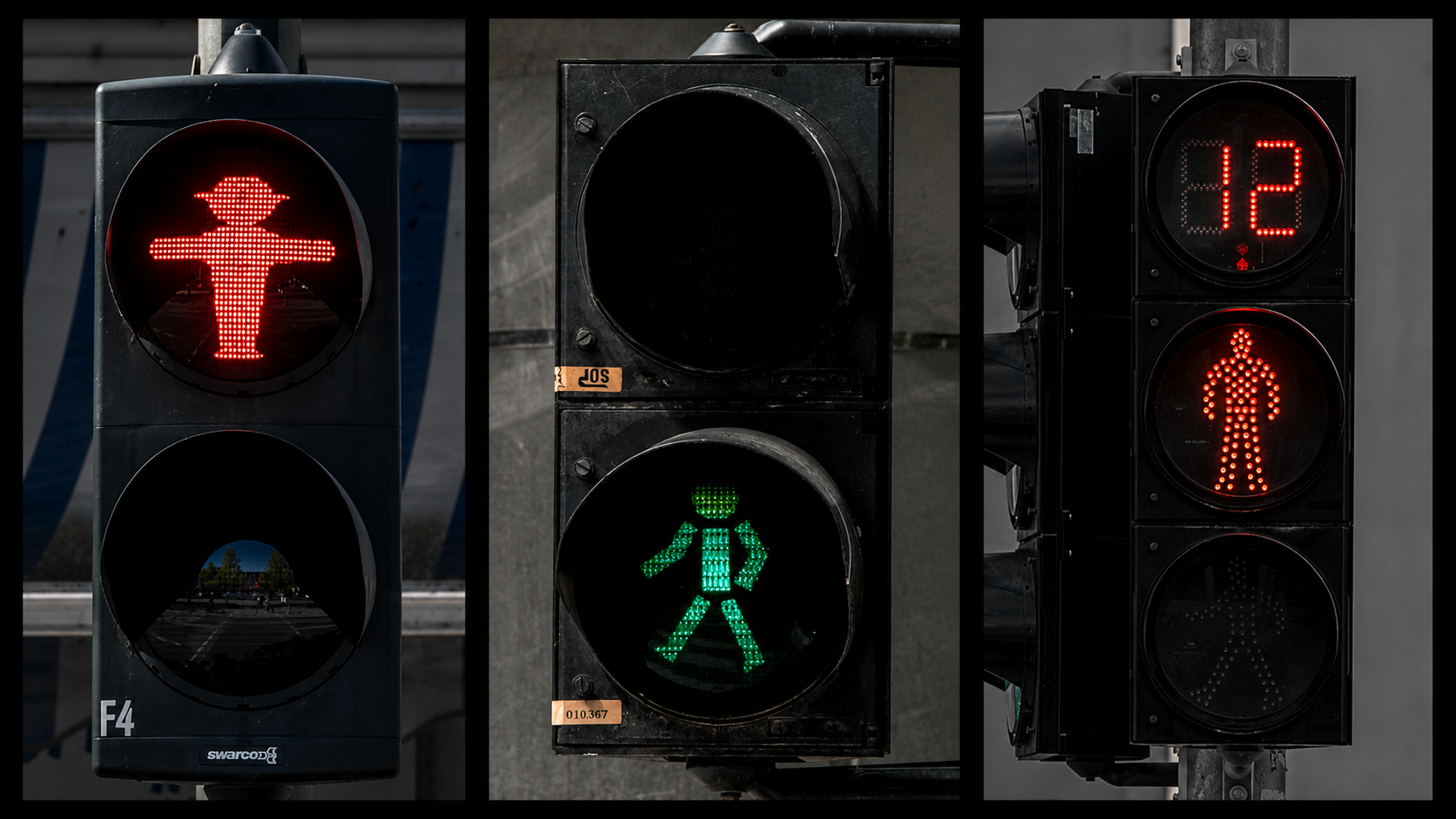
Over the past two months I have worked with filmmakers to film pedestrian crossings in eight cities across seven countries: Poland (Warsaw), Germany (Berlin), Italy (Rome), Turkey (Istanbul and Ankara), China (Chengdu), Thailand (Phuket) and Ghana (Accra). Rome is one of the eight cities, so the place I am living in is also a site. Here I wait for the green, step hesitantly off the pavement, catch the driver’s eye, and cross. In London I would have judged the gap and gone. I did not decide to start crossing this way. That is the disappearance the project is about.
What filming shows is very clear. In Berlin a woman arrived as the signal was changing against her and waited two minutes and fifty-four seconds for it to release her, looking at her watch six times. One person crossed against the red in front of her; she watched them go, looked at her watch again, and waited a further one minute and seven seconds. Two cars passed in this time. In Warsaw crowds gather on an empty side street, no car in sight, and do not cross; the wait serves no purpose, and they wait. This is close to what Bourdieu called doxa: an arbitrary arrangement misrecognised as the natural order of things, no longer open to question.
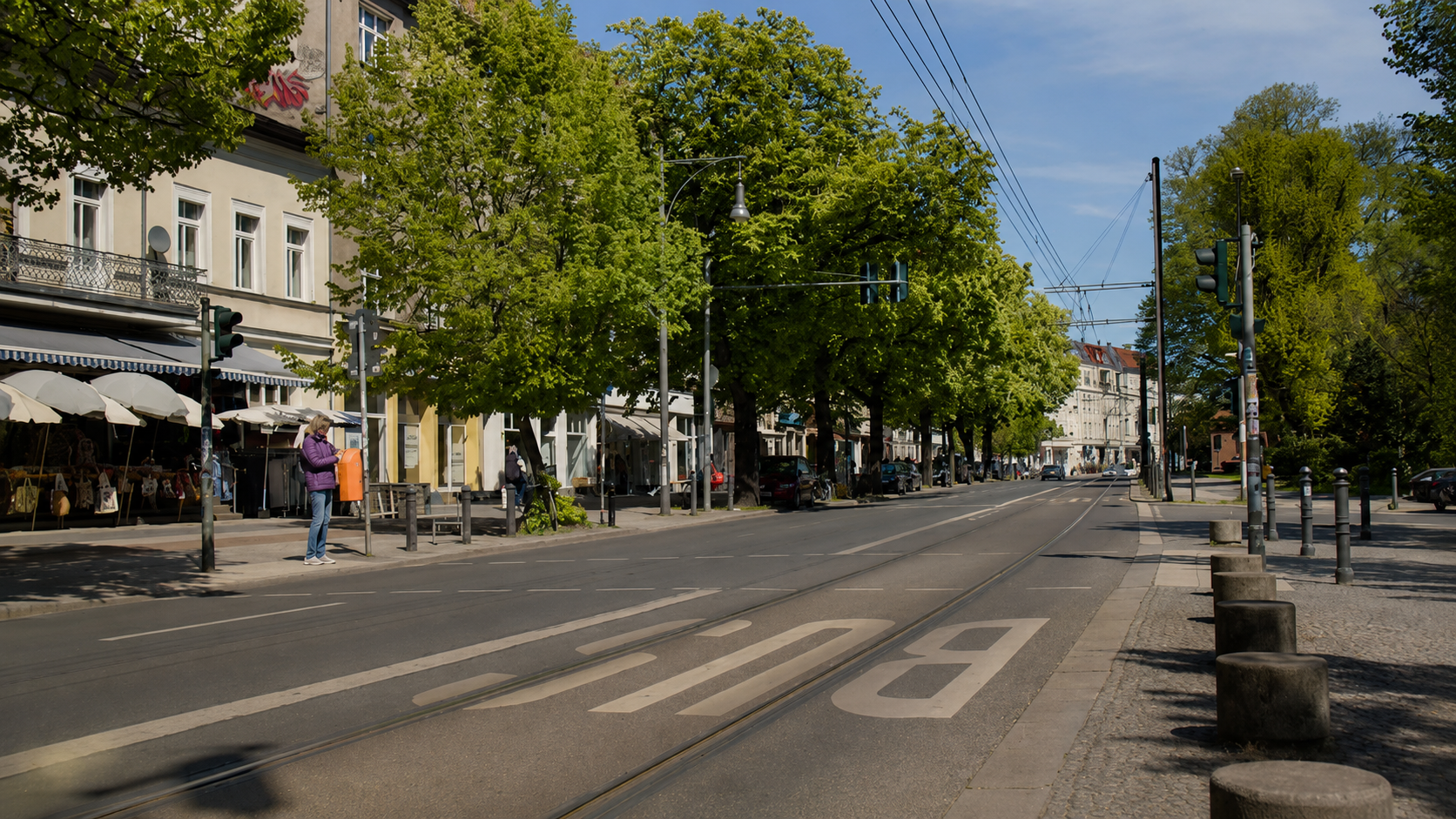
Waiting at a crossing is never simply functional. It reflects assumptions about who gives way, who absorbs delay, who carries risk, and whose movement takes precedence. As Peter Norton has shown, pedestrian behaviour had to be transformed before the street could stabilise around vehicles. “Jaywalking” was promoted by automobile interests in the early twentieth century to recast the pedestrian, not the vehicle, as the problem, and responsibility for safety was shifted onto pedestrians themselves. Crossing against signals became associated not only with danger but with social irresponsibility. Once made, that shift hardened into law, custom, and the design of the street itself: instruction embedded in space rather than stated through rules.
In Chengdu people seem to understand the rules exactly: which can be broken, which cannot. The signals count down to the second, and people step early. Beside an overpass built to send them up and over, pedestrians cross between cars and mopeds that slow to let them through, and the planter is worn bare where they pass instead. Not the system breaking down, but the system known so well that its gaps are part of how it holds.
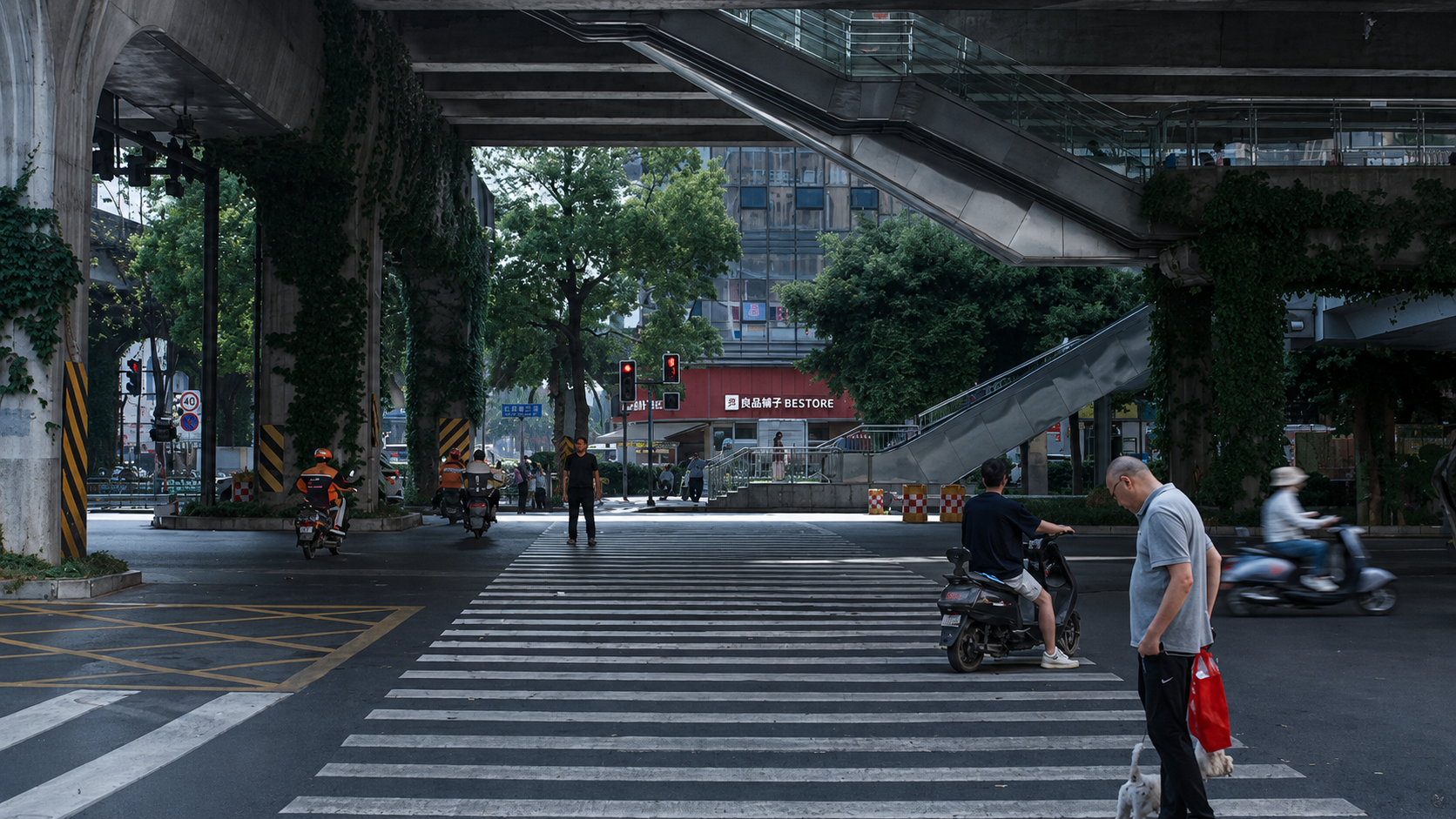
Yet no system fully determines behaviour. People still cross against the signal, follow strangers into traffic, and judge situations for themselves. But that judgement always operates inside limits set by someone else.
This is how governance becomes ordinary, habitual, and internalised, and why it can feel like agency: authority absorbed into habit, reproduced through repetition, until obedience no longer appears as obedience at all.
Yet the deviation that remains is not the system failing. What persists is genuine, and it is the margin rather than the rule. The system does not need to determine every footstep, because it has already taken the ground the footstep moves across. The road, the overpass, the signal, the settlement of risk and responsibility that decided who waits and who proceeds, all of this is in place before the pedestrian arrives, and none of it is theirs to rewrite. What the pedestrian still does is their own: the timing, the read of the traffic, the choice to step or hold. That is what the crossing makes visible: not obedience, and not freedom, but the quiet completeness with which governance comes to occupy the ground of ordinary movement, leaving the footstep free precisely because the ground is already held.
Filming by Vincent Prochoroff, Mishka Kornai, Milla Lewis, Zeliha Karakoca, Michael Barth, Mike Mogler, and Andy Madjitey.