

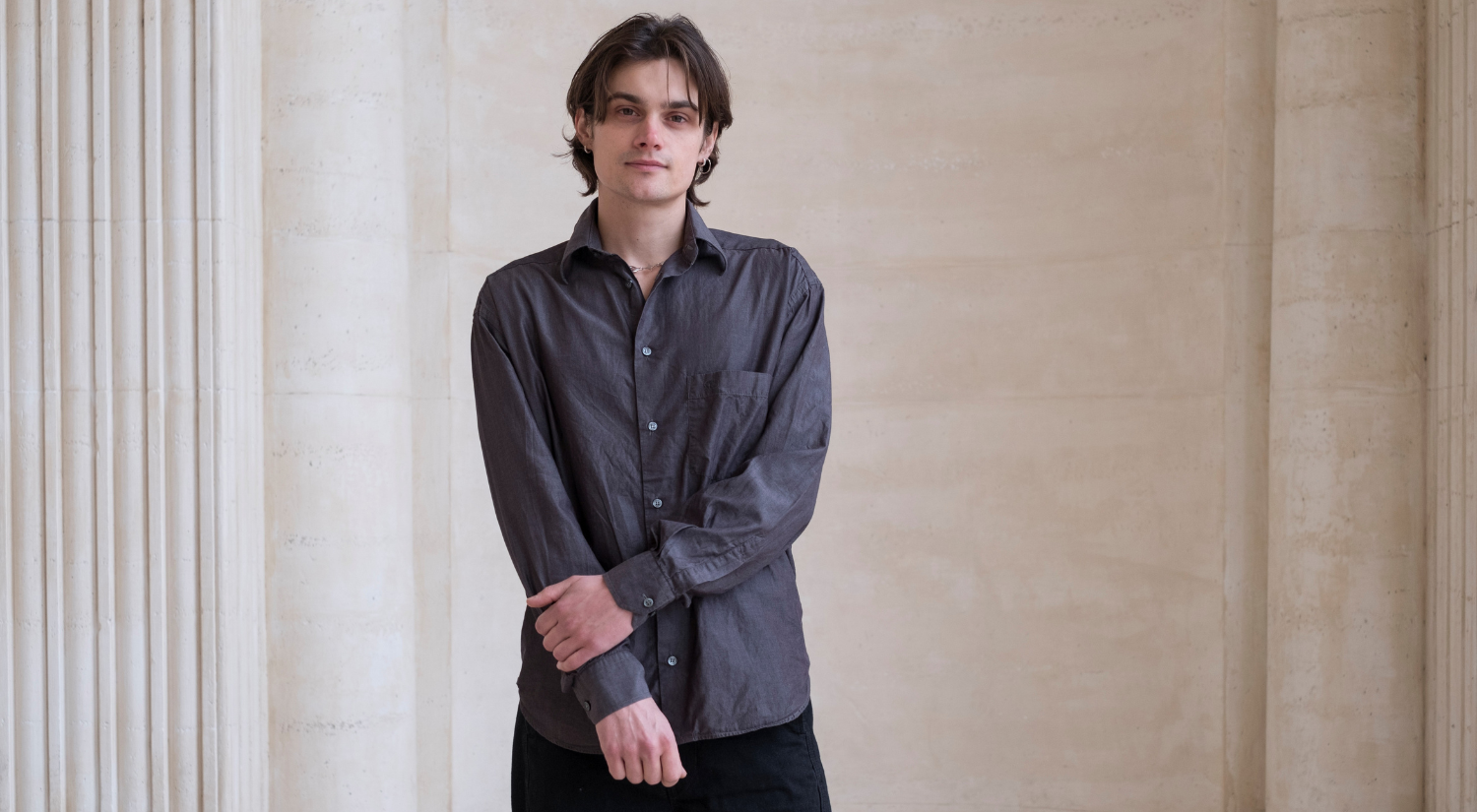
In this blog, Danny Leyland, Abbey Scholar at the BSR from September 2025 to June 2026, shares reflections on his residency experience and the research he presented during the Summer Open Studios with his project “Conjugations of Displayed Images”.
I encounter many depictions of little houses, made in stone, paint, or mosaic, while visiting Rome’s basilicas and museums, I notice that the houses are often cradled in the arms of someone, perhaps the figure of a saint, or an angel.
The 9th century mosaics in the apse of Santa Prassede provide an example. A figure who in priestly vestments clutches a naively realised miniature of a building. I read that the figure is Pope Paschal I, and the small building in his arms may represent the patronage of the construction of this church, or it may represent the Church as a whole. Elsewhere, on the façade of San Savalatore in Lauro, a basilica in Ponte, a 19th century bas relief depicts a house that is being carried through the air by angels, while the Madonna sits astride its roof. The scene refers to the whacky story that tells of how the holy house in Nazareth, where the Madonna was born and later received the annunciation, was lifted from the ground by a bunch of angels who then removed it to the small town of Loreto in Italy. The relief is designed with a beautiful simplicity which, to my eyes at least, seems proto-modernist. In its smooth rectangular geometry, completed with two windows and a roof, it is as boxy and uncomplicated as a cartoon house. A Playmbobil house. It reminds me of a pre-fab bungalow, rolling down the motorway on the back of a trailer, fresh out of a factory in the Netherlands or Germany.
Last summer in Sweden, I found two postcards in a ‘loppis’ – a pop-up second-hand stall. Each postcard shows a black and white photograph of the kind of house that is typical of the countryside in Hålsingland, a northern region of the country.
My grandmother owns a summer cottage in Hålsingland, near to the town where she was born. To an onlooker, spending time there might hardly seem like a holiday at all. She empties gutters, paints boards, wipes windows, fights back the encroaching forest from the deck. But, while she is certainly working, she doesn’t seem to mind it: ‘it is not like real work,’ she says, ‘it is a kind of pretend work, like a child playing in a toy house’.
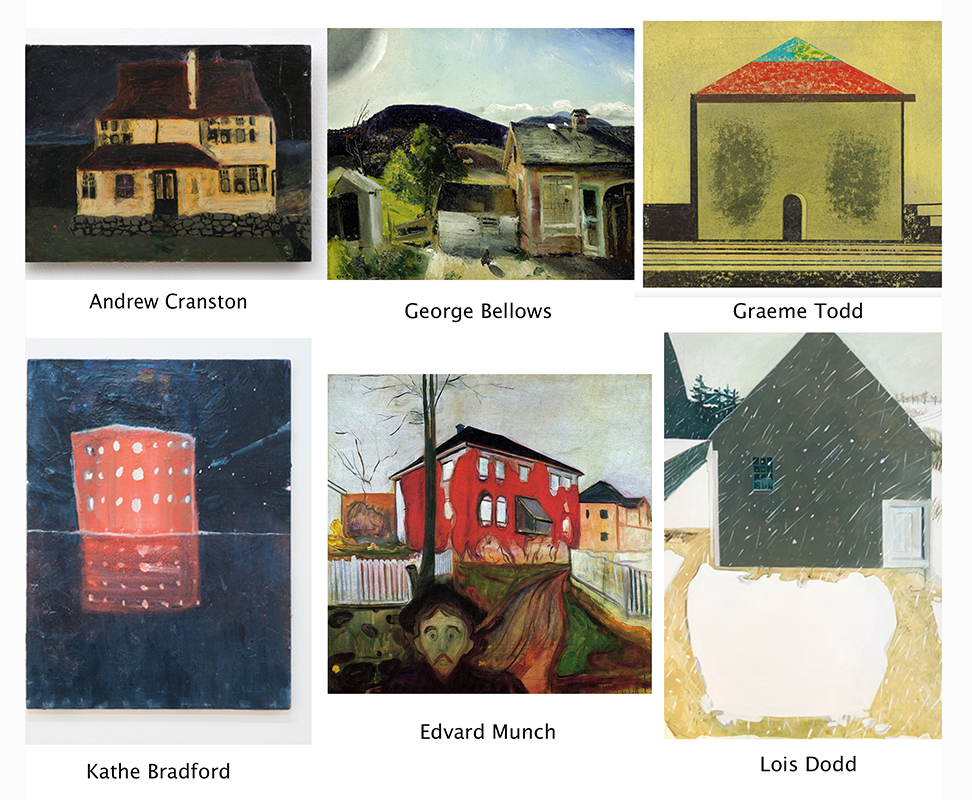
I have been thinking about cabins. The cabins I am thinking about offer a place to remove oneself to, where the motions of living are not quite the same, more like a performed version of it, and where the more immediate stresses and complexities of contemporary life no longer seem quite so relevant.
In Art Monthly I read an article written by Maria Fusco about artist residencies. Residencies, Fusco writes, teach us ‘not to renounce the everyday, but to understand it’. A residency occupies the same imaginary space as the cabin, offering a place of remove, a necessarily sheltered and privileged position of perspective, from which we can strive for a deeper level of understanding. Here we can find the kernel of the “cabin album”, albums of seclusion like Springsteen’s Nebraska (1982), Bon Iver’s For Emma Forever Ago (2008), and Adrianne Lenker’s Songs (2020), albums whose foundational myths involve the artist stepping outside of the usual present in some way, in order to be outside of it, looking in. But we can never truly be outside of the world. The walls of the cabin may be thick, but they are still draughty. A ‘residency is not a retreat’, Fusco insists.
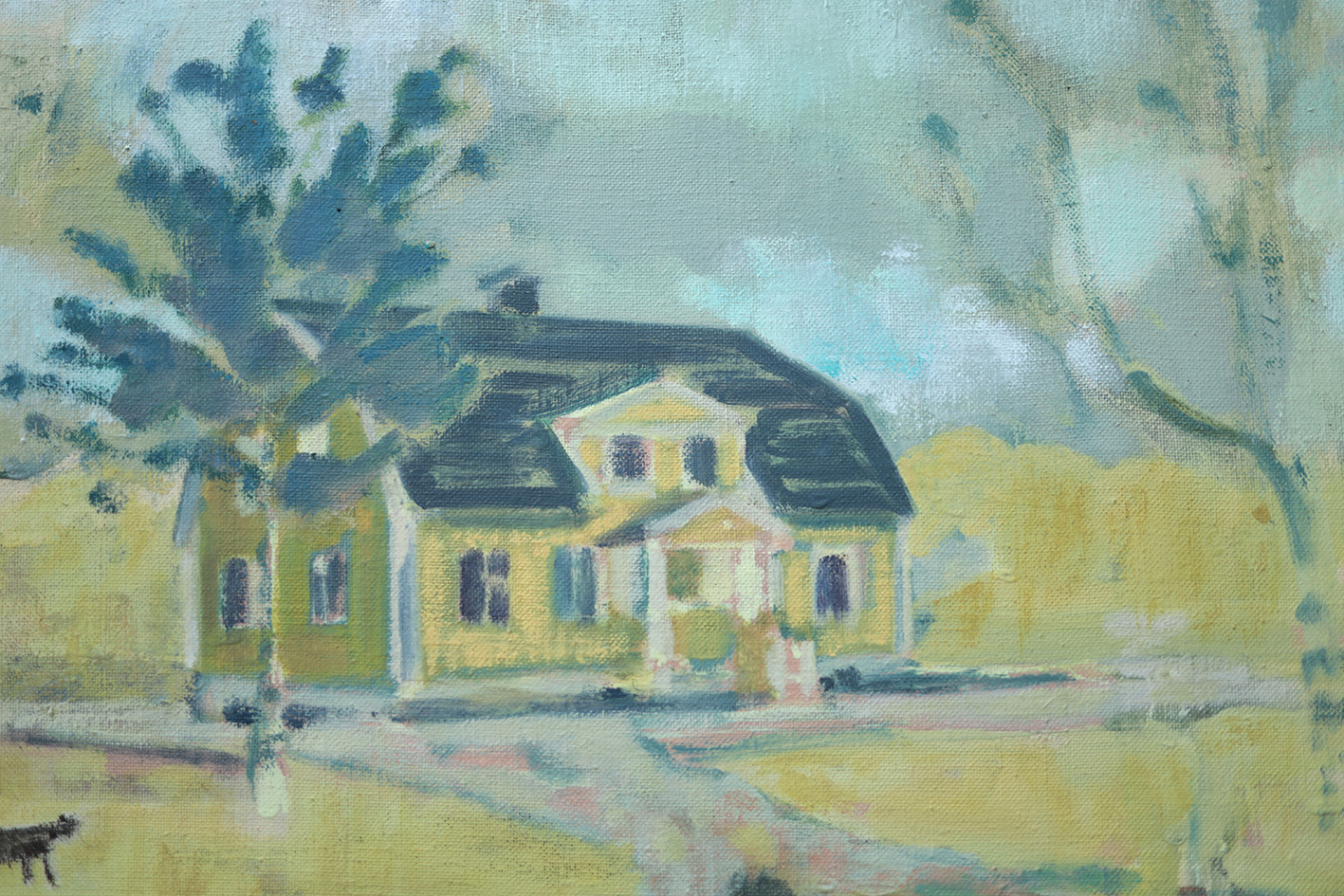
Of the two postcards, one of the houses might pass for a cabin, but the other one is too big; it’s more a farm house.
On a British School at Rome trip to the necropolis and the museum at Tarquinia, I see the hut urns that were made by the Etruscans to contain ashes of the deceased. Usually ceramic, they resemble the huts and shelters of the iron age period, and are often characterised by the Swan-neck design on top of the roof that may refer to the similarly-designed prow of a ship; the poetic-mythic reading refers to the ship that sails the spirit to the land of the dead.
Usually, it is said to be a “good death” if we die at home. Looking at these little houses, containing the ashes of the dead, I feel suddenly very moved.
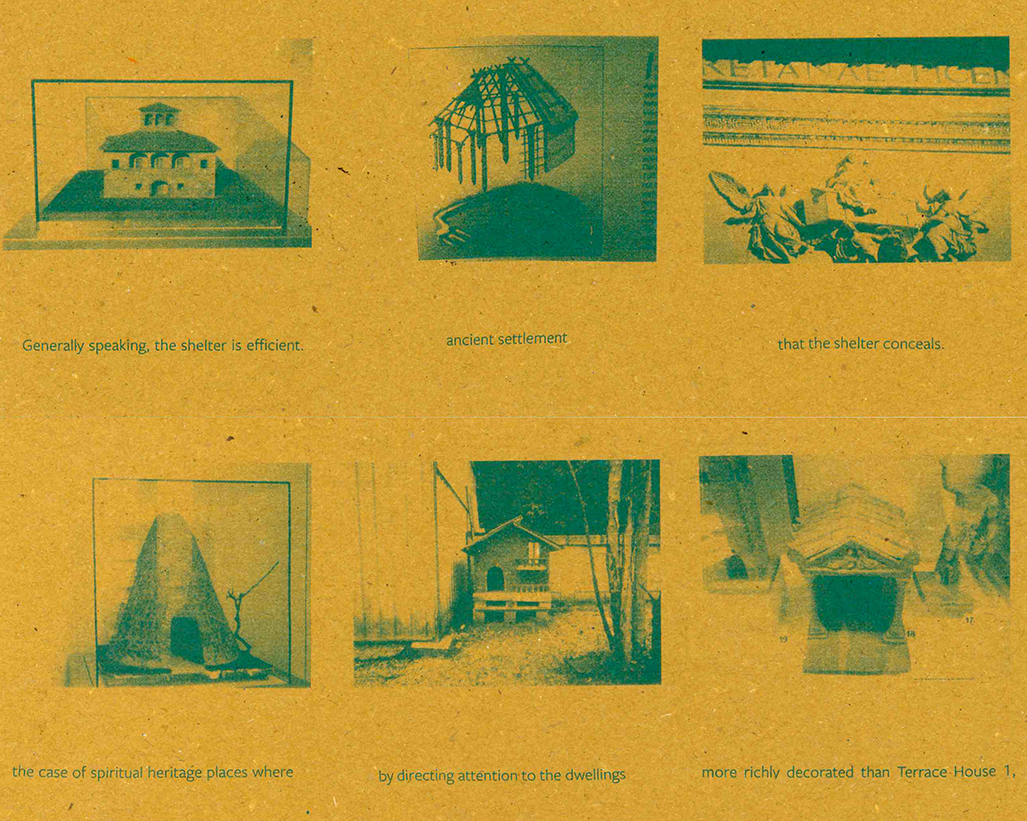
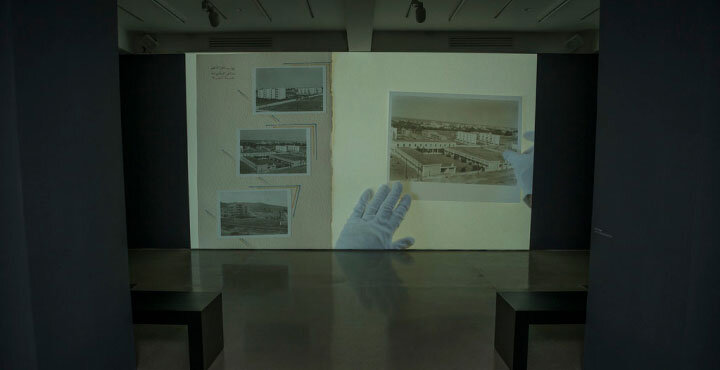
In Rome, I continue to collect images of houses, cabins, shelters, huts, kiosks, etc., and I find myself particularly fascinated by models of houses, frequently spotted in Rome’s museums, from the Museo delle Civiltà, to the Museo Palatino. Using some of these images, I make a zine for the second open studio, in March, accompanied by found-text cut out of a glossy research publication on the subject of shelters designed for archaeological conservation. The shelters described by the publication are intended to protect mosaics from the sun, stone reliefs from the wind and rain, and frescoes from the falling damps. Naturally, this raises questions about what kind of heritage we choose to protect.
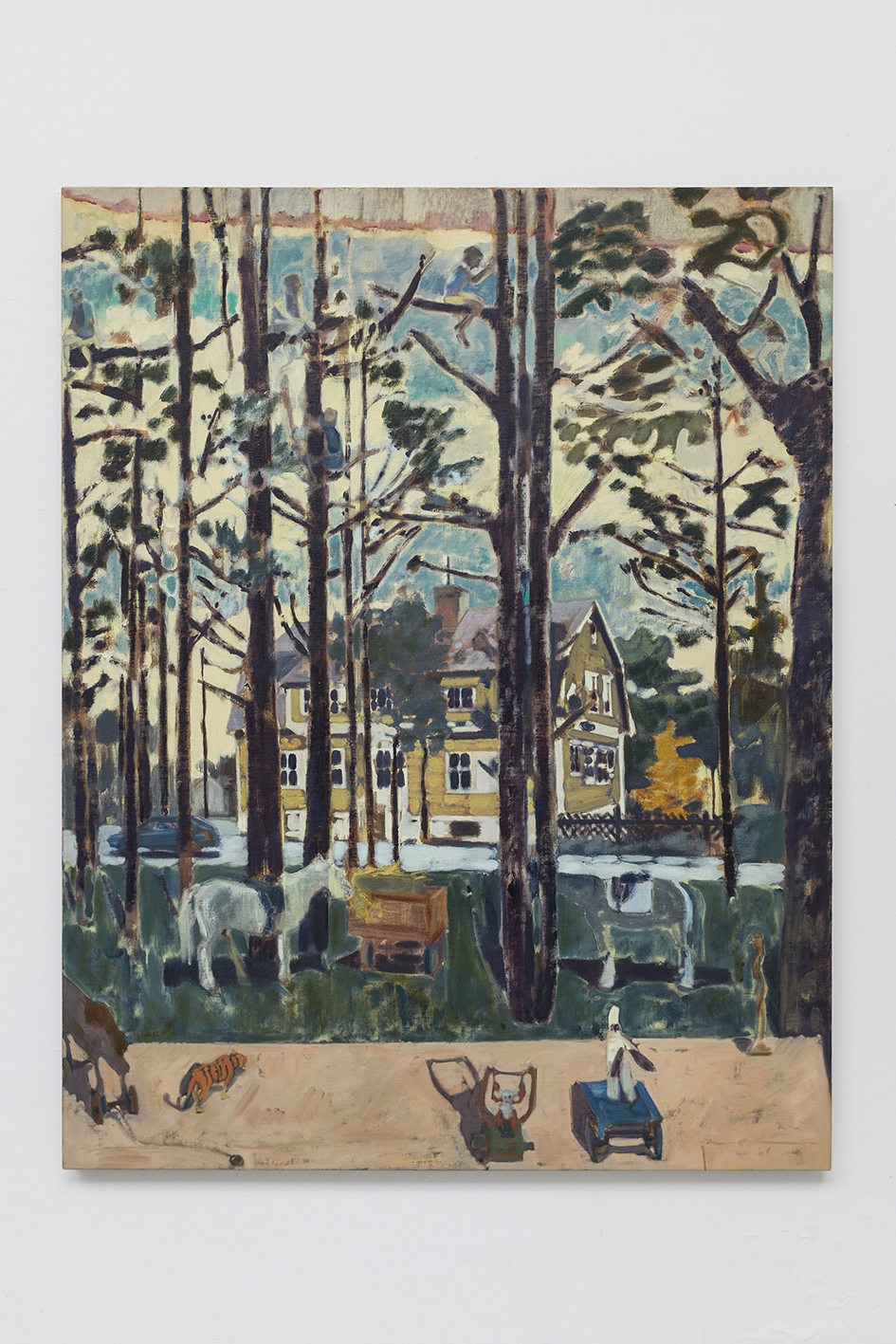
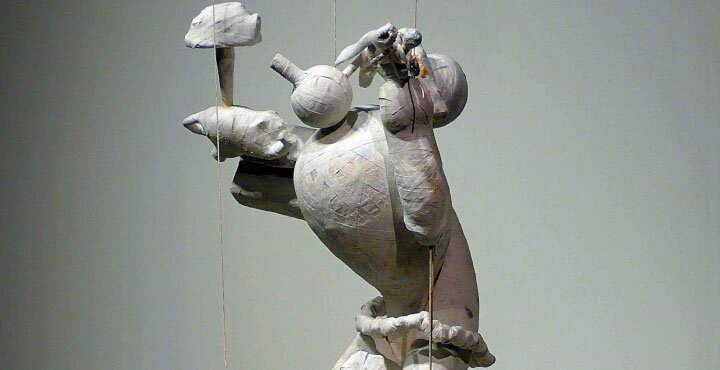
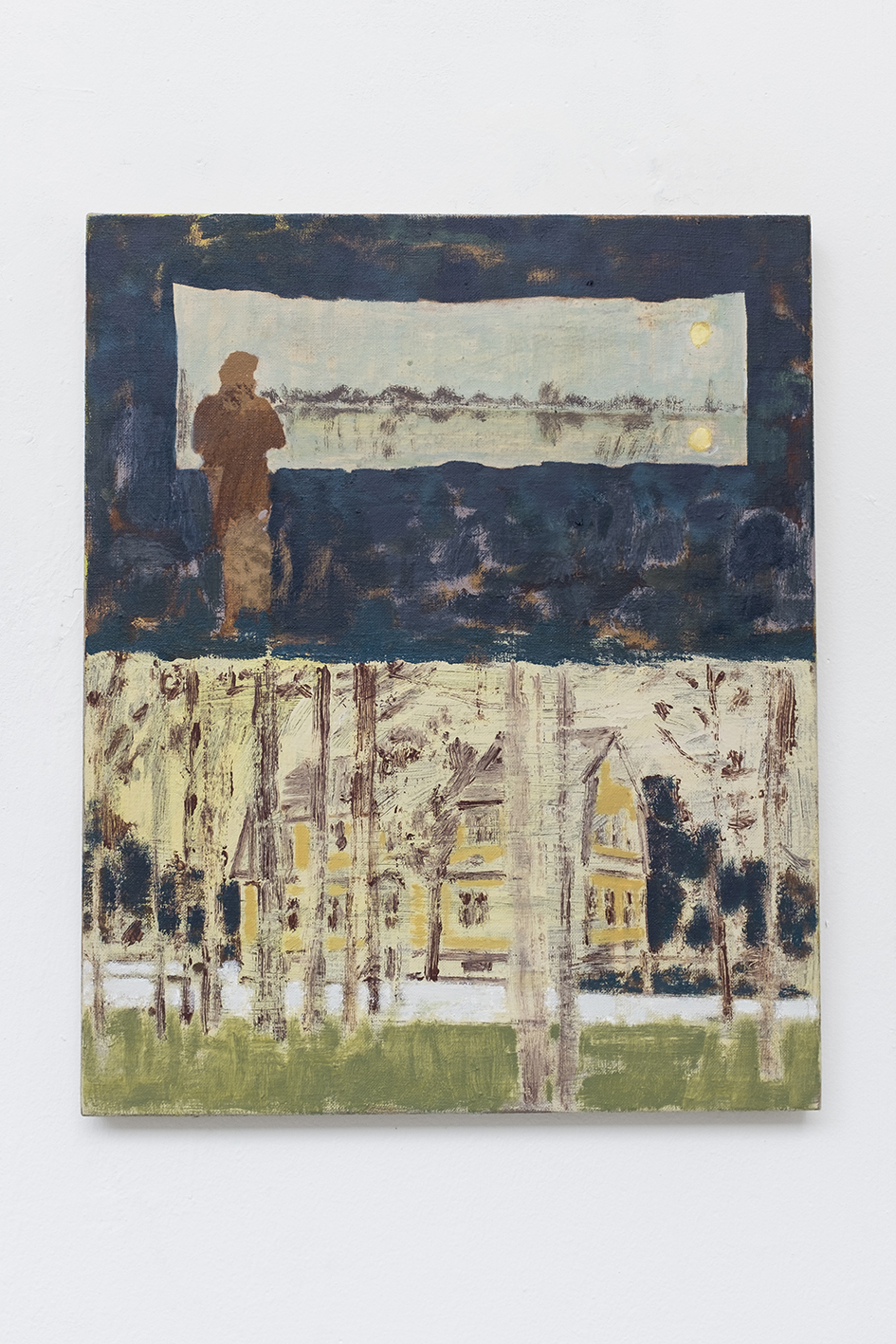
I paint pictures of houses, and I collect pictures of houses. I am drawn to the simplest of designs.
I think of how a child might draw a house, as a kind of face, with the two windows for the eyes, and the door for the mouth, a path snaking up to it.
On an LRB podcast about the so-called ceasefire in Gaza, I listen to an account of a Palestinian man who shelters with his young daughter in the shell of an apartment block, literally above the unexploded missile that wrecked the building, trying to protect his young daughter from the swarming mosquitoes, toxic waste, contaminated water, famine, and the imminent threat to life from drone and missile attack. In Gaza, 92 percent of all homes have been damaged or destroyed by Israeli forces. Well over 300,000 homes. In Studio 3, behind the beautiful courtyard in the British School at Rome, I listen to such things – you cannot ever really retreat from the world – and alongside all the undeniable delights of being here, being here in Rome, being served a morning cappuccino, being surrounded by so many new and fascinating people and experiences, I feel a kind of frozen, impotent horror, for, truly, it is incredible, this ability of ours to simultaneously process multiple, contradictory thoughts and emotions, and, as I do so, fumbling forwards, I paint pictures of houses.