
Staff – Residence & Estate

Staff – Residence & Estate

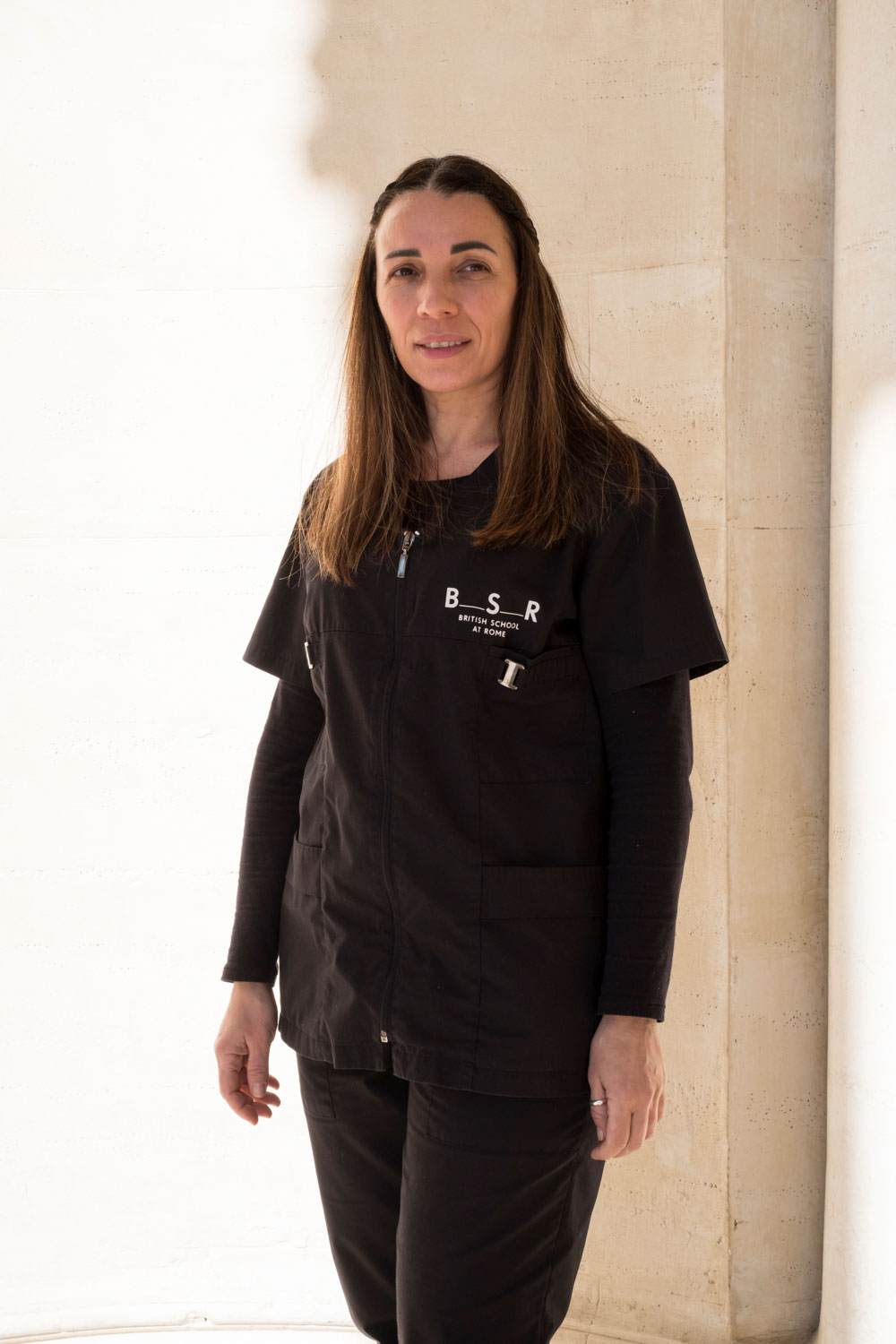
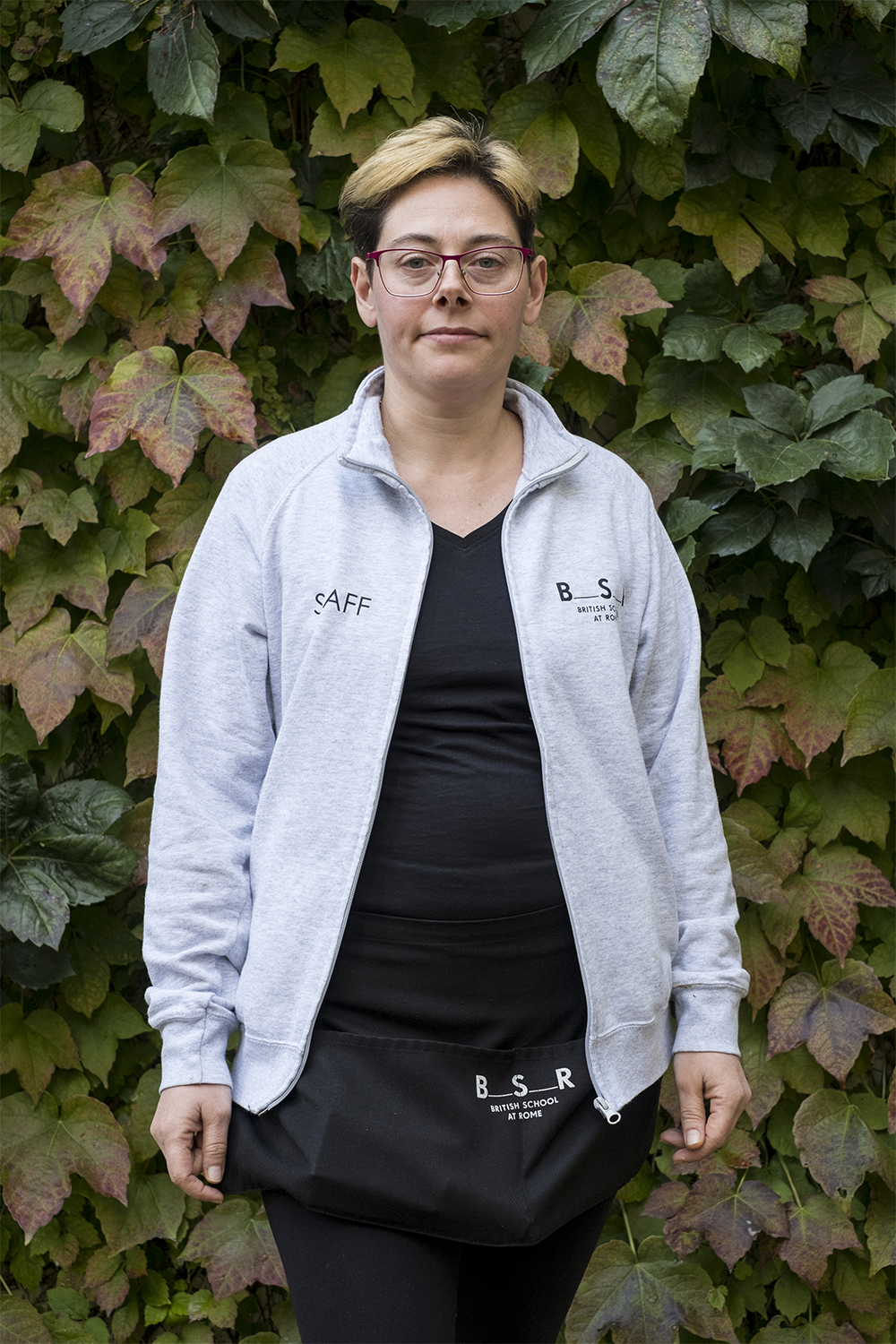
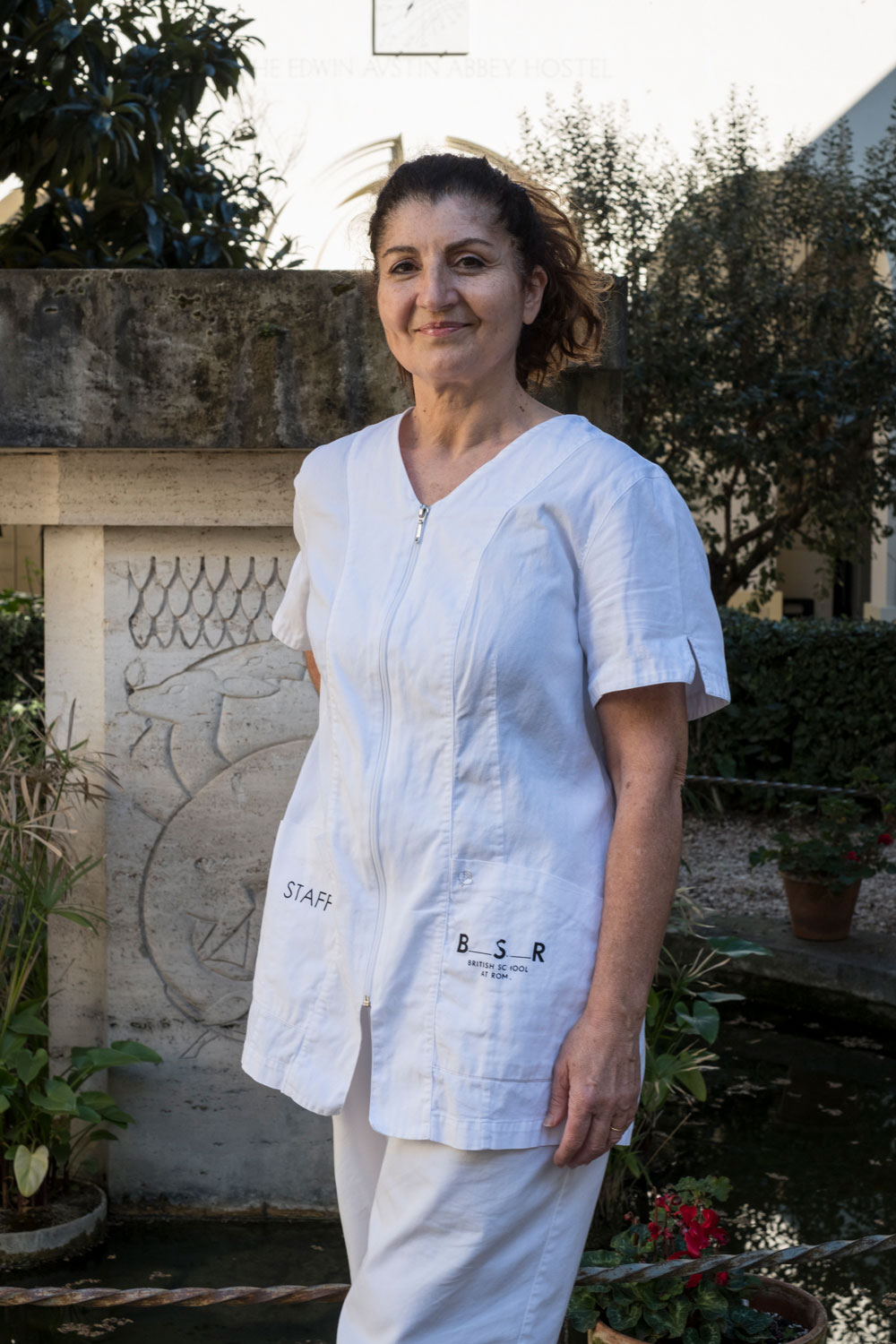
Donatella Astolfi
Cleaning Staff
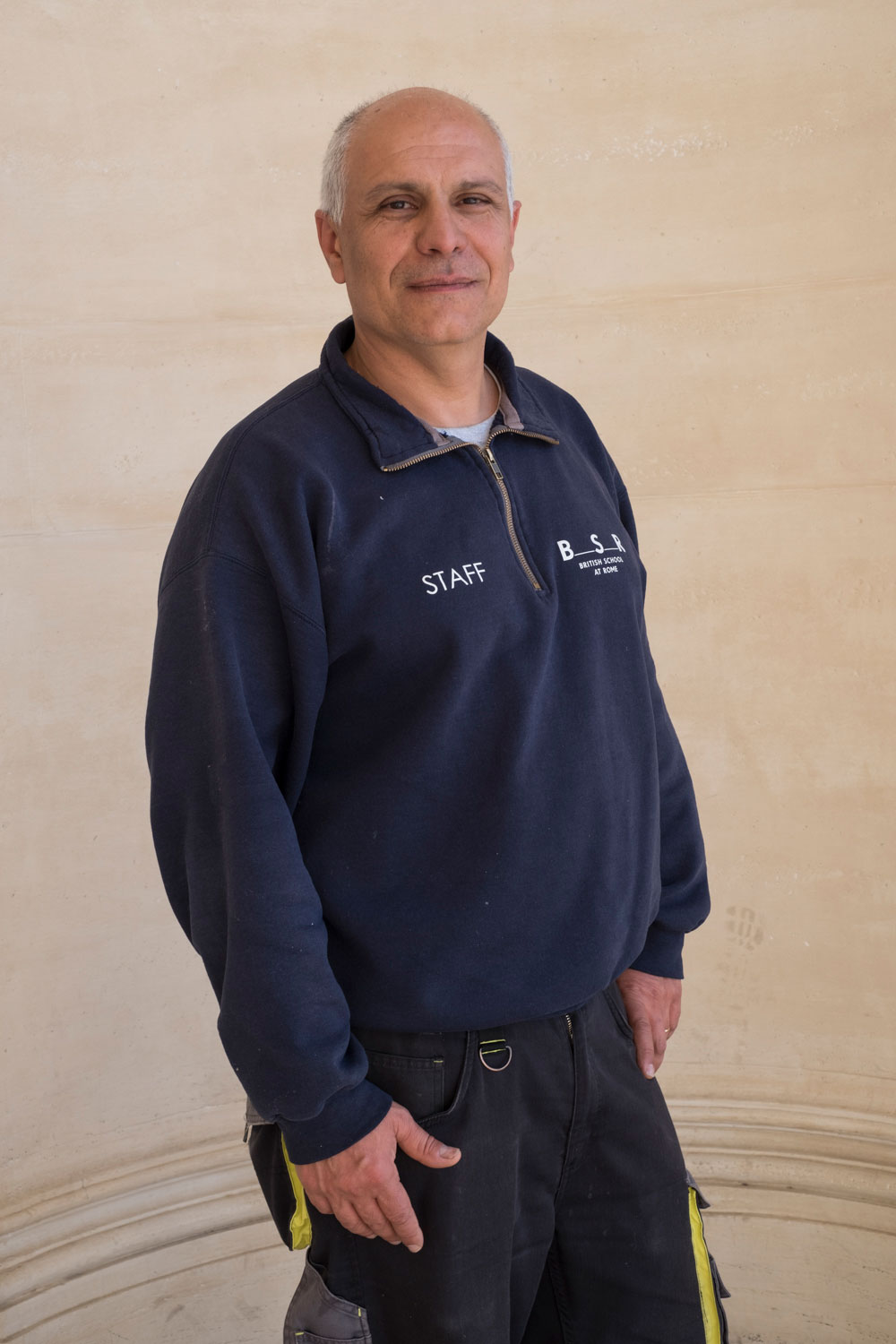
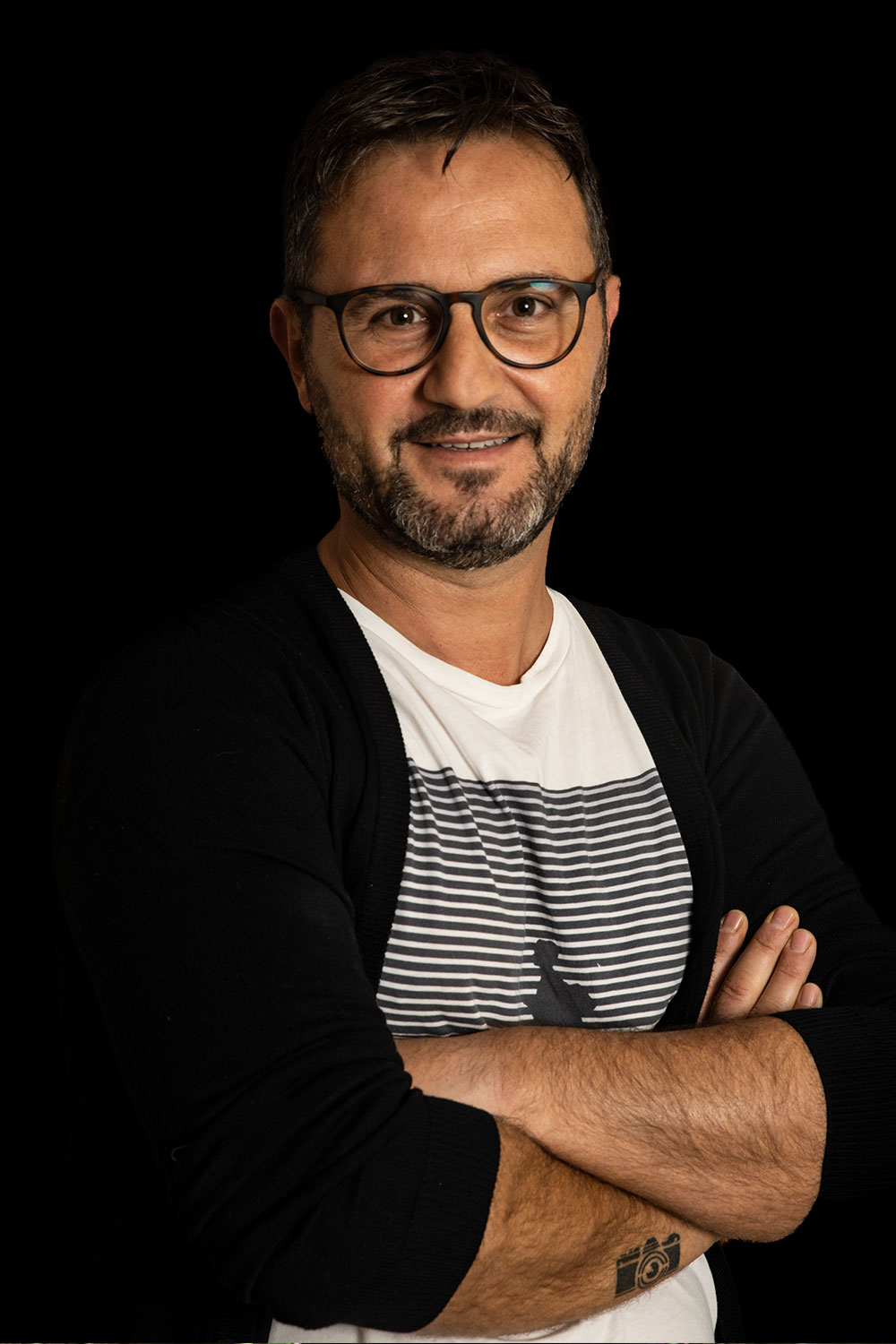
Fulvio Astolfi
Senior Maintenance Officer
Katia Di Carlo
Residence Assistant
Daniela Gobbi
Residence Assistant
Carmela Iorio
Cleaning Staff
Cristina Mangrobang
Cleaning Staff
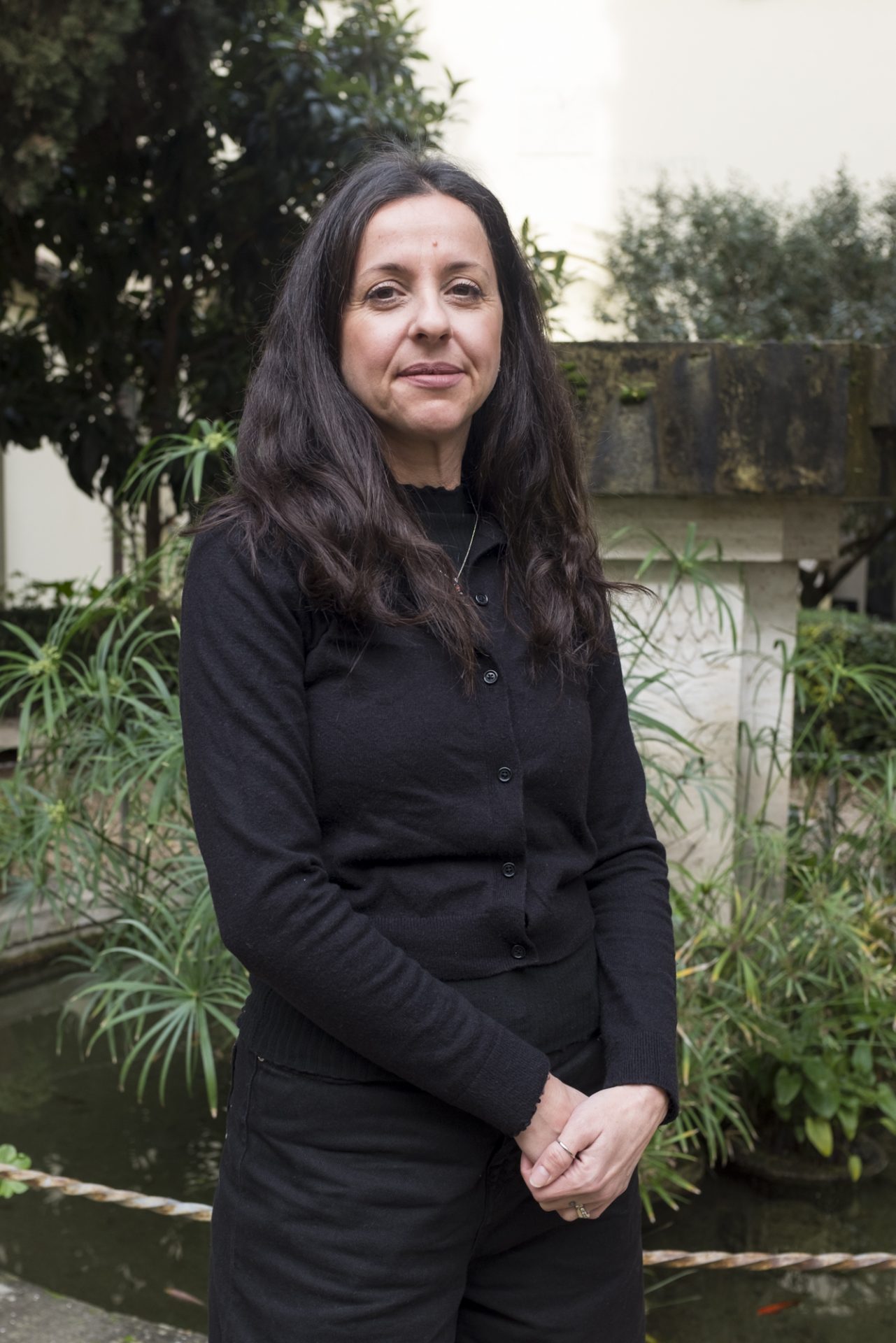
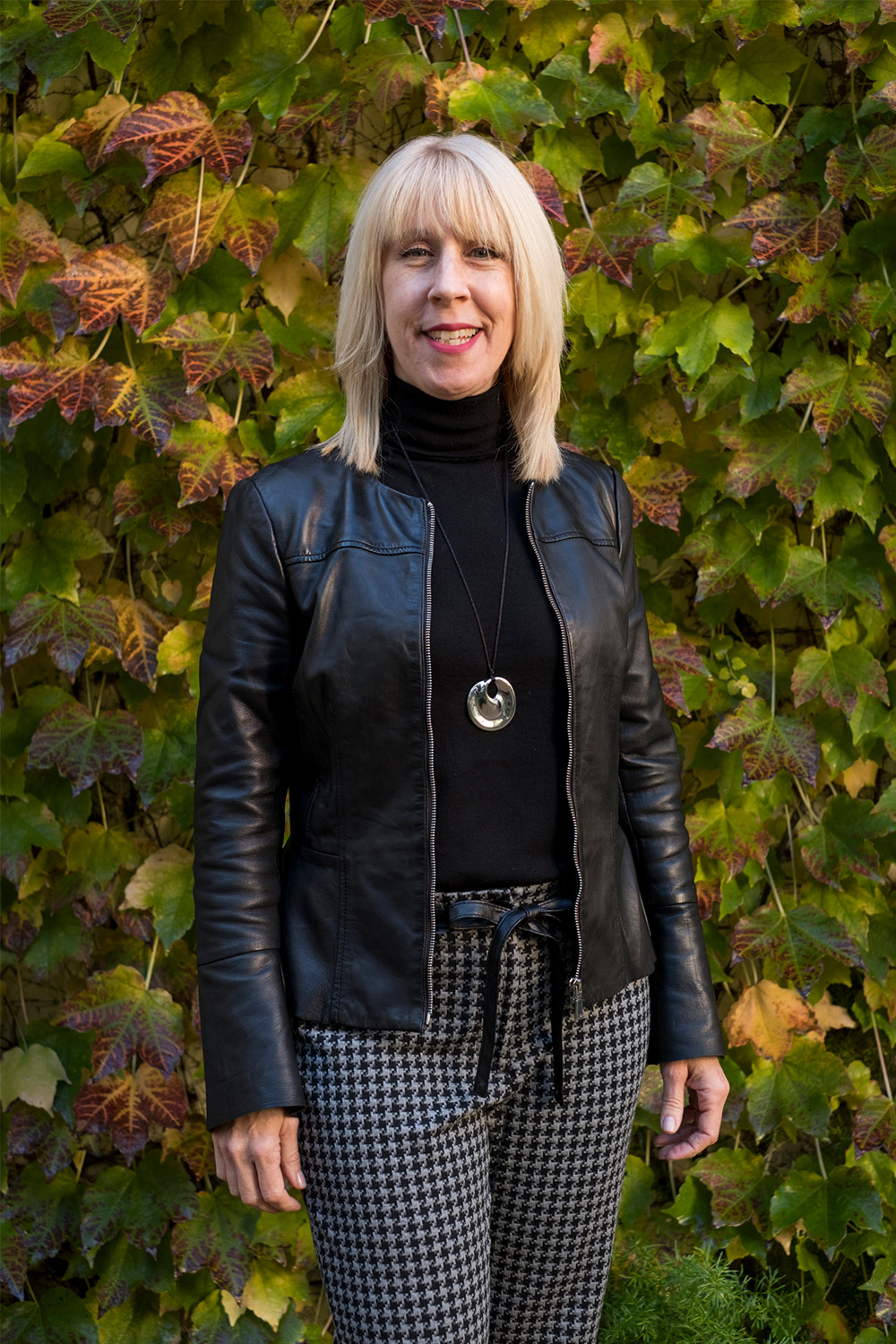
Christine Martin
BSc, Head of Residential and Estate Management
Stella Mastalli
Front Desk Assistant
Antonio Palmieri
Residence Assistant
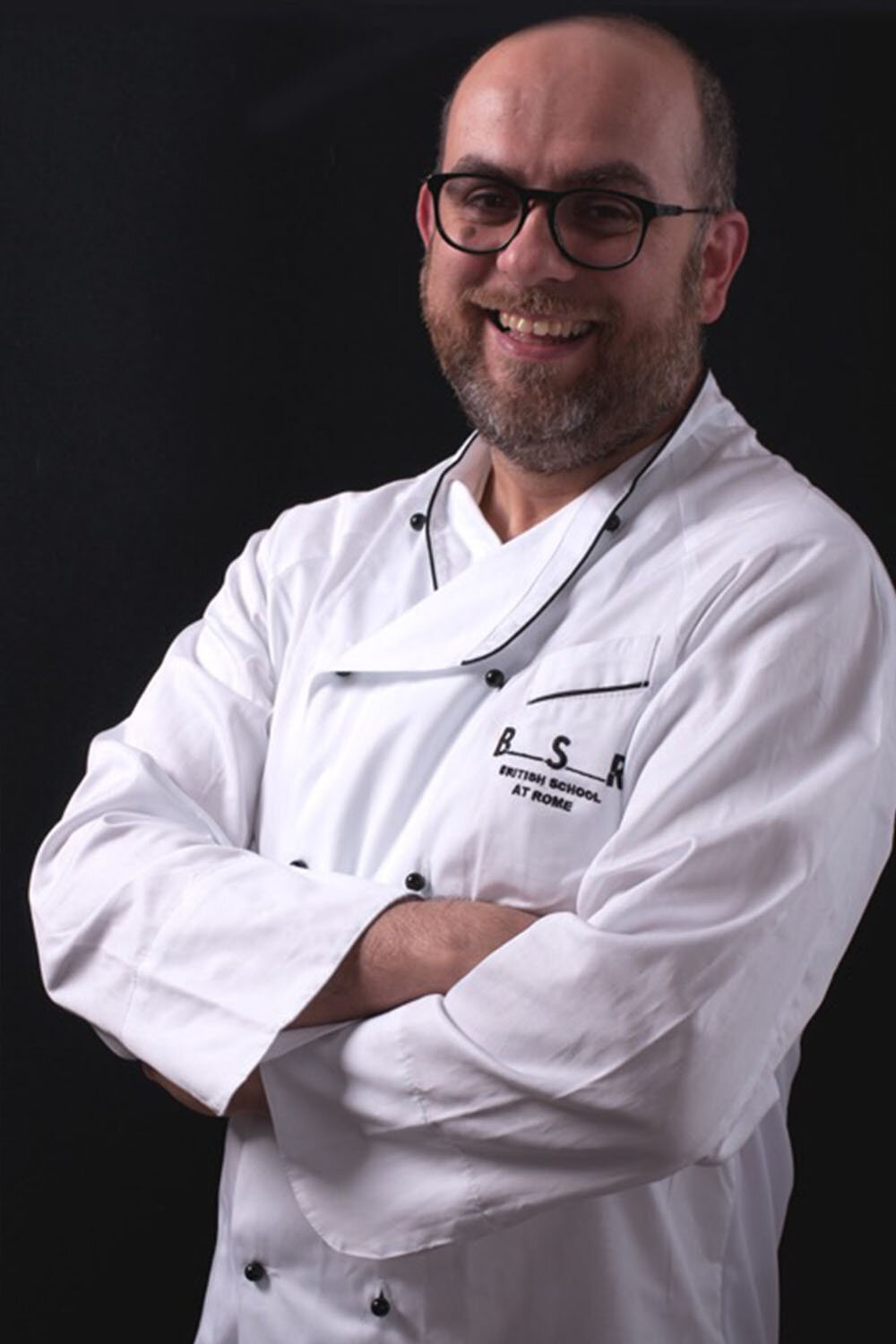
Renato Parente
Domestic Bursar

Latest Events

Latest Events

ITALY
Exhibition | Anzi Parla
The British School at Rome is delighted to present a solo exhibition in Italy by Eloise Fornieles, British Academy Postdoctoral Fellow. The exhibition opens on
5 November - 19 December, Monday to Friday, 3 to 7 PM
opening: 5 November at 6 PM
ITALY
Material Environments | Resilient Landscapes: Climate, Economy, and Human Adaptation in the Roman Sabina
This is the fourth in a series of lectures on Material Environments, hosted jointly by the American Academy in Rome and the British School at Rome over the academic
25 February 2026
18:00 - 19:30
ITALY
Lecture | In Search of the pontifex maximus in Quattrocento Rome
In the roughly 1000 years after its supposed rejection by the emperor Gratian as ‘unlawful for a Christian’, the pagan title pontifex maximus was only rarely used
14 January 2026
18:00 - 19:30

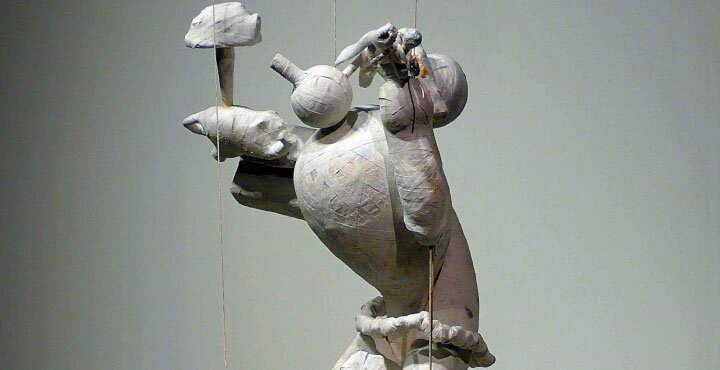
The British School at Rome is delighted to present a solo exhibition in Italy by Eloise Fornieles, British Academy Postdoctoral Fellow.

The exhibition opens on 5 November at 6 PM and runs until 19 December, with visiting hours Monday to Friday, from 3 to 7 PM.

The title of Eloise Fornieles’ first solo exhibition in Rome derives from Carla Lonzi’s celebrated 1978 assertion: “Shut up, or rather speak” (Taci, anzi parla). 

Like Fornieles’ own practice, the phrase performs authority in order to subvert it. Bringing together sculpture, sound, installation, and painting, Anzi Parla extends this project to complicate the relationship between the speaking and listening; between power and protest; between visibility and privacy. In doing so the exhibition reflects on what it means in the present historical moment to be seen and to be heard: to be represented. 

Drawing on Fornieles’ post-doctoral research into the function of voice in acts of protest, the exhibition likewise threads together the histories of the Rivolta Femminile (the feminist collective co-founded by Lonzi, Carla Accardi, and Elvira Banotti); of the “talking statues” of Rome (used by citizens to broadcast anonymous expressions of dissent); and of Roman graffiti from the classical era to the present day. These diverse forms of public expression model different means—collective authorship, abstraction, and ventriloquism—by which the nonconforming and therefore vulnerable subject might protect their anonymity and separate the voice from the body.

Fornieles’ palimpsest-paintings evoke the layers of dissent expressed through the “talking statues,” to which Romans have, since the sixteenth century, attached satirical notes protesting the power of church and state. In each case a complex, layered scrawl obscures—or effaces—buried images of each of the six “talking statues.” These gestures imply the movement of a body in the act of writing, breaking down a script in order to forge a new and differently coded alphabet. Over these loose, repetitive, and associative characters are collaged symbols evoking the non-binary language—which does not assign gender to nouns—which has been banned by the incumbent Italian government from schools. 

An installation of six video monitors on plinths reimagines the “talking statues” as avatars through which the anonymous voices of activists, journalists, lawyers, and educators are broadcast. Their accounts of resistance score videos of protesters pixelated to protect their identity, contemporary examples of graffiti, and abstracted colour fields.  On the surrounding walls are charcoal drawings based on archival examples of ancient graffiti found in Rome and Pompeii, to which the audience is invited to add their own drawings and texts. This layered, polyphonic experience connects present expressions of dissent to long histories of protest and resistance. 

Fornieles’ research is supported by The British School at Rome and The British Academy Postdoctoral Fellowship. 

Read the essay on ANZI PARLA by Ben Eastham, editor-in-chief of e-flux Criticism.

Public Programme

Workshop su Pratiche di Responsabilizzazione Comunitaria
🗓 9 November, 3–6.30 PM
📍Antigone Library in Via degli Ausoni 45, Rome, in collaboration with the independent project bar.lina
🗣 In Italian
Facilitated by writer and activist Giusi Palomba – sold out
More details here.

Transformative Justice Creative Writing Workshop
🗓 12 November, 3–6.30 PM
📍 The British School at Rome
🗣 In English
Facilitated by writer and activist Giusi Palomba – sold out
More details here.

ASTERISKS
🗓 26 November, 6.00 PM
📍 The British School at Rome
Performance with: Jahān Khājavi, Eloise Fornieles, and Nathalie di Sciascio
More details here.


This is the fourth in a series of lectures on Material Environments, hosted jointly by the American Academy in Rome and the British School at Rome over the academic year 2025-2026. Through several evening lectures, speakers will present new research on environments of ancient and post-Classical Rome and Italy. Changing technologies of research provide new answers to questions about the experience and effect of landscape and climate. These lectures showcase the ways in which environmental considerations recast our study of the past.

This paper presents an interdisciplinary exploration of environmental change, agricultural practice, and human adaptation in central Italy’s Sabina Tiberina, focusing on the newly launched Basel Villa dei Casoni Project. Situated between the Tiber plain and the Apennine foothills, the site offers a unique vantage point for examining how climate variability, land use, and social structures intersected in the Roman hinterland.

Through integrated methods—geophysical prospection, GIS mapping, palaeoclimate reconstruction, and ancient DNA analysis—the project reconstructs the long-term dynamics linking environment and society from the Iron Age to Late Antiquity. The Villa dei Casoni, a second-century BCE estate later transformed into an imperial residence, encapsulates the region’s transition from indigenous agrarian systems to market-oriented production and its eventual decline amid climatic and economic shifts.

By correlating environmental proxies (speleothems, dendrochronology, and sediment cores) with archaeological and bioarchaeological evidence, this study seeks to understand how Roman communities responded to climatic instability, crop failure, and disease. It argues that the Sabina represents not a peripheral zone, but a laboratory of resilience—where adaptation, innovation, and continuity reveal the deep entanglement of human and environmental histories.

In connecting archaeological, ecological, and genomic data, the paper highlights the potential of interdisciplinary research to illuminate the rhythms of ancient environmental change and to model long-term human responses to climate stress—an inquiry as vital today as it was in the Roman past.

Sabine R. Huebner is Professor of Ancient History at the University of Basel and an internationally recognized specialist in the social, religious, and environmental history of the ancient Mediterranean. Her research centers on the everyday lives of ordinary people in the Eastern Roman world, and she has published widely, including The Family in Roman Egypt (2013) and Papyri and the Social World of the New Testament (2019), as well as numerous edited volumes such as The Encyclopedia of Ancient History (2012), Mediterranean Families in Antiquity (2016), and The Single Life in the Roman and Later Roman World (2019). Her current work examines long-term interactions between climate change, pandemics, and societal transformation, integrating palaeoclimate research, archaeogenetics, and environmental archaeology. A former Radcliffe Fellow at Harvard, she has held visiting professorships at Princeton, Columbia, NYU, and Sapienza, and serves as General Editor of the Journal of Late Antiquity. Her research has been supported by major European and Swiss funding bodies.


In the roughly 1000 years after its supposed rejection by the emperor Gratian as ‘unlawful for a Christian’, the pagan title pontifex maximus was only rarely used of the popes and never by the popes themselves. The explosion of its use in papal epigraphy in the later Quattrocento has usually been interpreted as a sign of the Renaissance papacy’s imperial ideology, though in reality it owed significantly to the impact of Florentine humanism and its project of language reform. Yet to be properly explained, however, is the appearance of the title in a series of inscriptions of local, non-papal commission in Quattrocento Rome. Their study exposes alternate ways of living alongside and thinking about the Roman past and papal authority that challenge the humanistic mainstream, as well as an epigraphic culture that challenges scholarly expectations. Tracing the legacy of this culture in Rome and Lazio and touching on the history of famous monuments including the Trevi Fountain, this paper asks what this ancient and seemingly familiar title actually meant to contemporary Romans. The research emerges from the speaker’s Hugh Last Fellowship and Leverhulme Trust-funded collaborative work with the BSR on ‘Christian Epigraphy of Rome, c. 590—1870’.

Dr Oren Margolis is Associate Professor of Renaissance Studies in the School of History and Art History at the University of East Anglia and a Research Fellow of the British School at Rome. He studied and previously taught at Oxford University. His book Aldus Manutius: The Invention of the Publisher won the Renaissance Society of America’s 2025 Gladys Krieble Delmas Foundation Prize for best book in Renaissance Venetian Studies. He was a BSR Rome Awardee (2012/3) and Hugh Last Fellow (2023/4), and he received an International Fellowship from the Leverhulme Trust (2024–25) for his work in collaboration with the BSR on ‘Christian Epigraphy of Rome, c. 590–1870’.

The event is hybrid. You’re welcome to attend in person—no registration is needed, and access is free. If you would like to join us online, please make sure to register using the link above.


Search