

Please note that the workshop will be in Italian.
Download the programme here.
Download the book of abstract here.
The Politics of Dirt: Hygiene, Décor, and Control in the Italian City
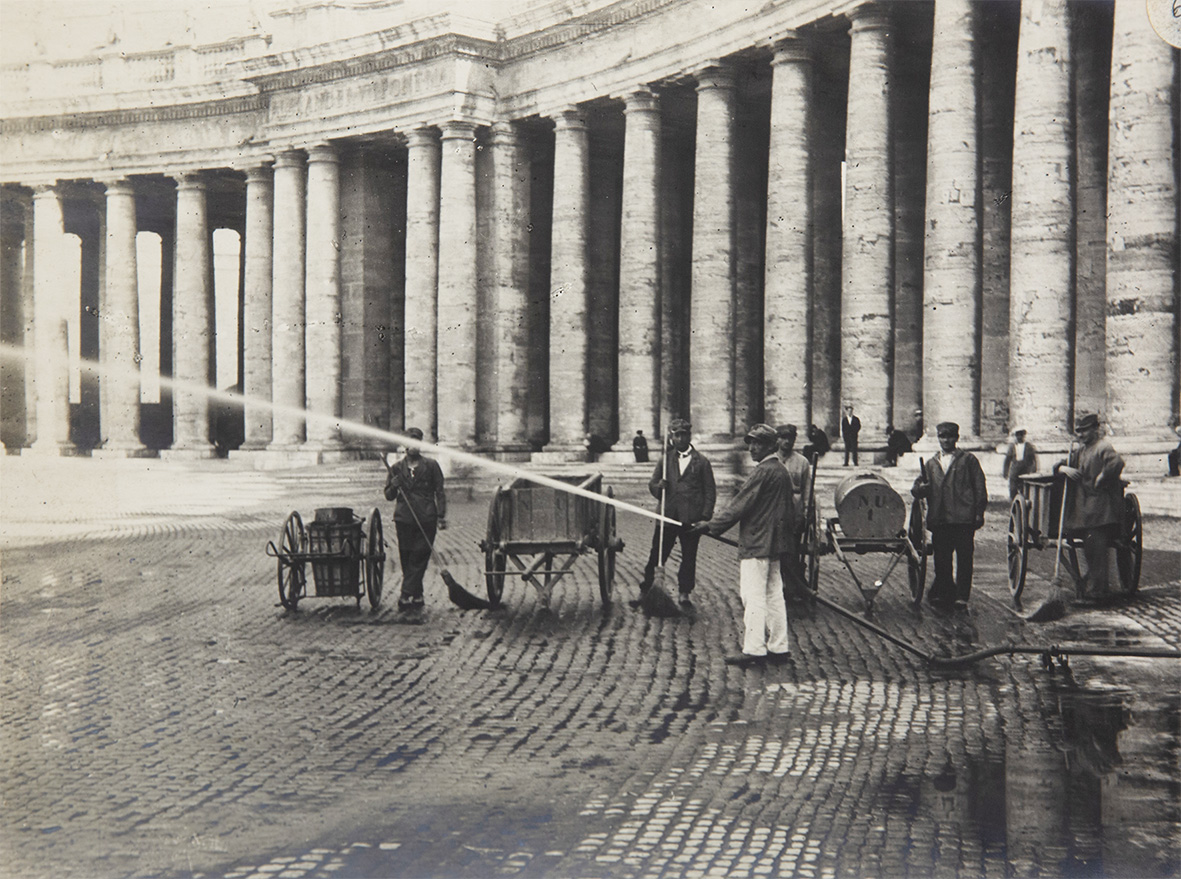
Most of us take clean public spaces for granted: we expect to walk across streets without encountering waste—or those cleaning it. This expectation is deeply rooted in our cultural aversion to dirt: concerns about purity lie at the heart of human societies. Dirt, and our reluctance to deal with it, are cultural artifacts that reinforce power hierarchies by labelling those who look impure as “out of place.” Cities have long embodied this approach, constructing social, and spatial separations between the allegedly proper members of a society and their dirty, unworthy counterparts.
“The Politics of Dirt” seminar investigates how these logics became naturalised across Italian cities, predominantly after 1870. Presentations by scholars at different stages of their career will trace the history and present-day dynamics of the urban management of “dirt,” widely understood as the socially constructed boundary-marker through which societies sort bodies, behaviours, and materials into “pure” and “impure.” Interdisciplinary conversations will explore how these classificatory regimes shaped labour, citizenship, and belonging, and how their legacies continue to structure contemporary Italy.
Le Politiche dello Sporco: Igiene, Decoro e Controllo nella Città Italiana
La maggior parte di noi dà per scontati gli spazi pubblici puliti: ci aspettiamo di attraversare le strade senza incontrare rifiuti—o chi li sta raccogliendo. Questa aspettativa affonda le sue radici nella nostra avversione culturale per lo sporco: le preoccupazioni per la purezza sono al cuore delle società umane. Lo sporco, e la nostra riluttanza a occuparcene, sono artefatti culturali che rafforzano le gerarchie di potere etichettando come “fuori posto” coloro che appaiono impuri. Le città hanno a lungo incarnato questo approccio, costruendo separazioni sociali e spaziali tra i presunti membri “appropriati” della società e le loro controparti sporche e indegne.
Il seminario “The Politics of Dirt” indaga come queste logiche si siano naturalizzate nelle città italiane, soprattutto dopo il 1870. Presentazioni di studiosi e studiose in diverse fasi della loro carriera ricostruiranno la storia e le dinamiche contemporanee della gestione urbana dello “sporco”, inteso in senso ampio come il marcatore di confine socialmente costruito attraverso cui le società distinguono corpi, comportamenti e materiali tra “puri” e “impuri”. Conversazioni interdisciplinari esploreranno come questi regimi classificatori abbiano plasmato lavoro, cittadinanza e appartenenza, e come le loro eredità continuino a strutturare l’Italia contemporanea.