

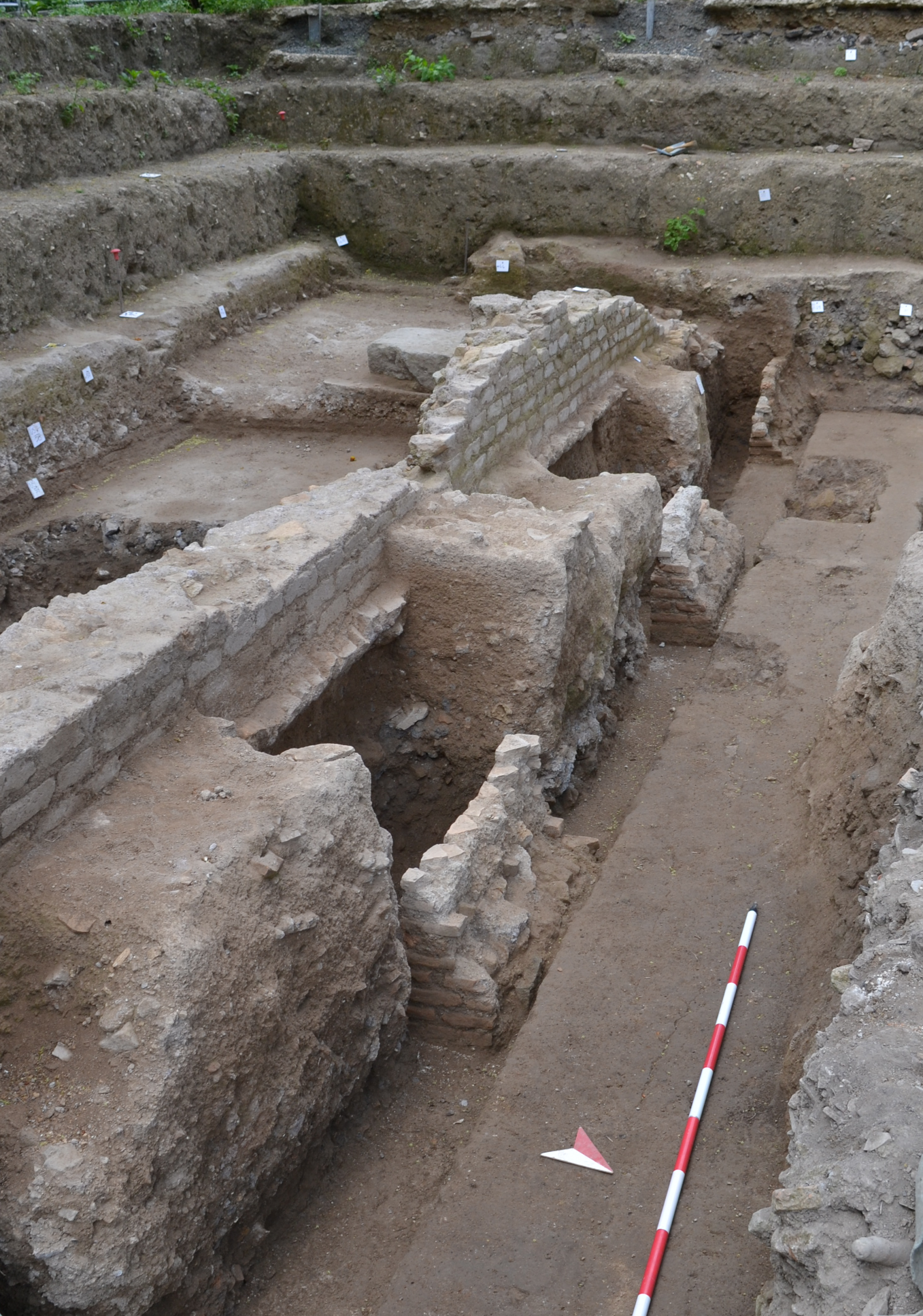
This lecture presents the preliminary excavation results of the Aventinus Minor Project’s from 2021-2024 and contributes to recent reinterpretations of Rome’s defensive, domestic, and religious topography across space and time. AMP unites excavation with the involvement of multigenerational community members, including local elementary and high school students, and residents of the Instituto Santa Margherita convalescent home.
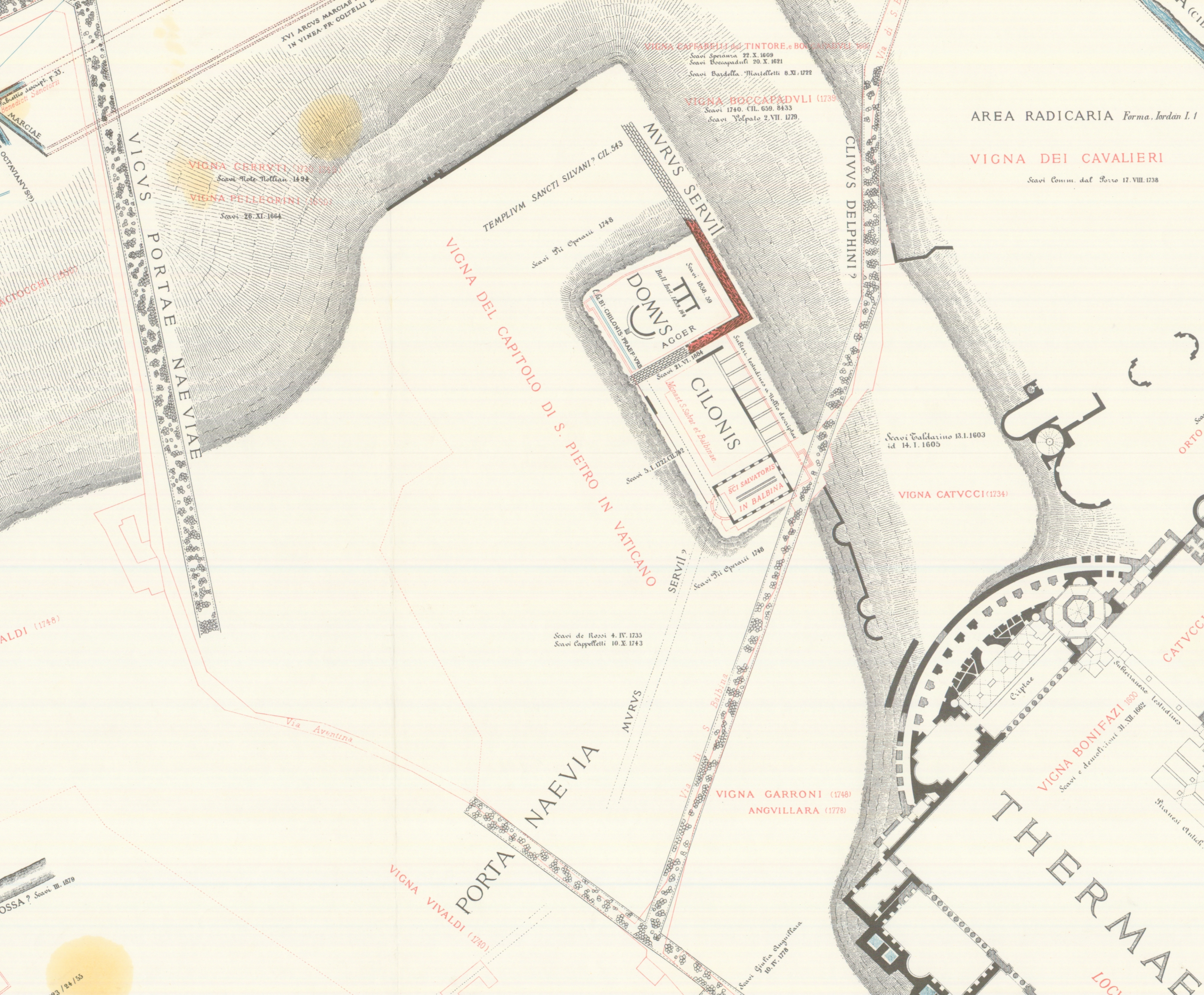
The site is located between the Circus Maximus and the Baths of Caracalla, adjacent to Santa Balbina Church. Limited 1980’s test trenches and archival research indicated that the site could contain a portion of the presumed Servian Wall, Roman houses, early Christian architecture, and Renaissance vineyards.
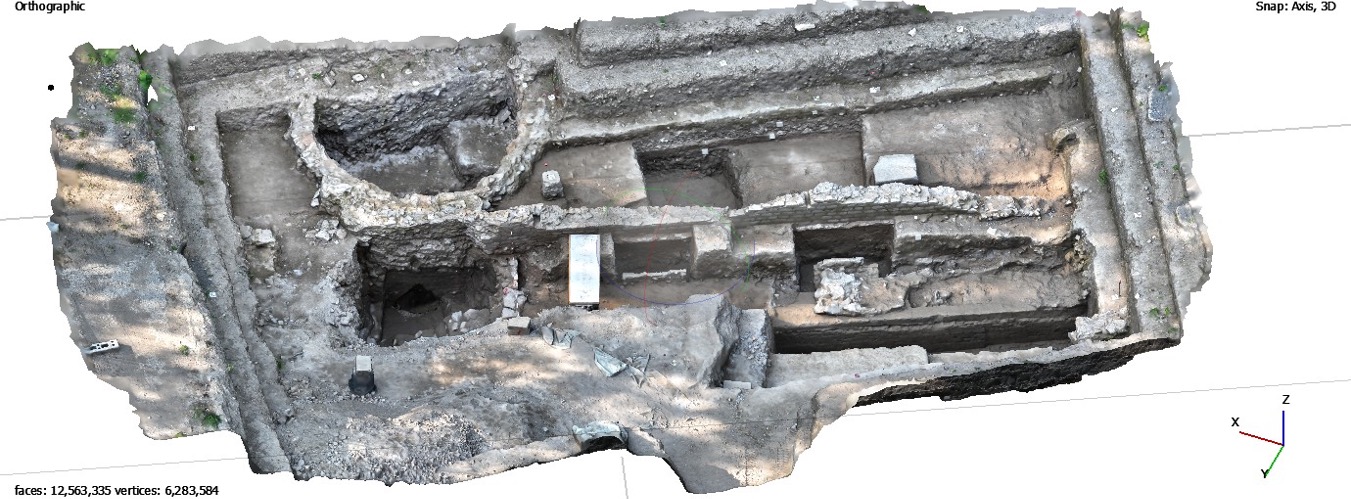
Excavations unearthed a complex multi-use neighborhood with intact strata from modern, Renaissance, late antique, and imperial phases of occupation. Features included an early cistern, Neronian mosaic and fresco fragments, later Roman sewage systems, and a late antique lime kiln, and Renaissance vineyards. The material finds reference the prolonged use of an urban space for evolving domestic, industrial, and religious purposes.
Conversely, AMP’s excavations discovered little conclusive evidence of the Servian Walls, suggesting that the long-accepted assumption that the Walls ran over the top of the hill might be reexamined, and the large opus quadrata blocks could belong to another unspecified building, perhaps an aqueduct.
Elizabeth Wueste is a Roman field archaeologist and Associate Professor of Archaeology and Classics at the American University of Rome. Originally from California, she has lived in the Eternal City for eight years, after previous teaching and research positions at Oberlin College and the University of California Berkeley. She has excavated in Greece, Albania, and especially Italy, including sites at Pompeii, Alba Fucens, Sicily, and Rome. She is a senior staff member at the Agora Valley Project: American Excavations at Morgantina, where she has been excavating the Hellenistic city for over a decade. Most recently, she is the director and principal investigator of the Aventinus Minor Project, a new community archaeological excavation project in Rome, where she is excavating a diachronic sequence encompassing more than 2000 years of urban use and transformation. Her scholarly interests include Late Antiquity, early Christian material culture, and the formation and expression of identity and religious plurality.
This lecture is part of the City of Rome programme, an intensive eight-week residential course directed by Dr. Christopher Siwicki, designed for postgraduates from selected British partner universities. The programme is aimed at students at the Master’s or early Doctoral level studying classical archaeology, art history, ancient history, and the transformation of antiquity in the Middle Ages and modern period.
See the full programme of City of Rome here.
The event is hybrid. You’re welcome to attend in person—no registration is needed, and access is free. If you would like to join us online, please make sure to register using the link above.