

The Gordon Rushforth Lecture on Medieval Rome
Many accounts of the city of Rome written in the eastern Mediterranean during the middle ages dwell on the fantastic: Cosmas of Jerusalem on the Capitol’s statues of the nations, adorned with bells which ring when rebellion threatens; Jâqût on the Lateran’s talismanic golden bird, or round St. Stephen’s fashioned from a single magical stone. According to the Pesachim of the Talmud: “In the great city of Rome there are 365 roads, and in each road there are 365 palaces. Each palace has 365 floors, and on each floor there is enough to feed the whole world”.
But we also have accounts of the city’s monuments, generally based on world chronicles going back to Eusebius but amplified in the retelling by Armenian, Syriac, Arabic and Byzantine writers, which contain much that is credible – and which has gone largely unrecognised in recent topographical scholarship. The lecture explores this literary world, focusing on two monuments which have always excited the attention of medieval commentators, the Colossus of Nero and the Pantheon.
Robert Coates-Stephens is Cary Fellow at the BSR, where he directs undergraduate and postgraduate teaching in the archaeology and topography of Rome. He has published widely on the fate of the city’s monuments in the middle ages and is completing a book, Statues after the end of sculpture. The statue world of early medieval Rome.
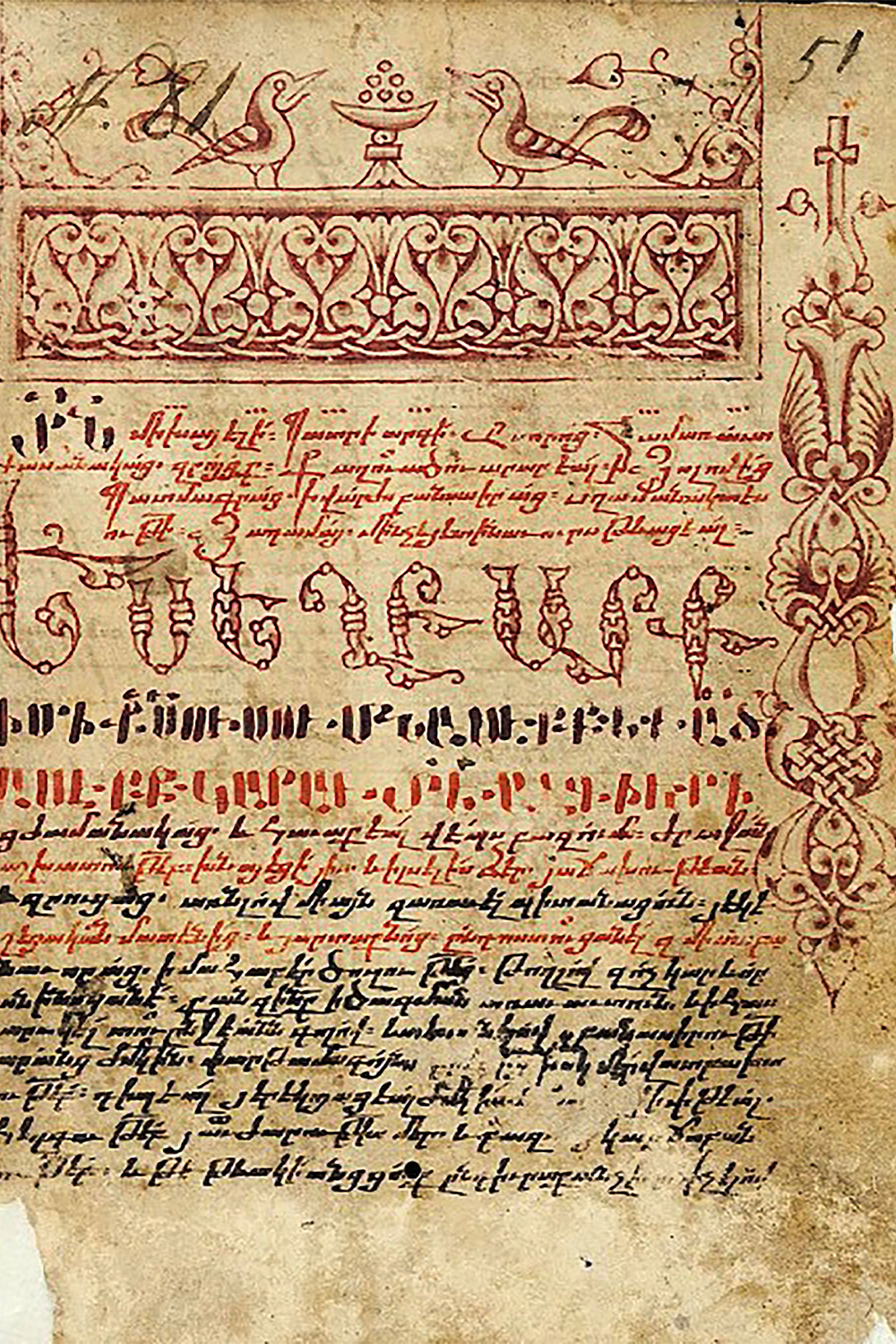
Image: Armenian Translation of Michael the Syrian Chronicle.