

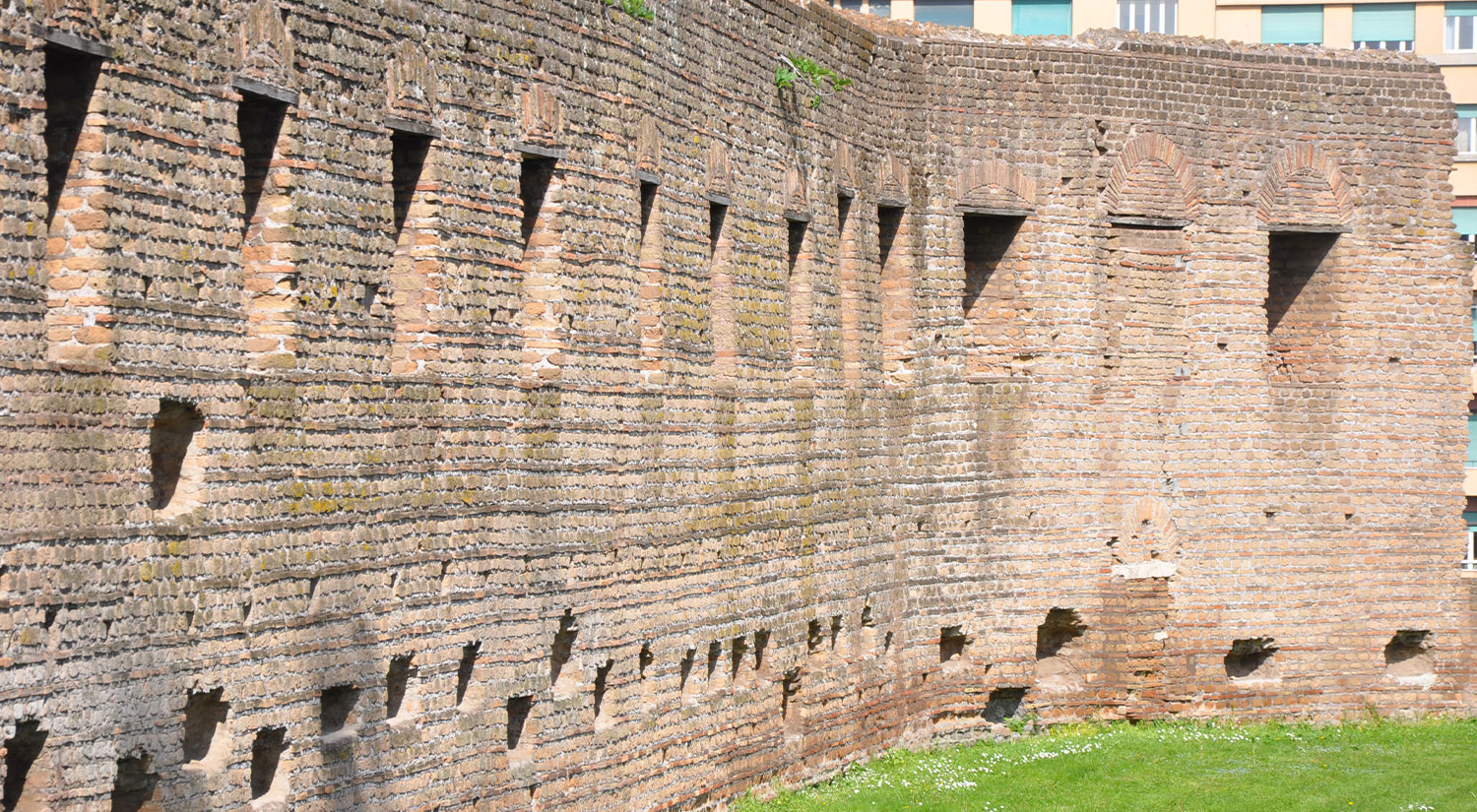
One question leads to another. First: What is the correct term for the late antique building technique which combines courses of bricks and tufa blocks, particularly common in Rome? Opus vittatum? Opus vittatum mixtum? Opera listata? Opus listatum? Opus mixtum? Second: should it be in Latin? Third: what would Vitruvius had called it if he had written his De architectura in the fourth century AD?, and would he have talked about opus or structura? Fourth: can it be helpful to compare the decoration of the Baths of Diocletian and women’s makeup, as described by Ovid? These questions may help us to understand some of the mental structures used by ancient writers in their descriptions of buildings.
This event will be in English.
CITY OF ROME LECTURE SERIES
Olof Brandt is Professor of Early Christian Architecture at the Pontifio Istituto di Archeologia Cristiana in Rome. His research interests include baptisteries, the churches of Rome, and modern methods for the analysis of standing buildings. He has published “Battisteri oltre la pianta” (2012) and “La croce e il capitello. Le chiese paleocristiane e la monumentalità” (2016). He was born in Sweden and began his university studies with Classical Archaeology at the University of Uppsala.