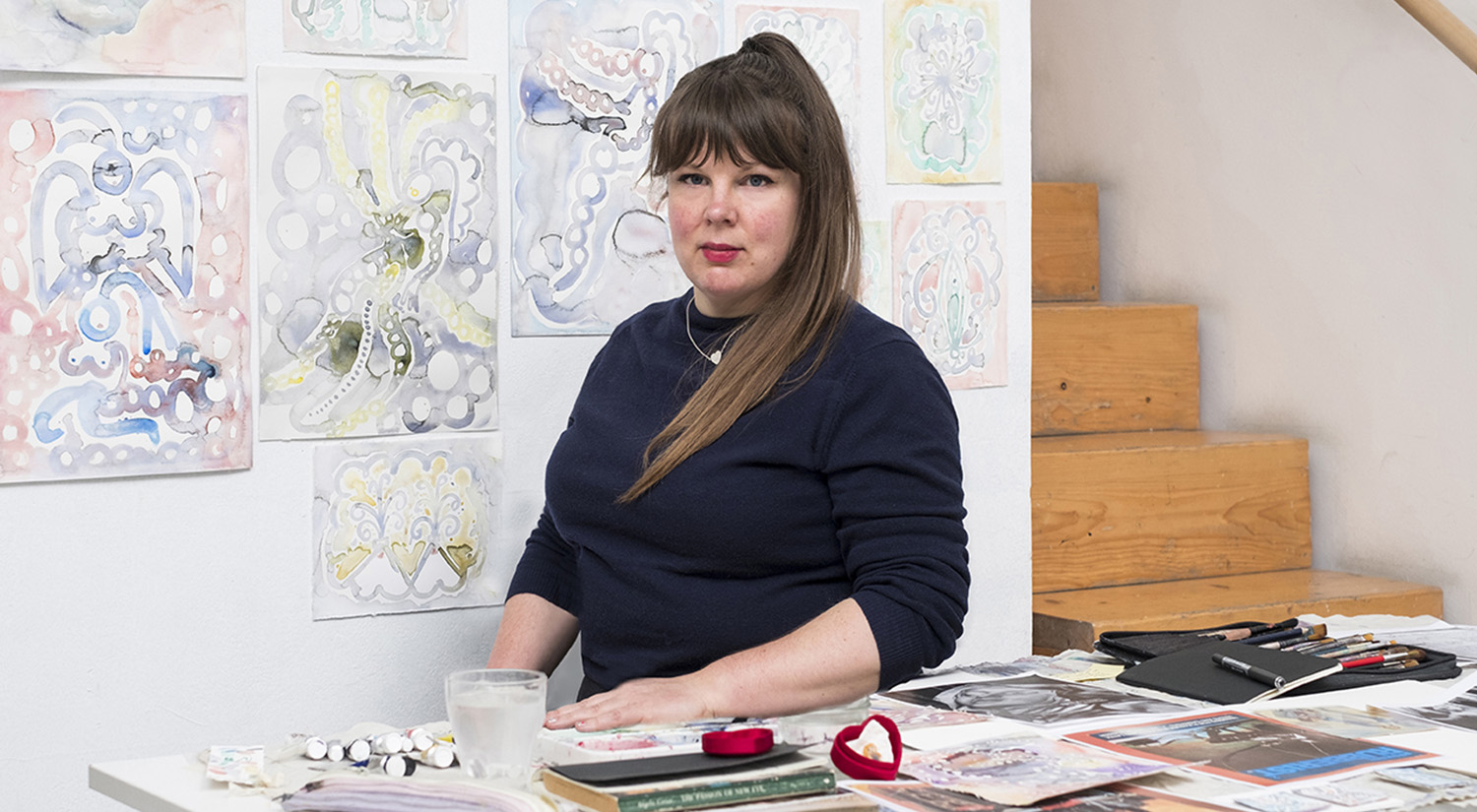
Abbey Fellow Susie Green (January–March 2026) reflects on her residency at the BSR in a new blog. Sharing insights into her experience in Rome, she discusses the research she carried out during her time at the School and how it has shaped her practice.
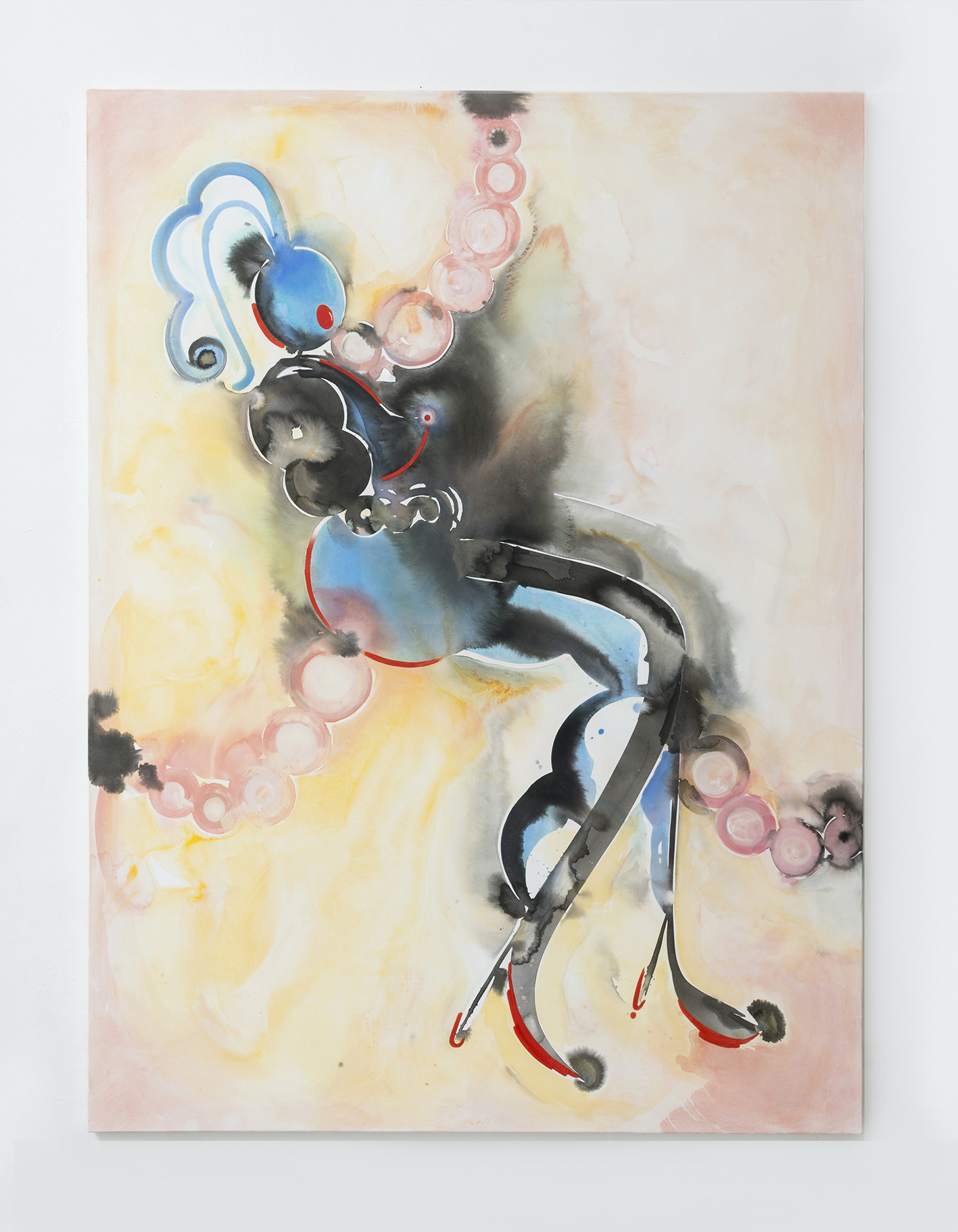
Spanning painting, performance, and sound, my work features feminine protagonists claiming power unapologetically. Throughout my work, dress, fetish, and disguise are constant sources of inspiration, with bodies adorned in preparation for ambiguous scenarios of pleasure, abandon, and release. Colour-saturated tableaus of escapism and excess sit alongside lived states of anxiety and tension; figures shape shift and smoulder, appearing on the brink of transcending the confines of their skin or melting into contained fantasy worlds.
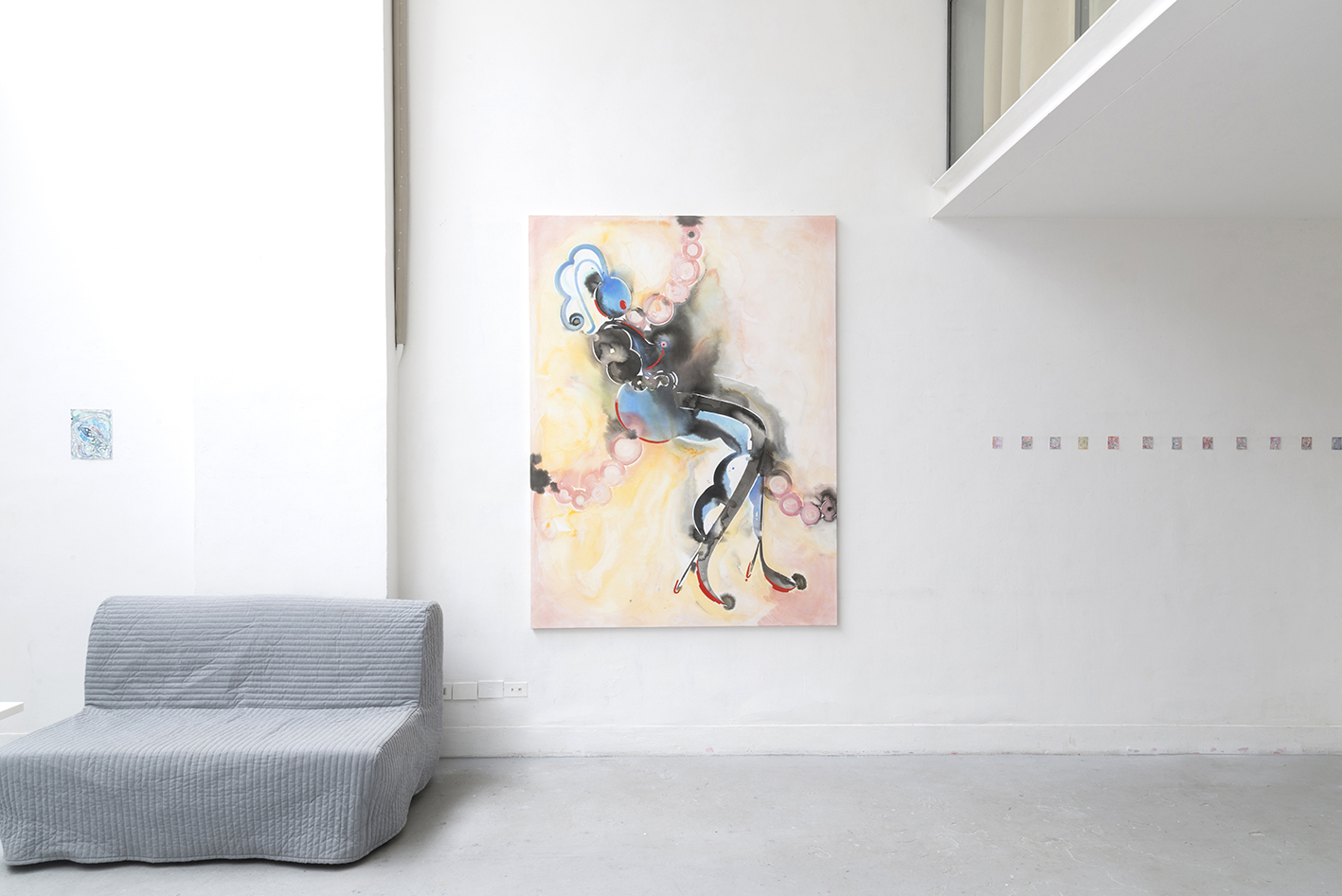
‘Angel (Sacred Enclosure)' (2026) acrylic and oil on canvas, 200 x 150cm. Installation at British School at Rome Spring Open Studios 2026. Photo: Luana Rigolli
My research in Rome began with a focus on exploring figurative excess and decorative thresholds within Baroque frescoes. I see my research now as a journey into a far more complex, hybrid body. Through the many open mouths of dynamic sculptures, into resonant throats of fountains and holy wells, within multiple stomachs of museums and archives, and amongst the dark guts of painted tombs, and hidden crypts. This body of Rome that I experienced is surrounded by a many layered skin, never fully permeable.
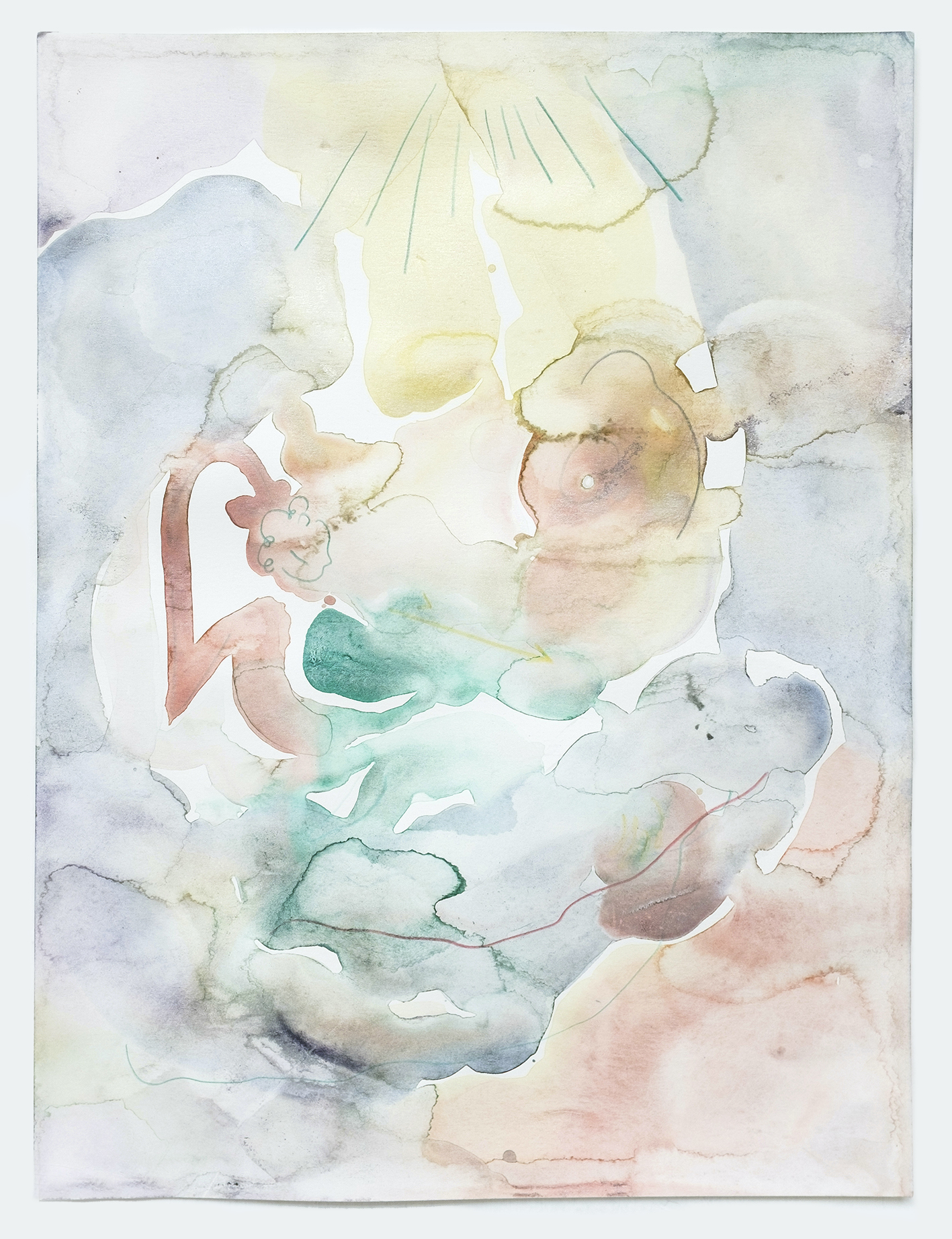
At the beginning of my residency I visited Bernini’s sculpture of the ‘Ecstasy of St Theresa’ inside the church of Santa Maria della Vittoria. A pilgrimage of sorts, I fell in love. Surprised to be putting a coin into a box to illuminate her, I then stared at gorgeous Theresa, held floating on her ethereal cloud, expressing her vision with an endless silent moan. At first seduced by her presence and parted lips, I was then saddened by my voyeurism. Looking into her mouth, I was then swallowed whole, and my Rome body journey began.
I visited an abundance of churches throughout my time in Rome, including The Chiesa del Gesù to view illusionistic ceiling frescoes by Giovanni Battista Gaulli. The fleshy, marble tones of this church interior (and so many more!) read to me like a sacred, illuminated womb. Looking up, I saw saintly bodies propelled towards a pastel-hued idea of a heaven, while subversive sinners tumbled downwards into an imagined, dirty hell. My eye was drawn to one feminine figure amongst the mass turmoil above, suspended at a midpoint within the celestial painted sky, her body waist deep inside a grey mist. Hovering in this space outside of binary opposites, she smiled happily down at me.
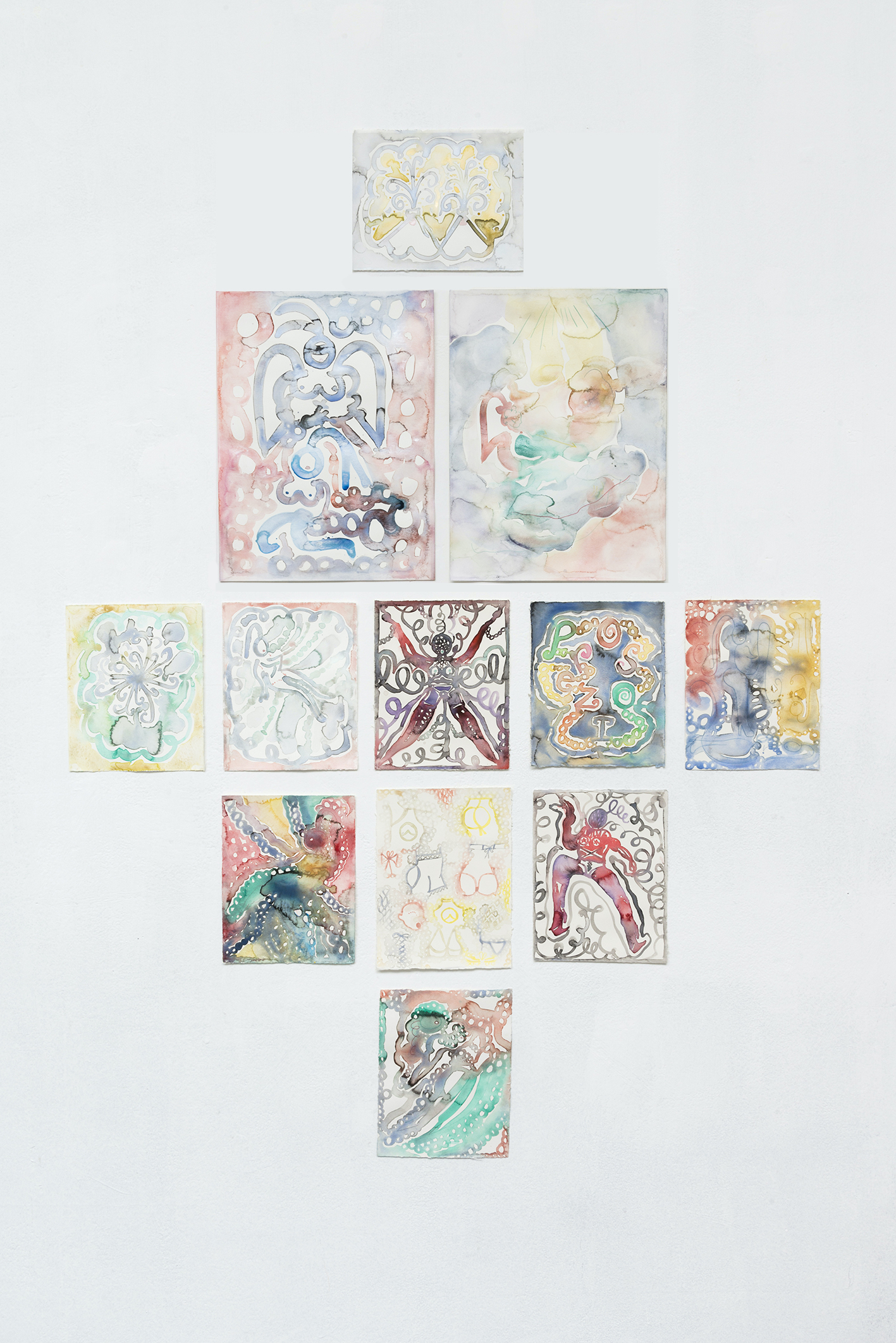
Selected works on paper (Baroque Machine) (2026) Installation at British School at Rome Spring Open Studios 2026. Photo: Luana Rigolli
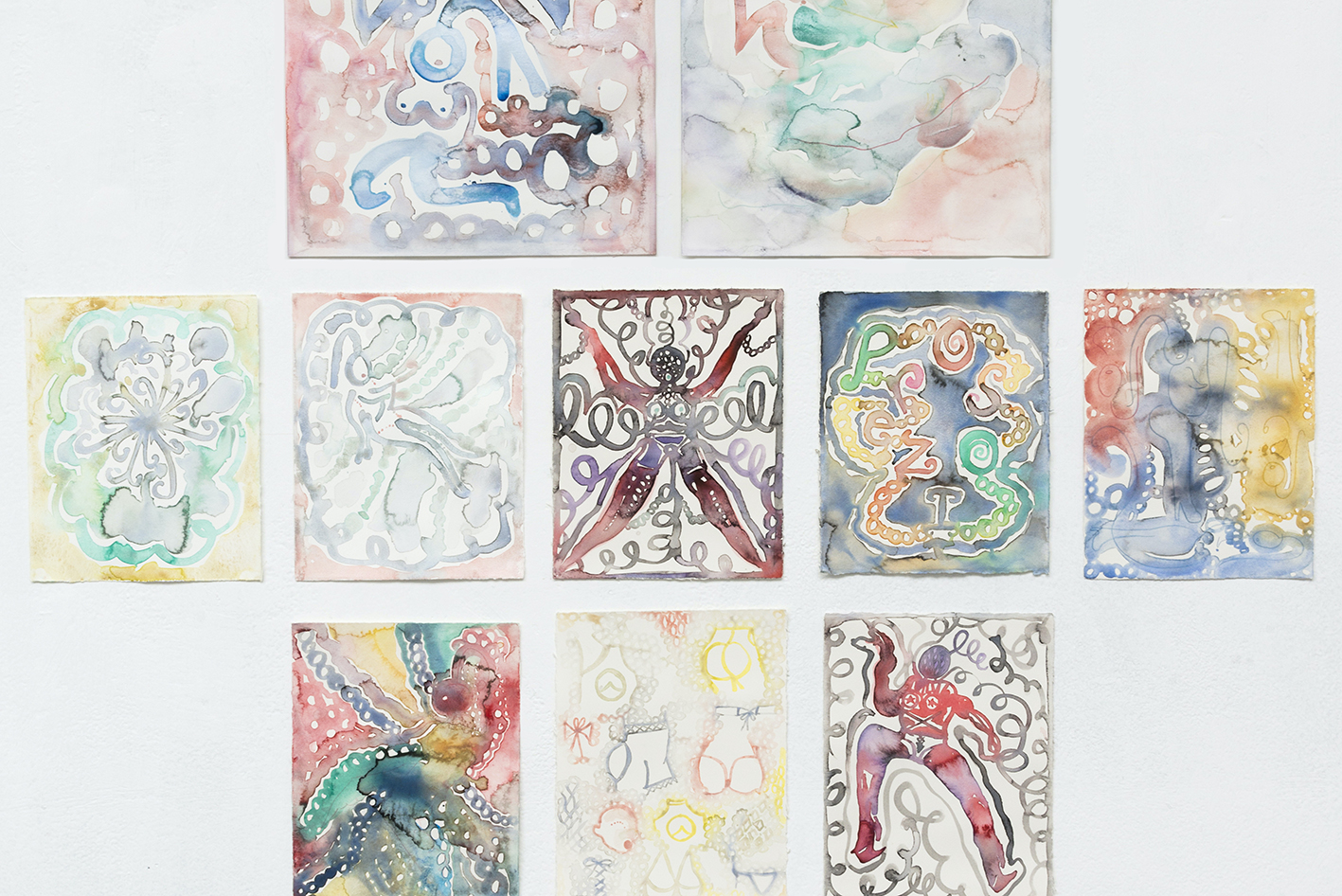
Inside the same church I saw a sign labelling the ‘Macchina Barocca’ — a 300-year-old spectacle and ‘Baroque Machine’ combining a moving painting, theatrical lighting, high glitz sculpture and a disembodied recorded voice. I began to imagine – what might a Baroque Machine for my own body look like and how would it hold me? What pleasure, rest or relief might it provide? Back in the studio, I painted my own imaginary machines—ornate, swirling contraptions for the exhausted body, promising metamorphosis, pleasure, and relief. My colourful figurative forms shifted between states of taught and loose, dark and luminous; dissolving, transcending, and reconstituting themselves.
Selected works on paper (detail) (Baroque Machine) (2026) Installation at British School at Rome Spring Open Studios 2026. Photo: Luana Rigolli
Throughout my time in Rome I found myself seduced by, and imagining myself becoming, the many fetishised, ornamental objects I encountered on research visits — wanting to inhabit their materiality somehow — while also questioning the labour, exploitation, and stories embedded within them. I sketched self portraits… as a crystal chandelier, an ornamental bell, a gushing fountain, a stucco angel, a fragment of a colossal statue, a chain of rosary beads…so many objects to question and desire.
Study of Saint Teresa (eyes closed) (2026), watercolour on paper, 38 x 28cm. Installation at British School at Rome Spring Open Studios 2026. Photo: Luana Rigolli
Shared dinners with brilliant residents, workshops, library forays, and studio visits broadened and enriched my research. For example, during a Trans-inclusive workshop at the BSR led by curator and consultant Dani Martiri I learnt about ‘Cybele’, the mythical ‘Magna Mater’ and her priestess followers the ‘Galli’ —figures whose rituals reframe Roman notions of power, gender and devotion. Conversations with curator and art historian Marta Pellerini introduced me to Etruscan mythologies and ‘Vanth’ – a benevolent, harness wearing goddess of the underworld. I also discovered that Etruscan demons were depicted in blue rather than red – an unexpected chromatic delight. Meeting with artist Eloise Fornieles brought me to ‘Madame Lucrezia’ and Rome’s ‘Talking Statues’—public objects once animated by speech and civic address. And how great to meet artist Anna Gloria Flores (HYDRA) and learn more about her own ritualised, creative world.
Studio 2, installation at British School at Rome Spring Open Studios 2026. Photo: Luana Rigolli
At night I lie in bed and think of Madame Lucrezia, Saint Teresa, and the multitude of carved or painted figures I encountered in Rome, their mouths held forever open in male gazey poses of terror, ecstasy, or transverberation. I feel empathy and concern, especially for Teresa, continually observed until she might crumble into dust. I imagine one day she will shift her posture, let out a fantastically wild scream, and turn to face the wall. No longer available for viewing, she will finally be allowed to rest.
Ethan Scanlon, Leverhulme Study Abroad Student at the British School at Rome from October 2025 to July 2026, shares insights into the development of his
Valeria Tettamanti, Ecole française de Rome (résidence scientifique jeunes chercheurs UNIONE –November 2025-July 2026) Awardee, discuss her project “Popular science in Italian feminine press at
Ethan Scanlon, Leverhulme Study Abroad Student at the British School at Rome from October 2025 to July 2026, shares insights into the development of his
Valeria Tettamanti, Ecole française de Rome (résidence scientifique jeunes chercheurs UNIONE –November 2025-July 2026) Awardee, discuss her project “Popular science in Italian feminine press at
Emlyn Dodd is former Assistant Director of the British School at Rome, an Associate Fellow of the Institute of Classical Studies at the University of
We use cookies on our website to give you the most relevant experience by remembering your preferences and repeat visits. By clicking “Accept All”, you consent to the use of ALL the cookies. However, you may visit "Cookie Settings" to provide a controlled consent.
This website uses cookies to improve your experience while you navigate through the website. Out of these, the cookies that are categorized as necessary are stored on your browser as they are essential for the working of basic functionalities of the website. We also use third-party cookies that help us analyze and understand how you use this website. These cookies will be stored in your browser only with your consent. You also have the option to opt-out of these cookies. But opting out of some of these cookies may affect your browsing experience.
Necessary cookies are absolutely essential for the website to function properly. These cookies ensure basic functionalities and security features of the website, anonymously.
Cookie
Duration
Description
cookielawinfo-checkbox-advertisement
1 year
Set by the GDPR Cookie Consent plugin, this cookie records the user consent for the cookies in the "Advertisement" category.
cookielawinfo-checkbox-analytics
11 months
This cookie is set by GDPR Cookie Consent plugin. The cookie is used to store the user consent for the cookies in the category "Analytics".
cookielawinfo-checkbox-functional
11 months
The cookie is set by GDPR cookie consent to record the user consent for the cookies in the category "Functional".
cookielawinfo-checkbox-necessary
11 months
This cookie is set by GDPR Cookie Consent plugin. The cookies is used to store the user consent for the cookies in the category "Necessary".
cookielawinfo-checkbox-others
11 months
This cookie is set by GDPR Cookie Consent plugin. The cookie is used to store the user consent for the cookies in the category "Other.
cookielawinfo-checkbox-performance
11 months
This cookie is set by GDPR Cookie Consent plugin. The cookie is used to store the user consent for the cookies in the category "Performance".
CookieLawInfoConsent
1 year
CookieYes sets this cookie to record the default button state of the corresponding category and the status of CCPA. It works only in coordination with the primary cookie.
elementor
never
The website's WordPress theme uses this cookie. It allows the website owner to implement or change the website's content in real-time.
viewed_cookie_policy
11 months
The cookie is set by the GDPR Cookie Consent plugin and is used to store whether or not user has consented to the use of cookies. It does not store any personal data.
Functional cookies help to perform certain functionalities like sharing the content of the website on social media platforms, collect feedbacks, and other third-party features.
Performance cookies are used to understand and analyze the key performance indexes of the website which helps in delivering a better user experience for the visitors.
Analytical cookies are used to understand how visitors interact with the website. These cookies help provide information on metrics the number of visitors, bounce rate, traffic source, etc.
Cookie
Duration
Description
_ga
1 year 1 month 4 days
Google Analytics sets this cookie to calculate visitor, session and campaign data and track site usage for the site's analytics report. The cookie stores information anonymously and assigns a randomly generated number to recognise unique visitors.
_ga_*
1 year 1 month 4 days
Google Analytics sets this cookie to store and count page views.
_gat_gtag_UA_*
1 minute
Google Analytics sets this cookie to store a unique user ID.
_gid
1 day
Google Analytics sets this cookie to store information on how visitors use a website while also creating an analytics report of the website's performance. Some of the collected data includes the number of visitors, their source, and the pages they visit anonymously.
CONSENT
2 years
YouTube sets this cookie via embedded YouTube videos and registers anonymous statistical data.
Advertisement cookies are used to provide visitors with relevant ads and marketing campaigns. These cookies track visitors across websites and collect information to provide customized ads.
Cookie
Duration
Description
VISITOR_INFO1_LIVE
5 months 27 days
YouTube sets this cookie to measure bandwidth, determining whether the user gets the new or old player interface.
YSC
session
Youtube sets this cookie to track the views of embedded videos on Youtube pages.