

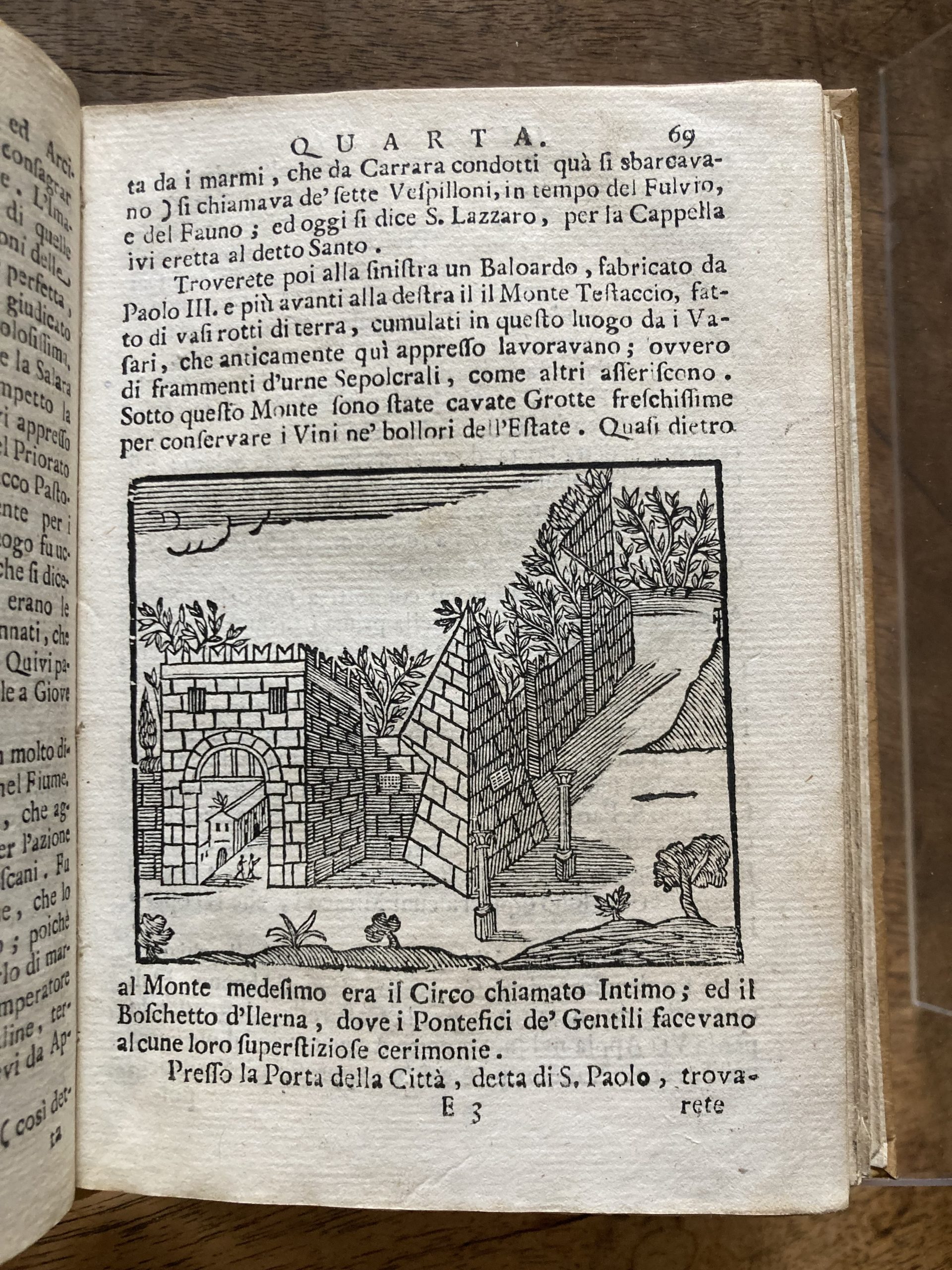
Guidebooks, prints, maps, photographs, and social media have all been used to convey the history and physical heritage of Rome to travellers, actual and prospective. Artists and authors’ representations and descriptions of the city’s ancient remains are necessarily selective, emphasising and omitting particular features, for political, ideological, aesthetic, historical, and commercial reasons. This half-day workshop examines changing approaches through which ancient Rome has been presented to visitors, from antiquity to the present day. Looking for both variances and commonalities, the papers investigate the how the city’s monuments and ruins were portrayed in different eras, for different audiences, through different media.
3 pm | Chris Siwicki, British School at Rome: Ancient Guides to Ancient Rome?
Raphaële Mouren, British School at Rome: Guidebooks to Rome: what was available for visitors in the mid-16th century?
Clare Hornsby, British School at Rome: Guiding from the Margins: Indices and lists in some early modern maps of Rome
Discussion
4.30 pm | Tea Break
Abigail Brundin, British School at Rome: Feet on the ground: early tourists in the city
Annunziata Berrino, University of Naples Federico II: Roma nelle guide turistiche di età contemporanea: una periodizzazione
Discussion
6 pm | Summing up and general discussion
This lecture is part of the City of Rome programme, an intensive eight-week residential course directed by Dr. Christopher Siwicki, designed for postgraduates from selected British partner universities. The programme is aimed at students at the Master’s or early Doctoral level studying classical archaeology, art history, ancient history, and the transformation of antiquity in the Middle Ages and modern period.
See the full programme of City of Rome here.
The event is in person—no registration is needed, and access is free