

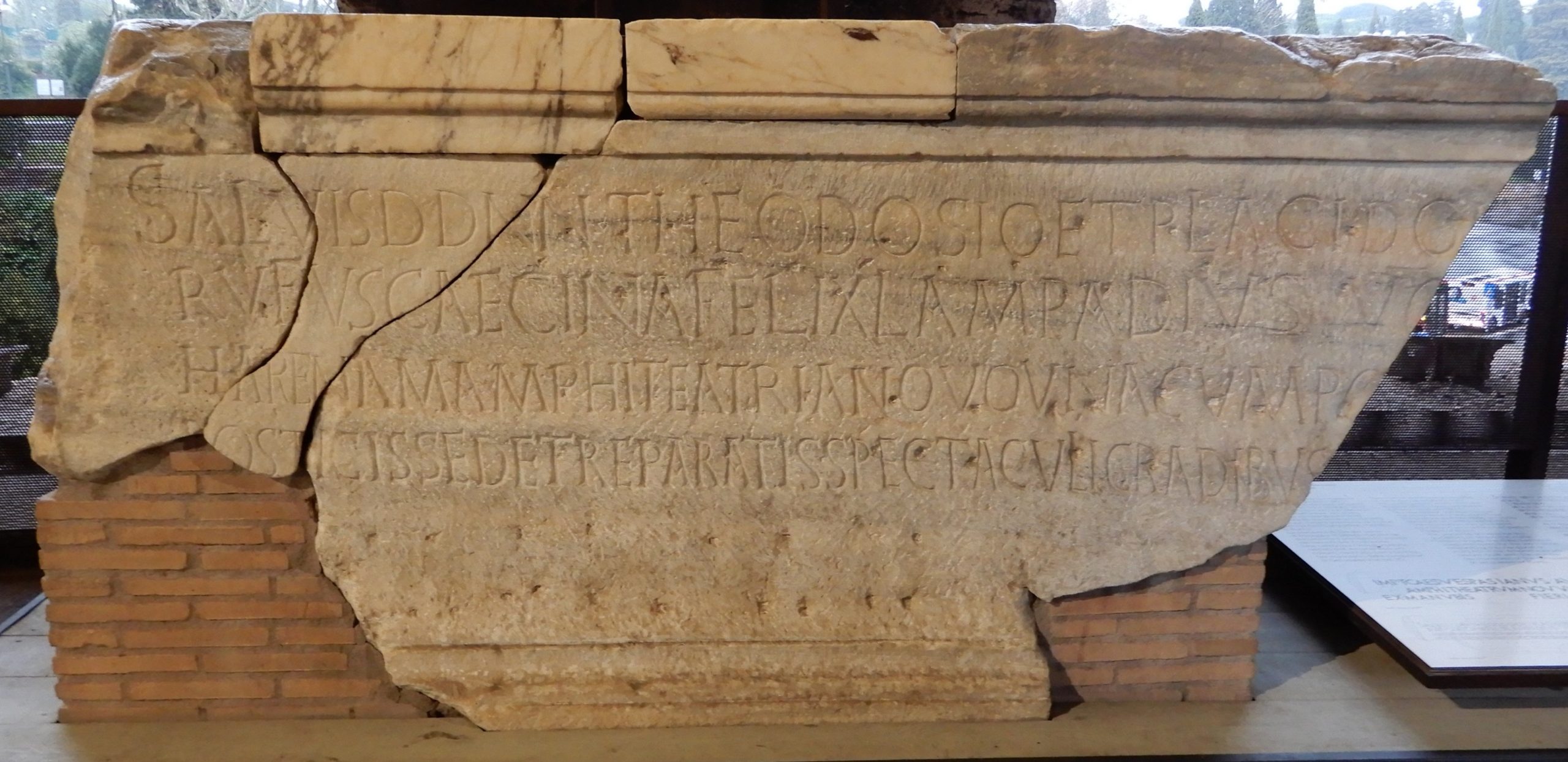
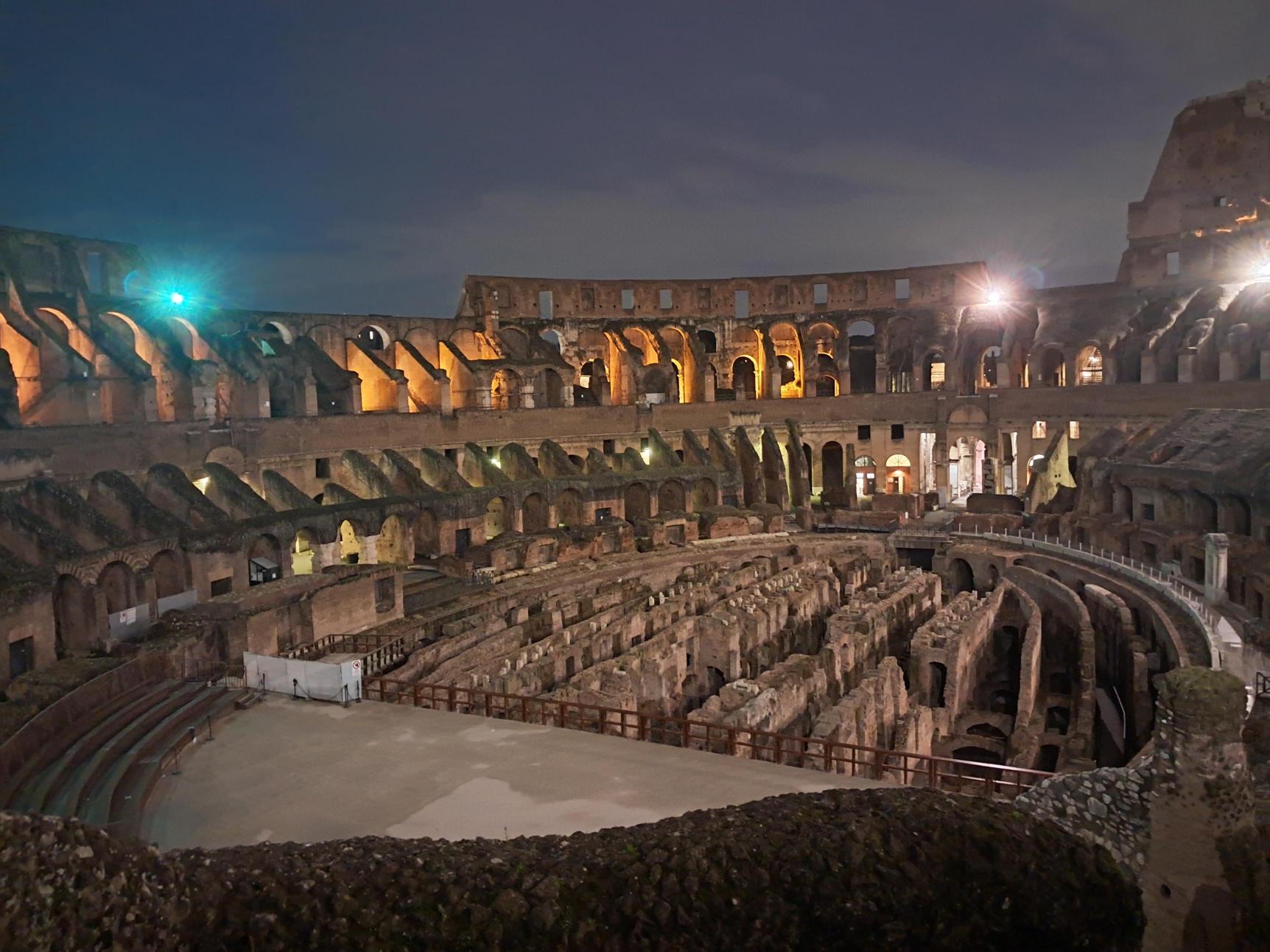
This paper offers a detailed reconsideration of inscribed blocks found in the ‘Colosseum’, which were reused in late antiquity, leaving behind only dowel holes from their original text. It re-examines the hypothetical text proposed by Geza Alföldy in 1995 in the light of new high resolution laser scanning undertaken by this research team. It assesses the plausibility of Alföldy’s proposal that the text represents a building-inscription of Titus, replacing one of Vespasian, in the light of both newly acquired technical data and its archaeological, historical, and epigraphic contexts. It offers a new reading of the text in order to demonstrate that Alföldy’s version is not the only one possible, and suggests that it might instead relate to improvements made by Domitian to the arena itself.
Alison Cooley is currently Professor in the Dept of Classics & Ancient History and Director of the Institute of Advanced Study at the University of Warwick. In that role, she oversees interdisciplinary postdoctoral training, mentors early career researchers, curates a programme of distinguished international visiting fellows, and hands out internal research funding: an extremely fulfilling portfolio of tasks! She also works closely with European university partners in the Eutopia alliance. Her inspiration for her IAS role has come from decades of engaging with the vibrant interdisciplinary community of the BSR, including as a Rome Award holder, member of FAHL, and editor of PBSR. She has published widely on Roman Italy, epigraphy, Pompeii and Herculaneum, and the early Principate. Her commitment to interdisciplinary research is reflected in her topic of her lecture tonight, which presents work done in collaboration with Paula Wilson and Mike Donnelly of Warwick Manufacturing Group.
This lecture is part of the City of Rome programme, an intensive eight-week residential course directed by Dr. Christopher Siwicki, designed for postgraduates from selected British partner universities. The programme is aimed at students at the Master’s or early Doctoral level studying classical archaeology, art history, ancient history, and the transformation of antiquity in the Middle Ages and modern period.
See the full programme of City of Rome here.
The event is hybrid. You’re welcome to attend in person—no registration is needed, and access is free. If you would like to join us online, please make sure to register using the link above.