

The lecture examines patterns of coin circulation in the city of Rome between second and first centuries BC, drawing on evidence from coin finds from urban excavations. Building on research conducted for my doctoral and earlier specialist work, I explore how material recovered from the so-called sottosuolo urbano can illuminate the composition and dynamics of the Roman monetary pool during a period of profound political and socio-economic transformation.
The late Republic was marked by increasing military expansion, intensified mobility, and the growing integration of Italy and the wider Mediterranean. These developments are reflected not only in the volume of coin production but also in the diversity of coin types circulating within the city. By analyzing the whole assemblage alongside broader quantitative trends, I reconstruct patterns of loss, retention, and recirculation within Rome’s urban environment. Particular attention is paid to the decades spanning roughly 120–80 BC, a phase characterised by both growing monetisation and structural tensions within the Republican system.
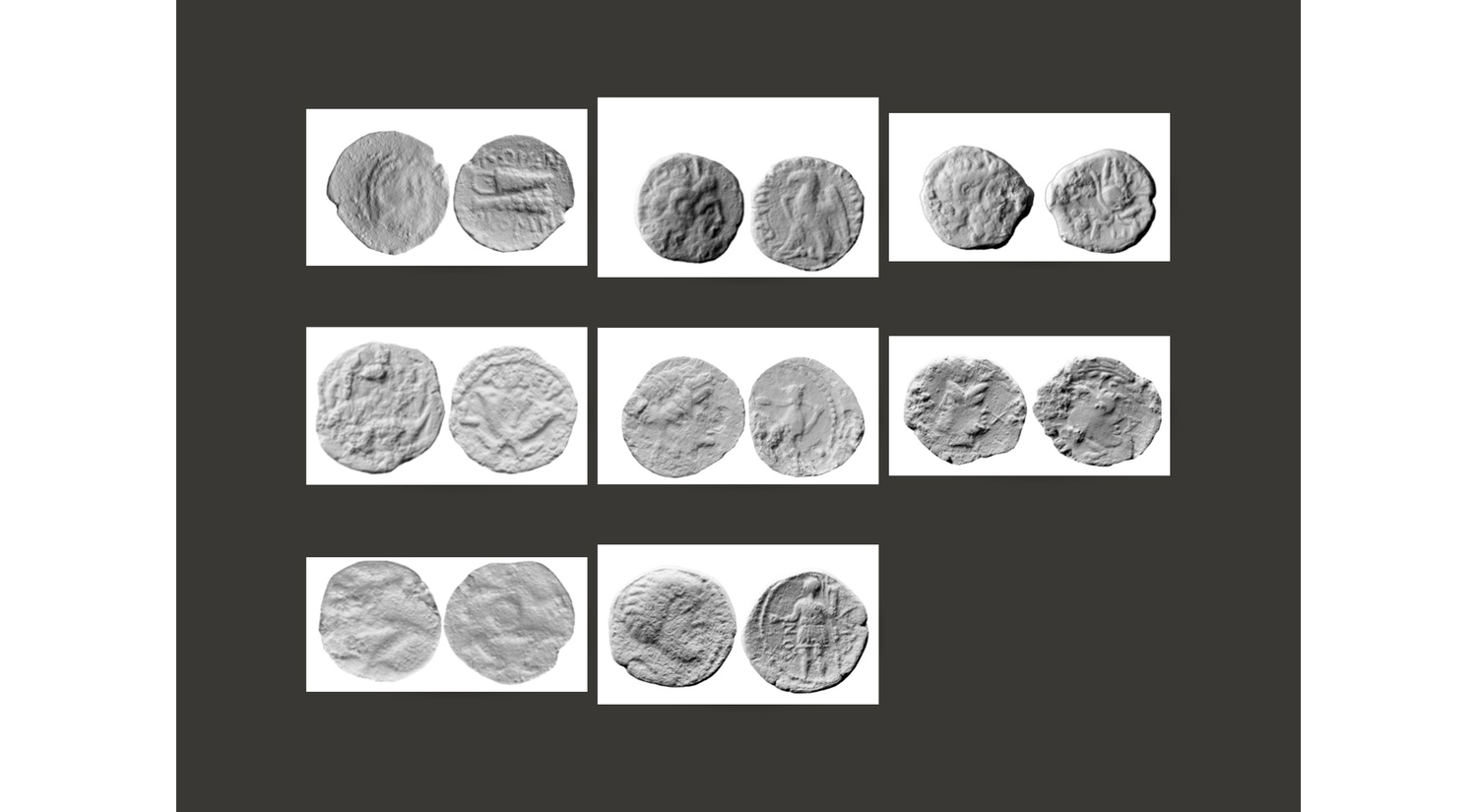
A central focus of the paper is the presence of non-Roman coinage within the urban monetary pool. Far from being marginal anomalies, foreign issues—whether from allied Italian communities or more distant Mediterranean regions—offer valuable evidence for connectivity, economic permeability, and the practical realities of exchange. I assess the scale and contexts of their appearance, considering whether such coins functioned as fully accepted currency, as bullion, or as residual material embedded within circulation patterns shaped by warfare, migration, and commerce.
Rather than approaching coin finds solely as chronological indicators, this study treats them as active components of urban economic life. Their spatial distribution and associative contexts allow us to move beyond production-based narratives towards a more nuanced understanding of how money operated in everyday transactions. In doing so, the paper seeks to contribute to broader debates on monetisation, integration, and urban economic behaviour in the late Republican world, while presenting the evidence in a way accessible to a multidisciplinary audience.
Marta Barbato is an archaeologist specialising in ancient numismatics and currently serves as Head of the Coin Cabinet at the National Roman Museum in Rome. She completed her PhD in Classics and Ancient History at the University of Warwick, where her doctoral research examined Roman Republican coin finds from urban excavations in Rome and central Italy.
Her research focuses on patterns of monetary circulation, hoard evidence, and the economic and communicative functions of coinage in the late Roman Republic and early Empire. She has published widely in international journals, including The Numismatic Chronicle, Revue Belge de Numismatique et de Sigillographie, and Mélanges de l’École française de Rome. She is also Co-Director of Ancient Numismatics. An International Journal.
Alongside her academic research, she holds a position within the Italian Ministry of Culture, where she contributes to the safeguarding, study, and research of numismatic collections.
This lecture is part of the City of Rome programme, an intensive eight-week residential course directed by Dr. Christopher Siwicki, designed for postgraduates from selected British partner universities. The programme is aimed at students at the Master’s or early Doctoral level studying classical archaeology, art history, ancient history, and the transformation of antiquity in the Middle Ages and modern period.
See the full programme of City of Rome here.
The event is hybrid. You’re welcome to attend in person—no registration is needed, and access is free. If you would like to join us online, please make sure to register using the link above.