

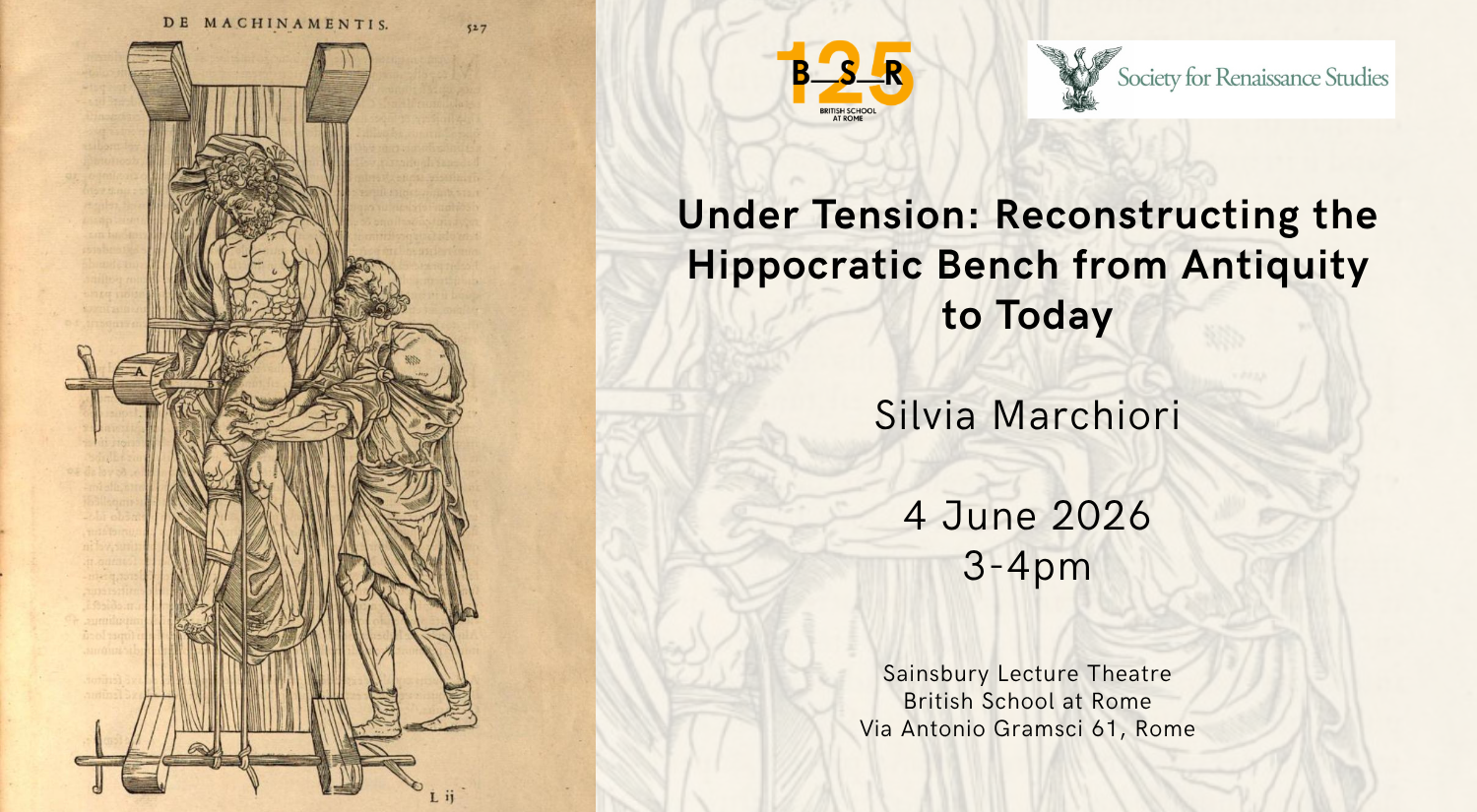
Historians have long used re-enactment to recover the experiential knowledge of early modern scientific practices, baking cakes using early modern recipes and recreating alchemical experiments. But what if we historicise re-enactment itself? This workshop explores how sixteenth-century physicians reconstructed the medical knowledge, techniques, and instruments of classical Antiquity. In the 1530s, the learned physician Guido Guidi obtained a tenth-century Byzantine manuscript containing ancient descriptions and illustrations of bandaging techniques and orthopaedic devices, including the so-called Hippocratic bench: a large machine designed to apply traction to limbs in the treatment of fractures and dislocations. After translating the text from Greek into Latin, Guidi worked with artists to reshape the Byzantine illuminations into Renaissance drawings that helped readers visualise the technical complexities of a wide range of surgical procedures. Drawing on Guidi’s manuscripts and printed works, I have been collaborating with the BSR’s Senior Maintenance Officer Fulvio Astolfi to reconstruct the Hippocratic bench and re-enact the medical practices associated with it. Following an introduction tracing the fate of the Hippocratic bench from Antiquity to the Renaissance, this workshop combines historical analysis with hands-on engagement. Participants will be able confront the challenges of recovering highly practical knowledge using only textual and visual evidence, experimenting with surgical knot-tying and operating the Hippocratic bench.
Silvia Marchiori received her PhD in History and Philosophy of Science from the University of Cambridge and is currently the 2025-26 Rome Fellow at the British School at Rome. Her research on the reception of Cornelius Celsus’s De medicina in medieval and early modern Europe explores the transmission of ancient medical knowledge from the perspective of the histories of practice, engaging with manuscript culture, translation studies, the history of surgery, and the financial and social negotiations of philological work.