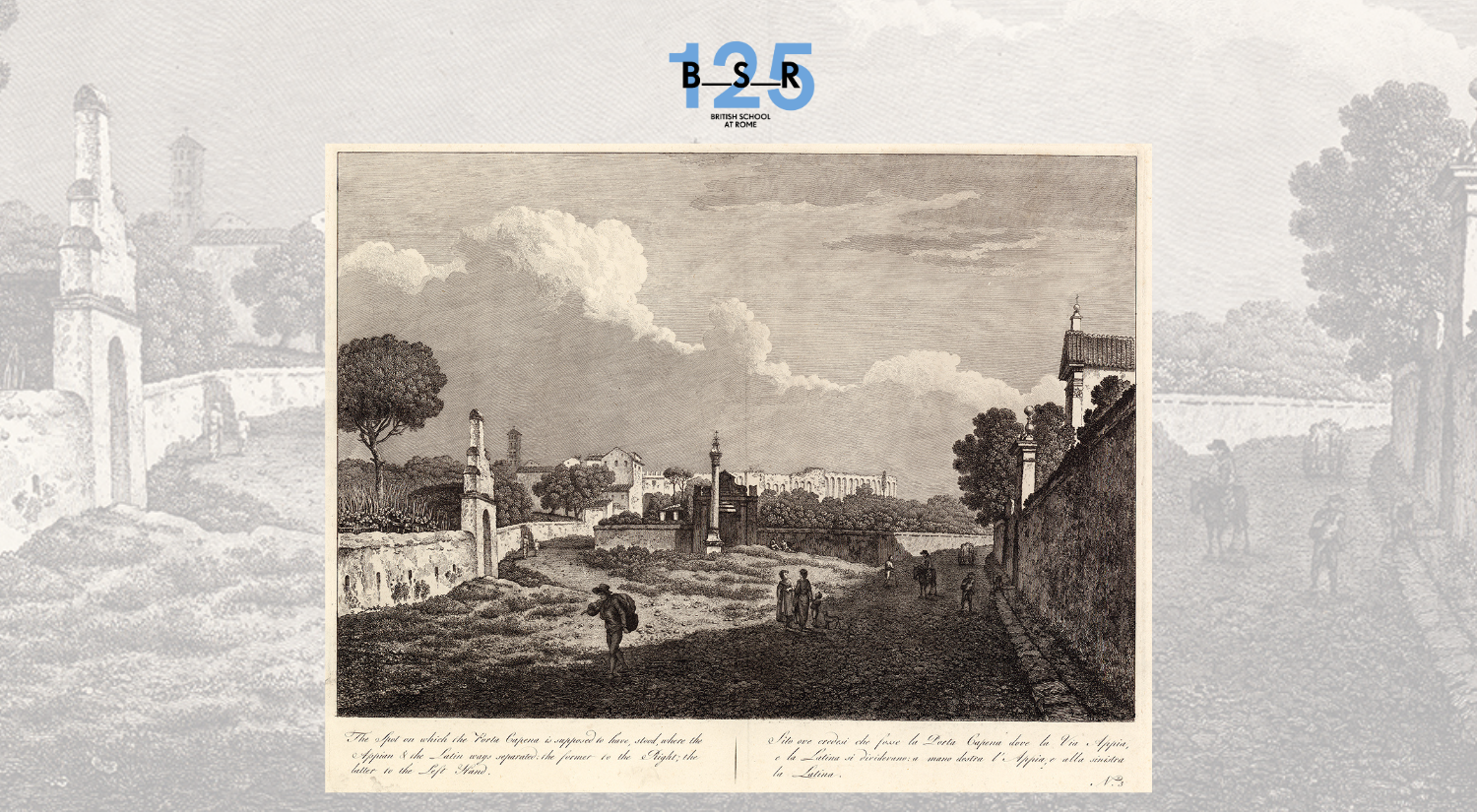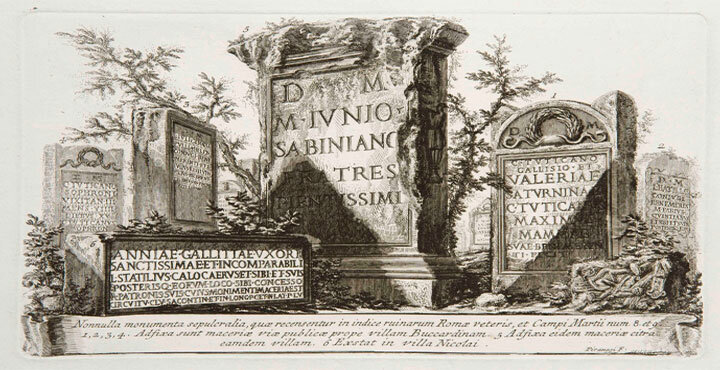


The British School at Rome (BSR) has recently initiated a new research collaboration with the Norwegian Institute in Rome (DNIR) focused on the historical development of the stretch of the via Latina located within the Aurelian Walls. One of the earliest named roads of ancient Rome, the via Latina predates the more renowned fourth-century BC via Appia and originally extended for over 200 kilometres from Rome to Capua.
While the via Latina and its associated monuments outside the city have been the subject of extensive scholarly attention, the section within the third-century AD Aurelian Walls has remained comparatively understudied. This collaborative research project seeks to address this gap by examining the road’s evolution from antiquity through the modern period.
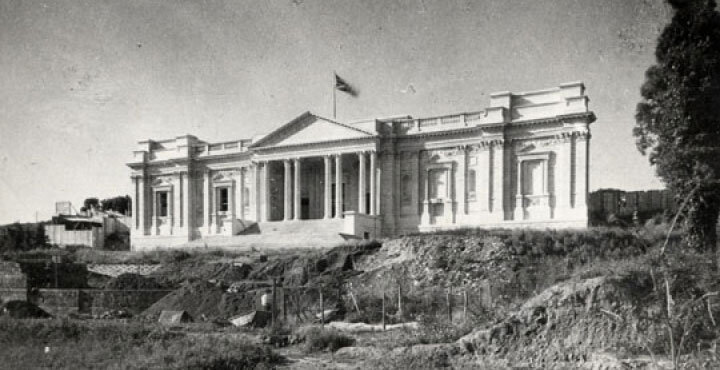
As part of the research programme, a virtual exhibition has been curated that brings together nineteenth- and early twentieth-century photographs from the historic research collections of the BSR and DNIR, alongside contemporary photographs of the same locations. The juxtaposition of historic and modern images highlights the transformations that have taken place over the past century and a half, particularly in relation to the restoration and presentation of ancient monuments.
The virtual exhibition, entitled Deceptively Unchanged: Historic Images of the First Mile of the Via Latina, is now available online and can also be accessed in Norwegian.
Further details on the project are published in the recent fieldwork report:
Stephen Kay and Christopher Siwicki, “The First Mile of the Via Latina Project, Rome,” Papers of the British School at Rome 93 (2025): 395–397.
The project is led by Stephen Kay (Archaeology Manager) and Christopher Siwicki (Research Fellow).