

Dr Fiona Sit, Rome Awardee from the University of Leeds, shares insights into the development of her research project, “Refugee Identities and Sculptural Practice in Seventeenth-Century Rome.”
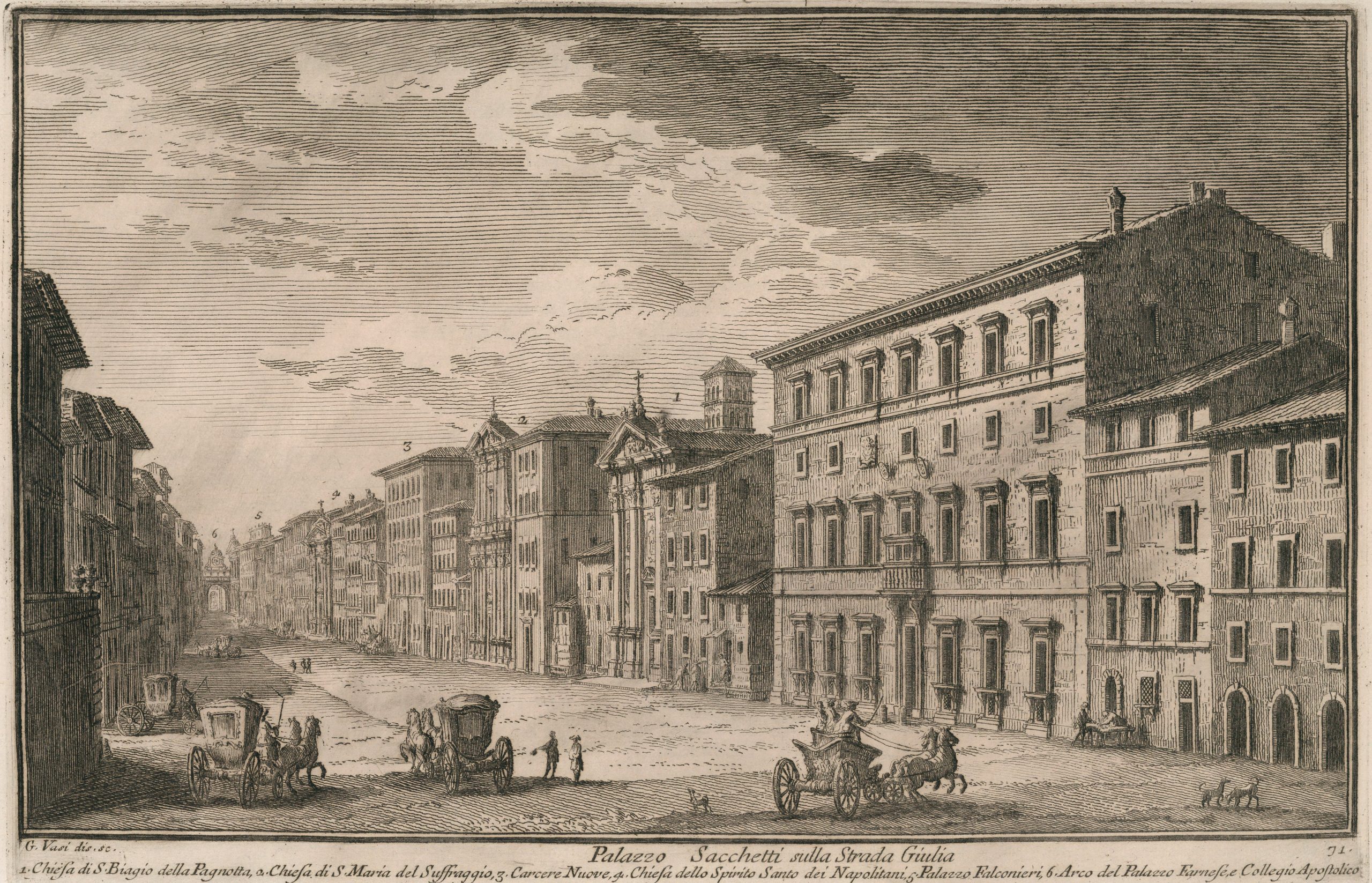
‘On the said day, two [blocks of] marble of enormous size passed by my house on Via Giulia, […], carried by eighteen buffaloes on a very low and massive cart. The first was taken to the Armata, to be worked by the sculptor Domenico Guidi; the other towards Castello, perhaps to be worked by Bernini.’
With this vivid entry in his Ephemerides of 1668, Carlo Cartari, viceprefetto of the Archives of Castel Sant’Angelo, captured the spectacle of artistic practice on Via Giulia in seventeenth-century Rome. Under papal urban reforms, the street developed into a neighbourhood with heterogeneous communities, where migrant artisans’ workshops stood beside noble palaces and foreign national churches. It became a setting in which the papal court, aristocratic families, and migrant communities all vied for prominence as they sought to assert their identities in the fabric of the city.
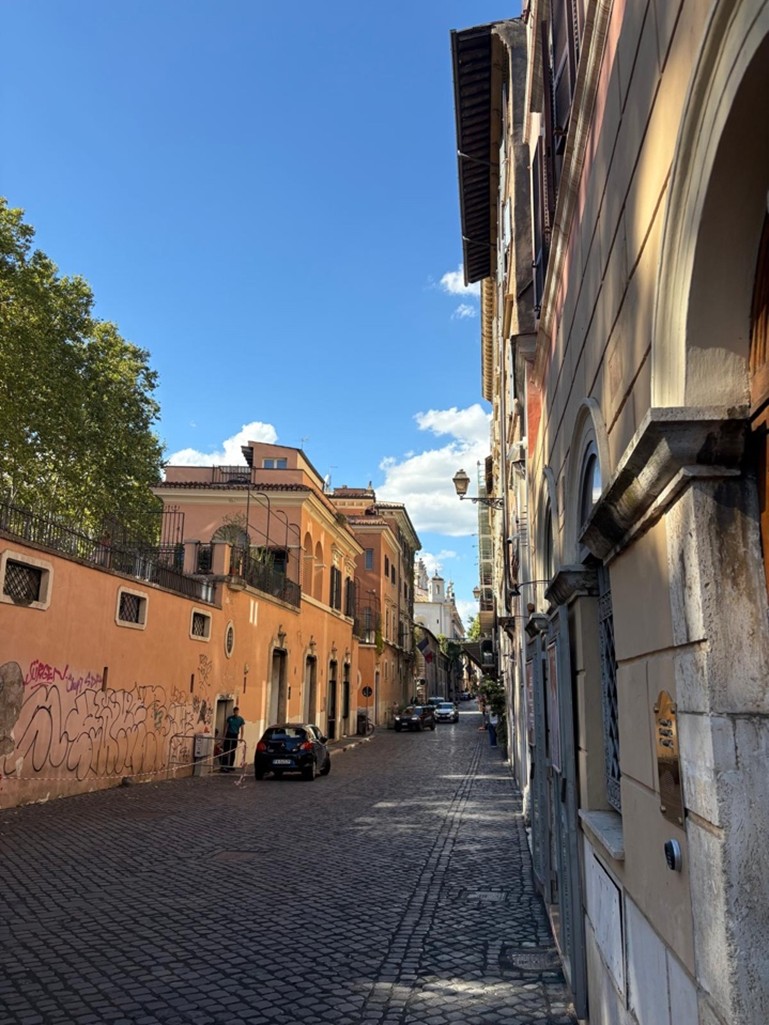
My research at the BSR examines the sculptural practice of Domenico Guidi, who established his workshop in the Neapolitan church of Spirito Santo on Via Giulia after fleeing Naples following the revolt against Spanish rule in 1647. This forms part of a larger project that considers the role of materials in shaping the identity of migrant and refugee sculptors who settled around Via Giulia in the sixteenth and seventeenth centuries. It challenges the assumption that refugees and migrants primarily sought to assimilate into their host communities. Guidi’s career instead reveals a far more complex and dynamic form of self-fashioning, as he navigated precarious relationships with the Roman, Neapolitan, and Spanish communities. With its concentration of foreign communities, Via Giulia offered a setting in which migrants actively constructed and contested their multifaceted identities.
While objects have often been understood primarily to be representational of identities, my project considers how their materiality and physical properties played an active role in self-fashioning. The properties of marble, for instance, determined how it was modelled, carved, displayed, and circulated in artisans’ workshops. These material constraints and possibilities contributed to how sculptors built their careers and expressed their identities within Rome’s complex social landscape.
Fieldwork made possible by my stay at the BSR has been central to the project. Walking along Via Giulia allows me to reconstruct the movements of artisans through the neighbourhood—from their workshops to the patrons’ palaces, and towards the port of Ripa Grande, where marble entered the city. Experiencing these spaces at the scale of the body, observing the architecture, and noting the clustering of national churches offer insights that no map or documents can fully convey. Visiting churches, museums, and galleries, where migrant artists’ works are now housed, further reveals how material choices shaped the production and reception of their sculptures.
My fieldwork is complemented by archival research. Documents preserved at institutions such as the Venerable English College on Via Giulia shed light on the disputes and power dynamics between the various communities, and how these ultimately informed artistic practice on the street. Together, the site visits and archival research enable me to trace not only how marble circulated in Rome, but also the city’s social, material, and political landscapes that shaped the identities of migrants who worked there.
By returning to a moment when ideas of ‘refugee’, ‘belonging’, and ‘extraneity’ were beginning to take shape in Europe, we can better rethink the complexities of migration today. The experiences of early modern migrants on Via Giulia remind us that mobility has long produced identities that are hybrid, dynamic, and materially grounded—forces that continue to shape the complexity of cultural landscapes in our time.