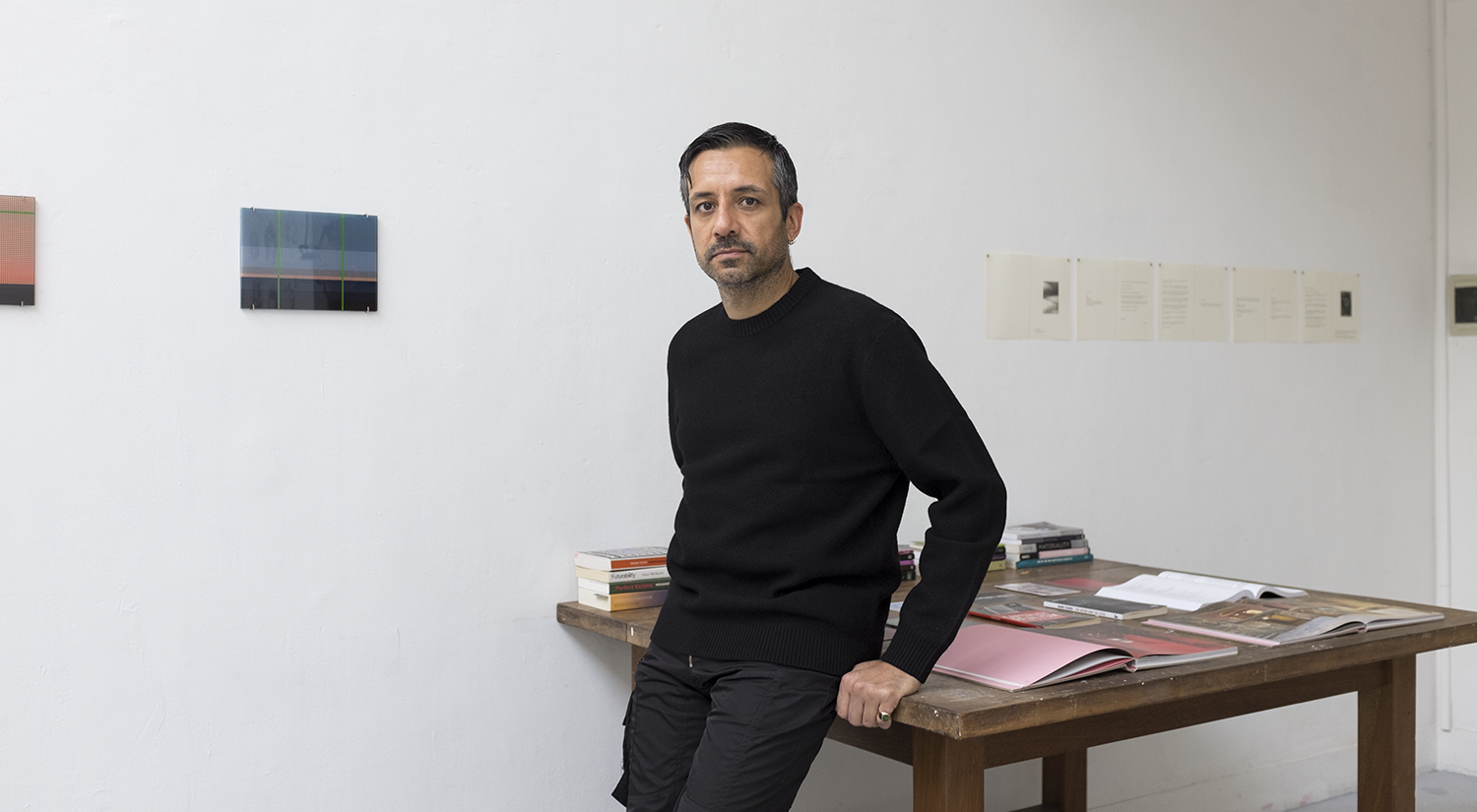
In this blog, Prem Sahib — Abbey Fellow at the BSR from September to December 2025 — shares reflections on his residency experience and the research he presented at the December 2025 Winter Open Studios.
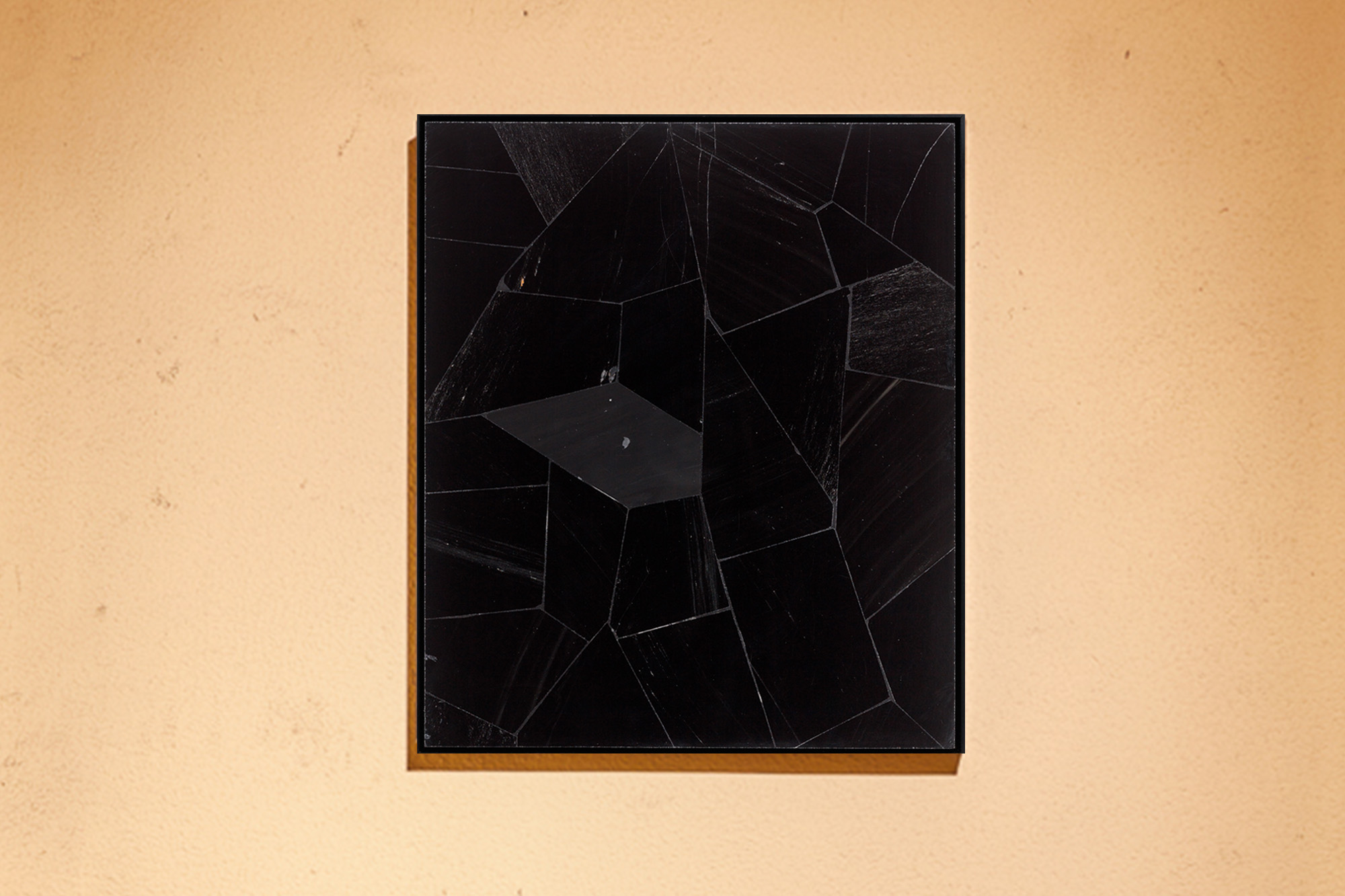
My initial research loosely centred on the material culture associated with ancient divination practices. I was mostly thinking about this in relation to screens, because of works I made previously—obsidian mirrors—based on similar forms I came across in Pompeii. I liked how the cracked surface of these mirrors resembled contemporary communication devices like smartphones and tablets, and how obsidian (being a volcanic glass) embodied ideas around violence, pressure, and trauma. When researching further, I found that some ancient cultures also used obsidian for scrying—the practice of staring into dark reflective surfaces to receive messages beyond the material world.
By chance, I was asked to participate in a group show in Rome that opened during my first week here. The exhibition, Chi esce entra, curated by Simon Würsten Marin, took place in a derelict building on Via Gregoriana—a space that once functioned as a nightclub.
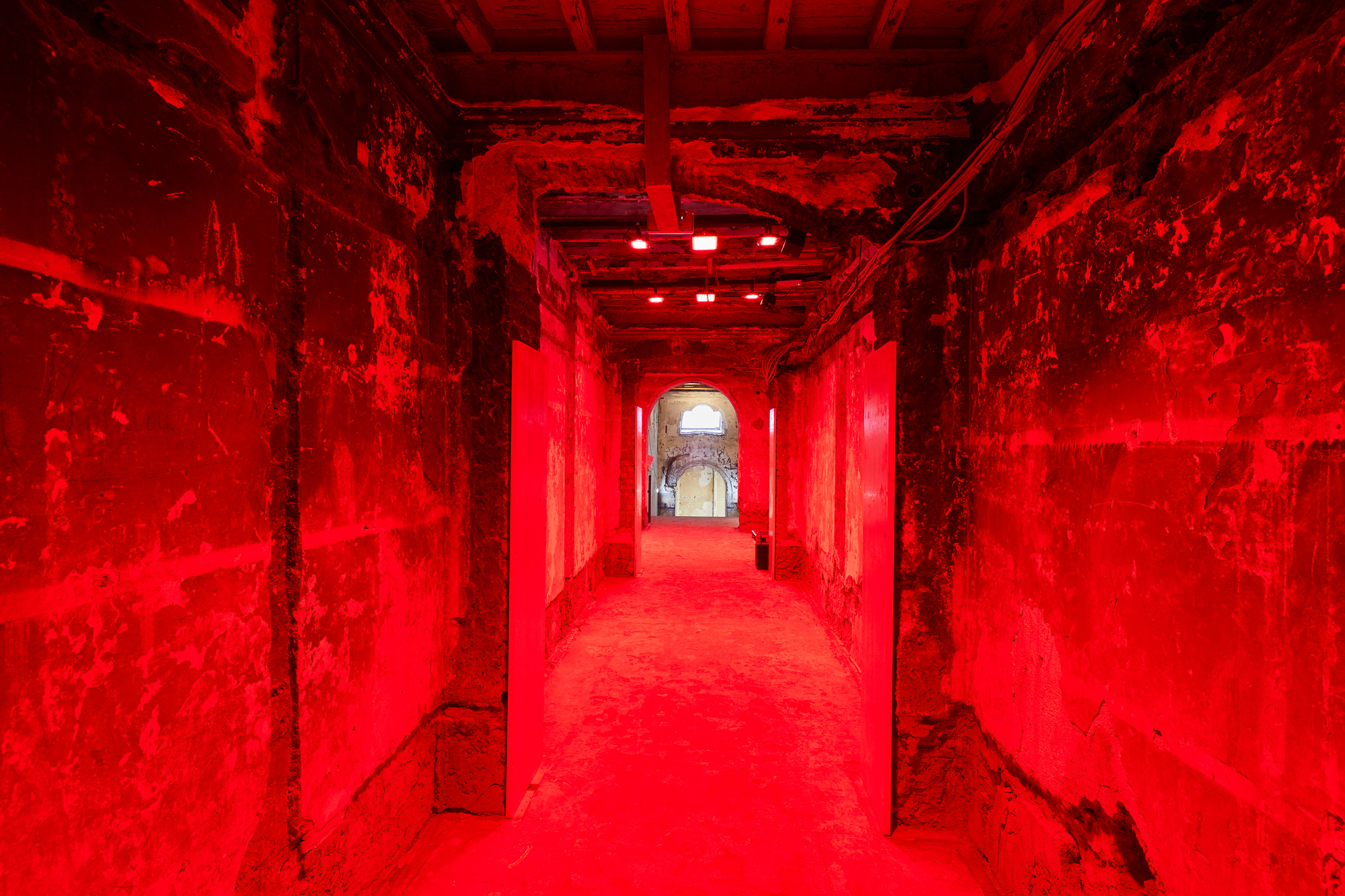
One of the works I presented was an obsidian mirror titled MAN DOG (2020), which plays a recording of an encounter I had with an American man in an online gay chat room in 2016. The hateful soliloquy plays in real time through the obsidian object once every hour, while a stretched and slowed-down version of the same monologue—where the words are no longer legible—plays as a guttural soundscape in the entrance corridor to the space, which I lit in red light, as if viewers were entering a larynx.
The idea of a refracted voice—along with echoes, reverberations, and doubling—is something I’ve continued to think a lot about during my time in Rome, especially in relation to truth and representations of reality online.
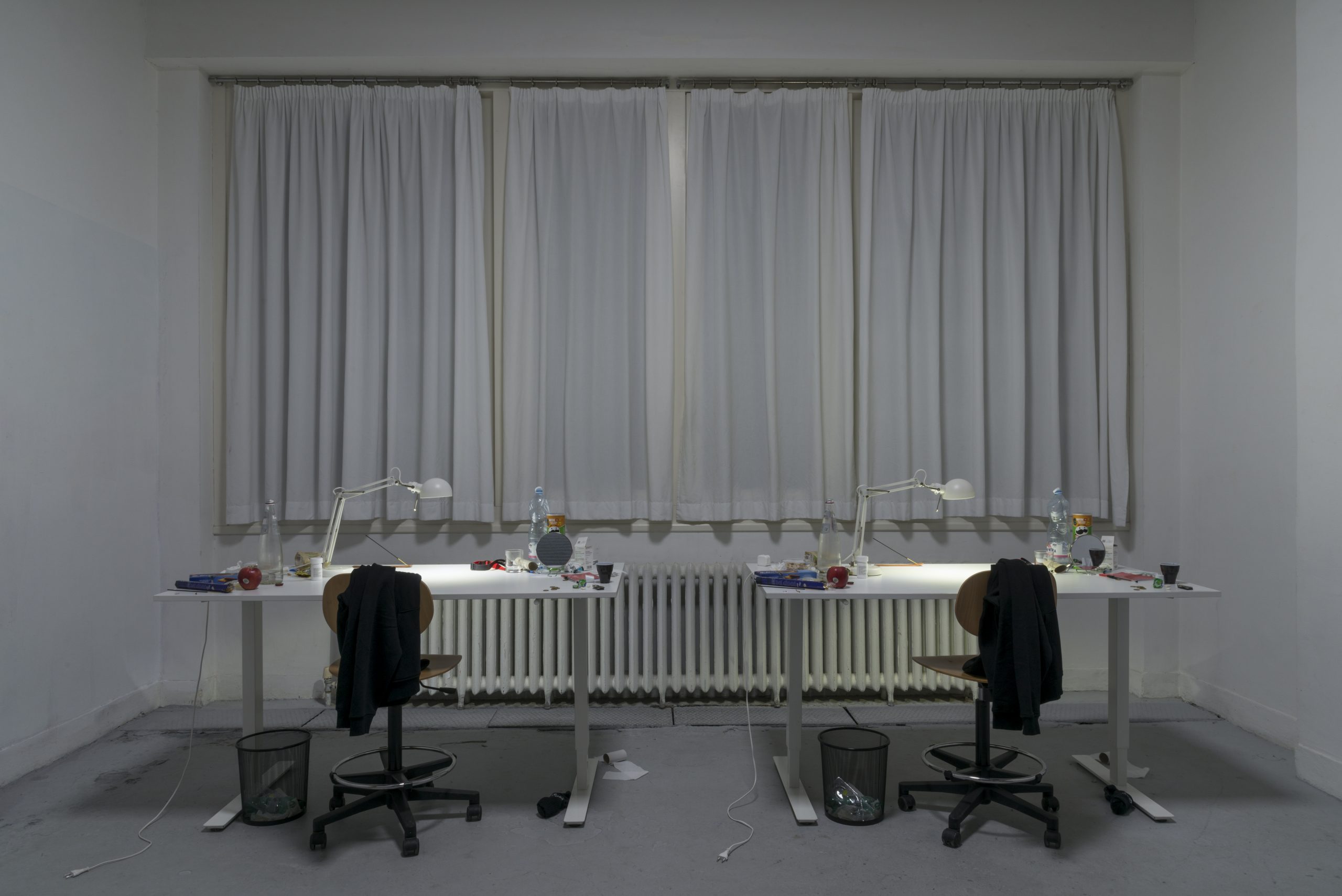
Quite early on, I began making a ‘twin still life’ using two identical desks in my studio, where I meticulously placed everyday detritus so that both forms eventually mirrored one another. I was thinking about the desk as a site of labour and knowledge production—except my desk mostly displayed signs of consumption—perhaps pointing to the ‘work’ occurring elsewhere.
Writing has helped me think through many of my ideas, and since being in Rome I’ve worked on two main texts. The first, a poem called Corruption? Real life, consists of dream fragments and prose that collectively form a kind of ‘scatter environment’. The second, Vape, is a short script I assembled from material I found in an online forum for a physical cruising site. I rearranged the conversation so that it read like a script with different acts. When I first read the thread, I noticed some users discussing an elusive and marginal figure who was undesired in this space, which they nicknamed ‘Vape’.
Alongside this, I’ve also been experimenting with body prints made using my face and acrylic paint. I’ve enjoyed looking back at these as shadowy impressions that map the contours of my body into strange and unfamiliar patterns. Like the desks, there is something uncanny and eerie at play.
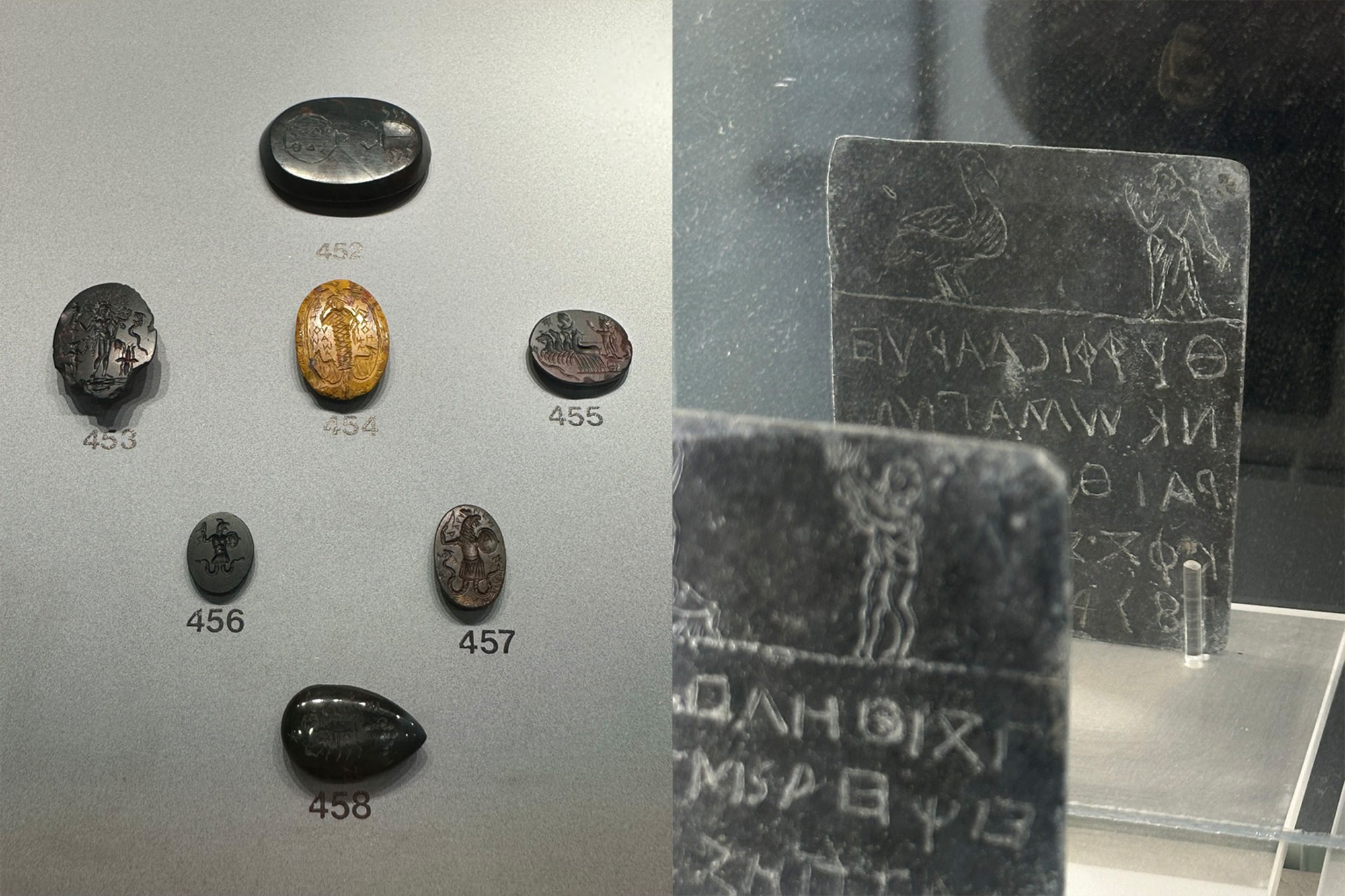
I’ve tried to see a lot of artefacts while being here, and some of my favourites include the curse tablets, or defixiones, at the Baths of Diocletian. Although not strictly rooted in divination, they can be understood as forms of interference or disruption through divine means. I’m drawn to thinking about ways in which relationships to power and antagonism can be transformed or reimagined. Formally, it was interesting to see engraving, piercing, and folding as part of this language of fixity and mobilisation.
In Naples, I also loved seeing the Farnese gemstones at the Archaeological Museum, which include a large number of apotropaic amulets. It was here that I came across the Gnostic figure Abraxas: a deity depicted with a rooster’s head, a warrior’s body, and two serpents as legs—believed to surpass dualisms and binaries such as good and evil, light and dark etc. I later learned that he was often invoked on many of the defixiones I had seen in Rome.
For me, this interest in the ‘divine’ is a way to think about superseding the institutional and political frameworks that enact upon our lives.
Before I arrived, I had been working on a new series of works that I call reverse paintings, which are made by injecting paint into the back of acrylic sheets in which thousands of small holes have been milled. From the front, the paintings look a bit like screens which hold a residual light, perhaps appearing as if malfunctioning, or refusing to transmit an image fully. Amidst the monotony and trappings of my doubles, I found myself looking to horizons to develop these works. However, when mediated through the digital, they somehow end up feeling even more insidious.
Much of my research has brought me back to questions around the political capacities of art in an age of censorship, and how we navigate a future where suspicion, corruption, and the need to protect ourselves have become part of our everyday.