In this blog, David Osbaldeston, Abbey Fellow from January to March 2026, reflects on his residency experience and the research he presented at the Spring Open Studios in March 2026.
At its most fundamental, my research explores the tensions found between seeing and reading, and much of what I do has the deliberate intention of making something both familiar in appearance and re-animated for the present.
Like any discipline the making of art has its own codes and histories too. The point is to try to do something interesting with them. The opportunity of undertaking the Abbey Fellowship in Painting at the British School at Rome meant I could find ways to inform what I do outside the regular patterns of making.
The work I make takes the form of drawing, printmaking, photography, collage, and painting to explore power relationships, value systems, styles or identities. When in the studio, the final product is often a result of intensive labour that goes through several layers of editing, translation and re-making.
This results in an accumulation of activities which come together to spatially operate as a kind of ‘flat sculpture’.
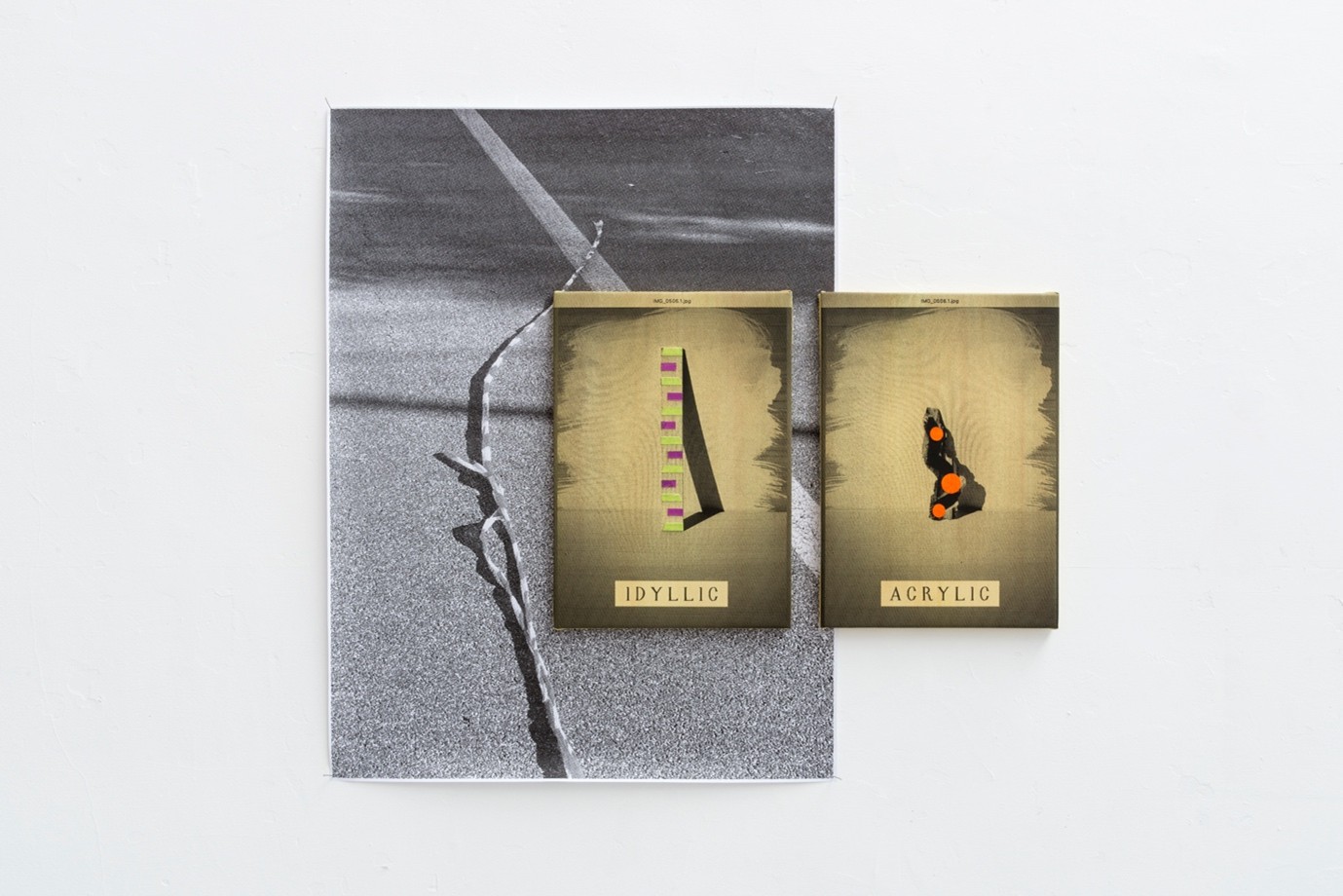
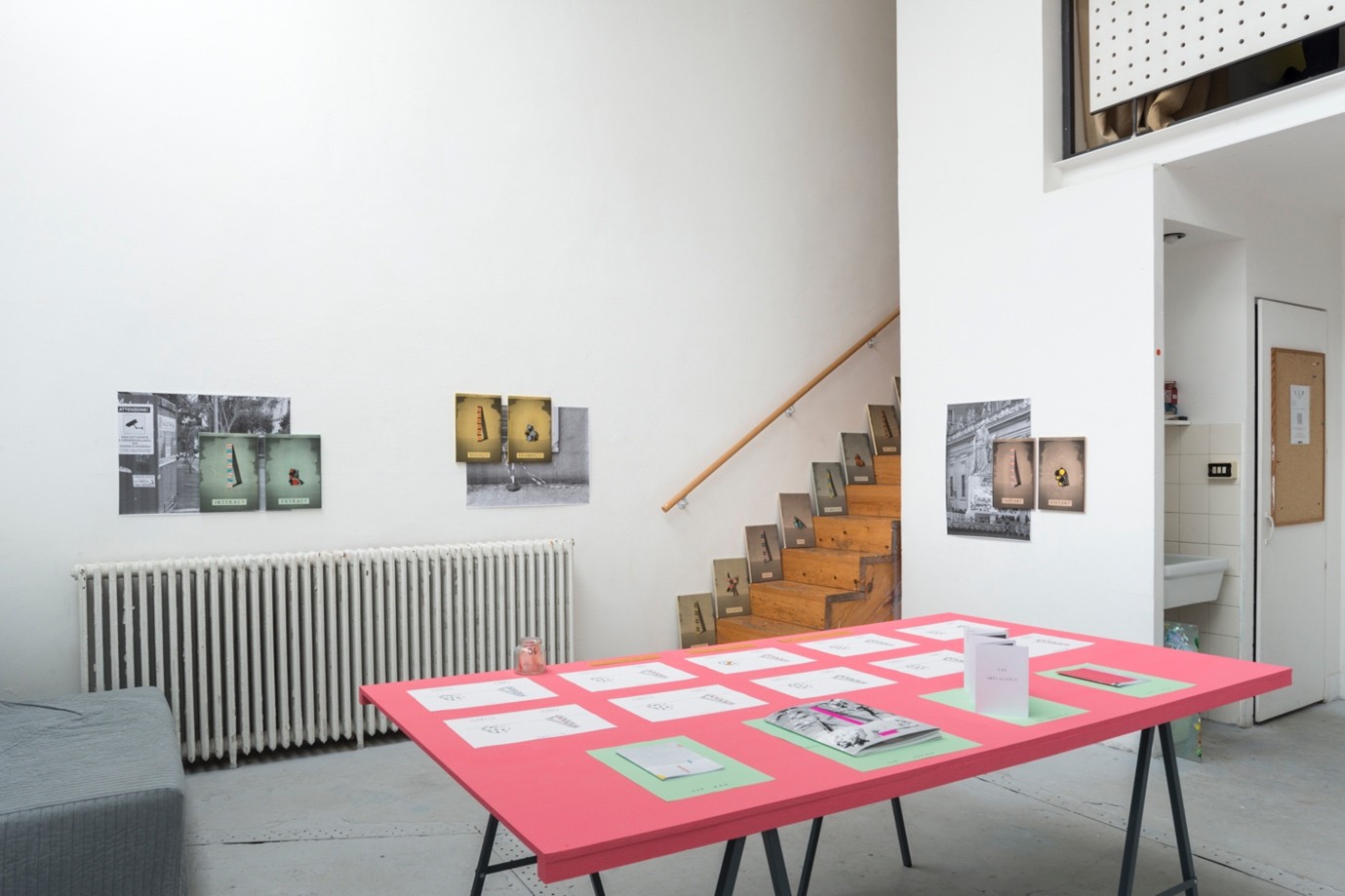
The Diverted (idyllic / acrylic) 2026. Oil, collage, & half-tone inkjet print on canvas, each 245 x 350mm, with 540 x 720mm printed poster.
What concerns me is a conscious effort to play or interfere with established perceptions where one position or state of being is in dialogue or conflict with another.
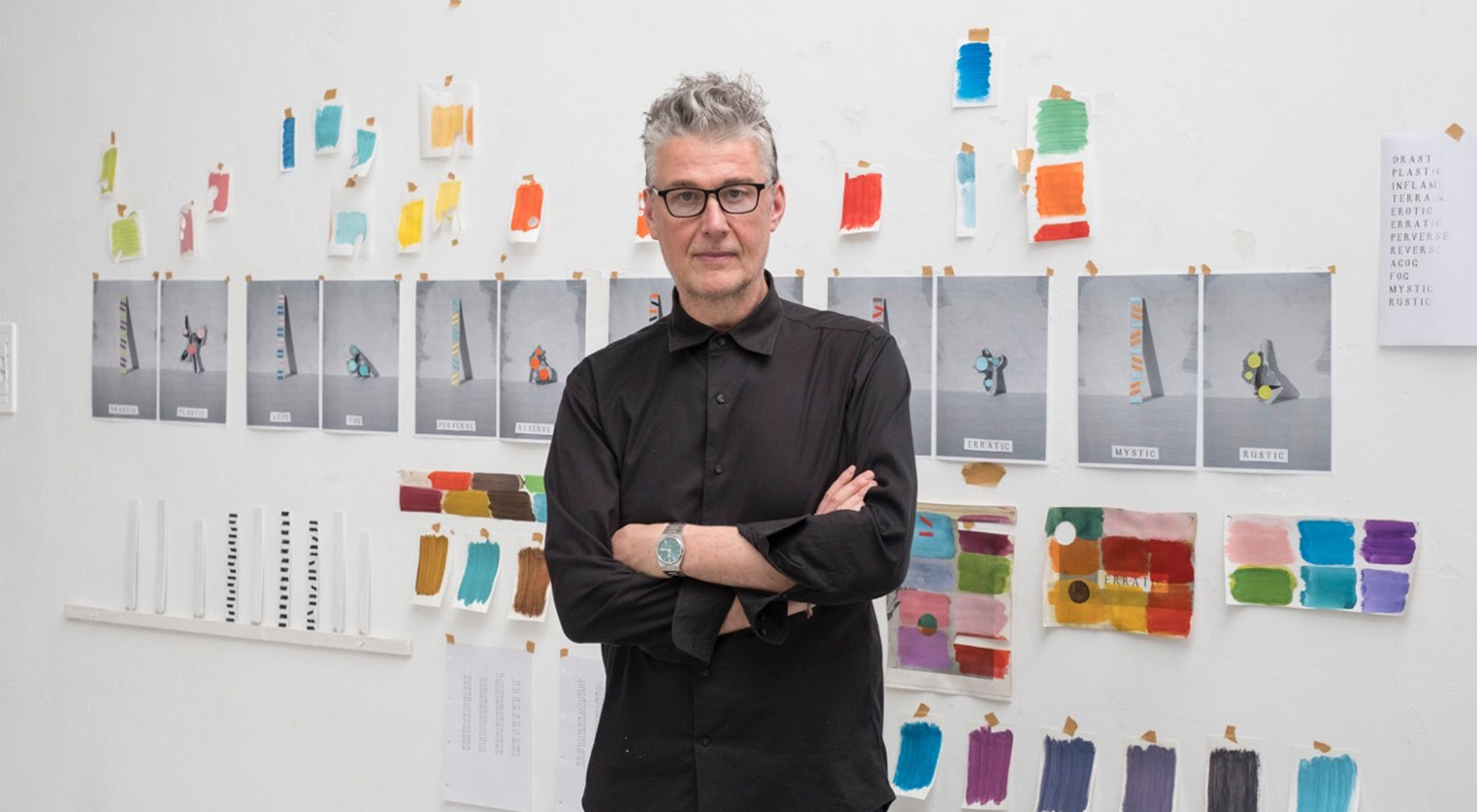
In recent years I have been making series of works I call ‘word props’ which are an ongoing collection of characteristics making us human.
Sometimes I’m looking to find a set of thematic connections to be edited down over time. These are arranged in symmetrical and asymmetrical pairings to invoke the absurdities found amidst an increasingly intolerant public sphere. Like ‘elective affinities’ ** in reverse.
Other times they are intentionally fuzzy or appear to synchronise like a riddle and are almost always expressed as dualities or multiples presented in sequences for which I later find a title. I think of them like threads bound together in a dialogue where associations are formed and stretched.
I realise that to a reader (if you’ve got this far) all this may sound a bit abstract, but I’m compelled to make something where the outcome is uncertain until something tacit is implied. So, what I’m looking for in a new set of arrangements is a contradiction which becomes both concrete yet slippery.
Spending time with the city has been invaluable. Like a slow reveal, it’s become clear that Rome is nothing but a series of continuous or broken narratives, enigmatic yet visceral, many of which continue into the present moment and will evolve beyond.
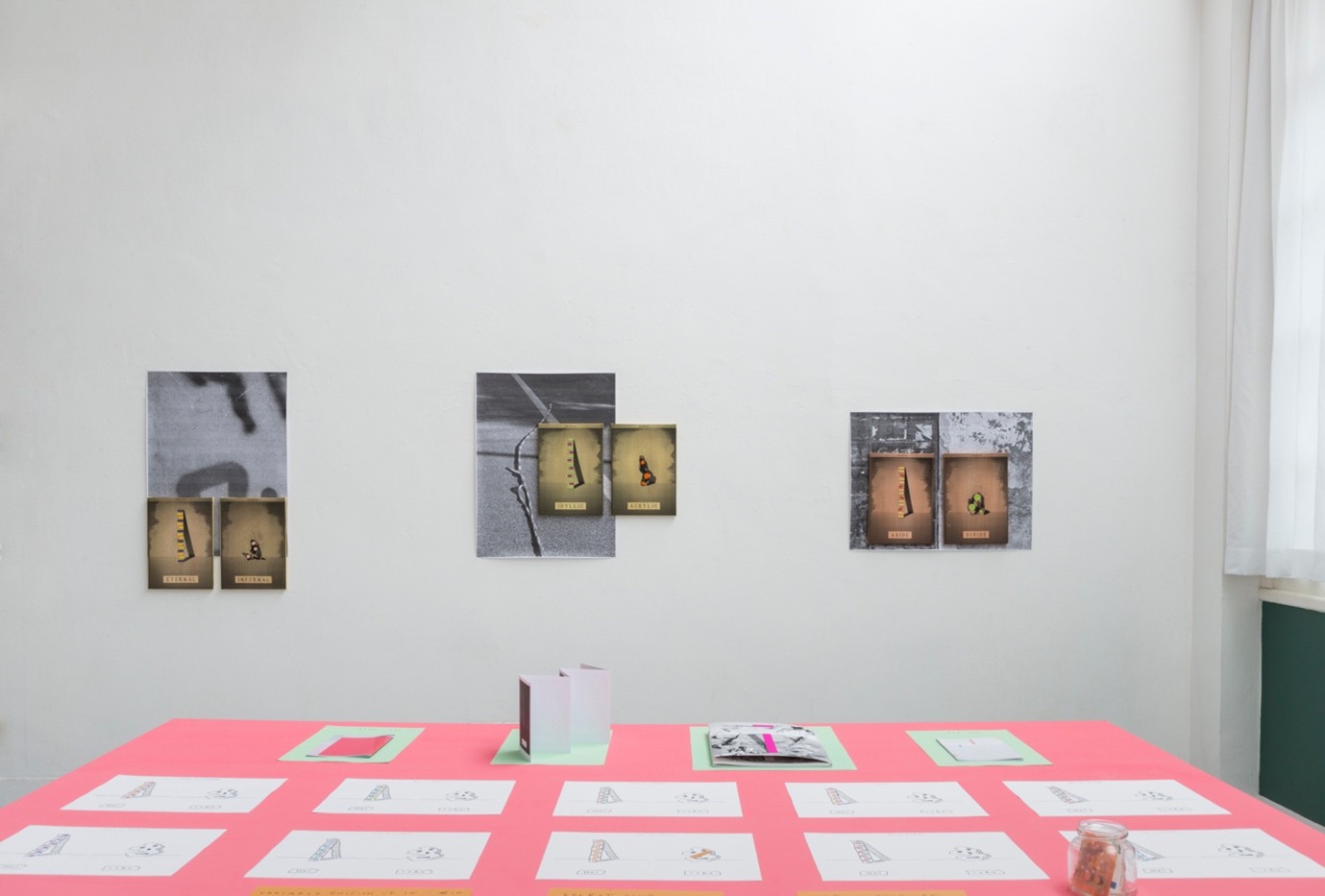
Open Studio, Installation. 2026, photo by Luana Rigolli
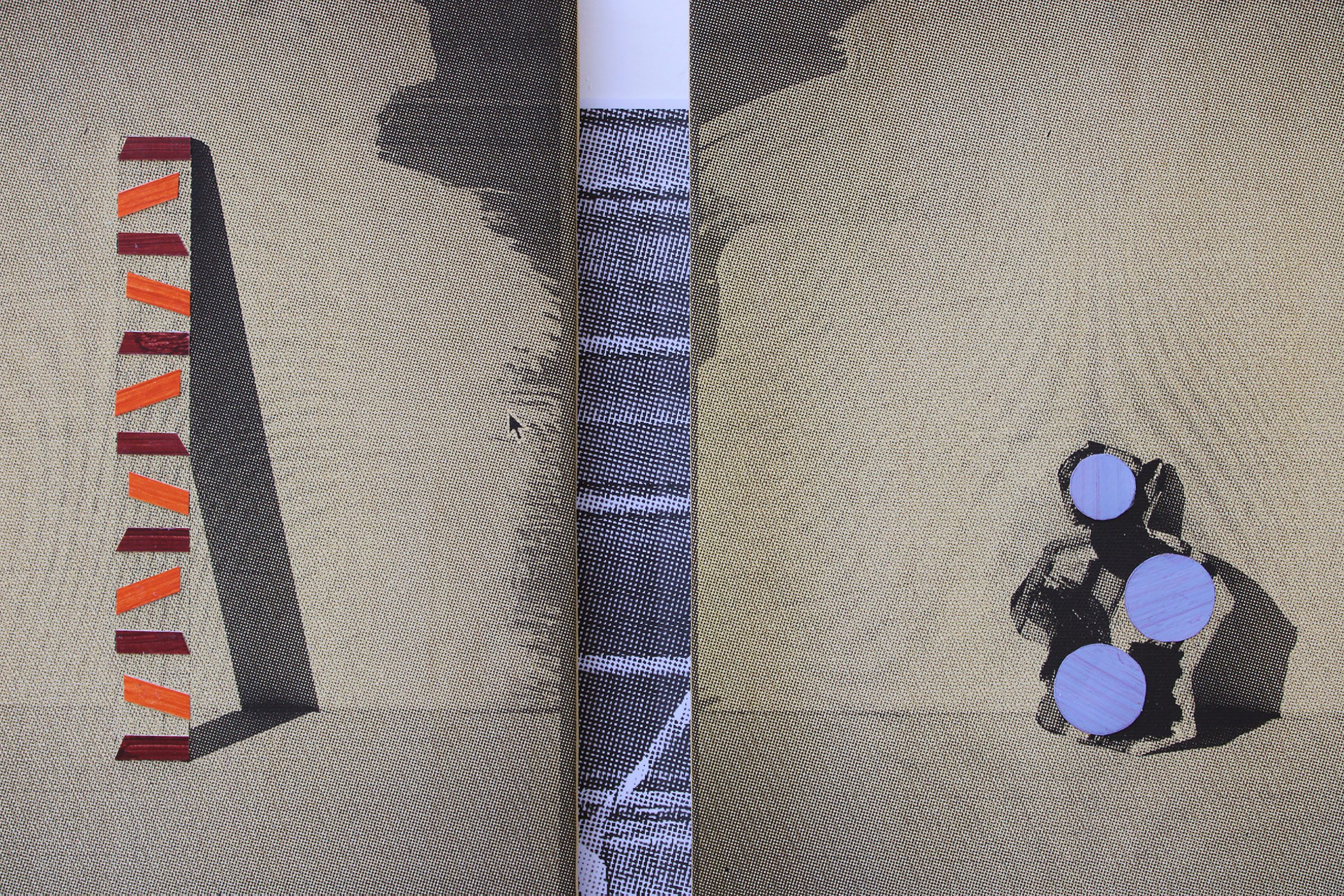
The Diverted (Bucolic / Shambolic) detail, image courtesy the artist. 2026
Initially, my interest was to research the multiple epigraphic qualities found in the city and how the manifestation of control and power stretching from antiquity to modernity played out within the urban fabric. This could not be experienced in the same way in any other location. I’m conscious the accumulative effect of this catches the mind more than any single effect and is expressed in the artistic achievements, architectural styles, ideologies and patronages which have shaped them.
To begin with, I named the working title to this idea (somewhat ironically) as The Interference of Time. This was meant as a kind of private joke that if the laws of physics could be adjusted, then perhaps monolithic forms of control and power could be re-imagined too. But I now feel this was a diversion.
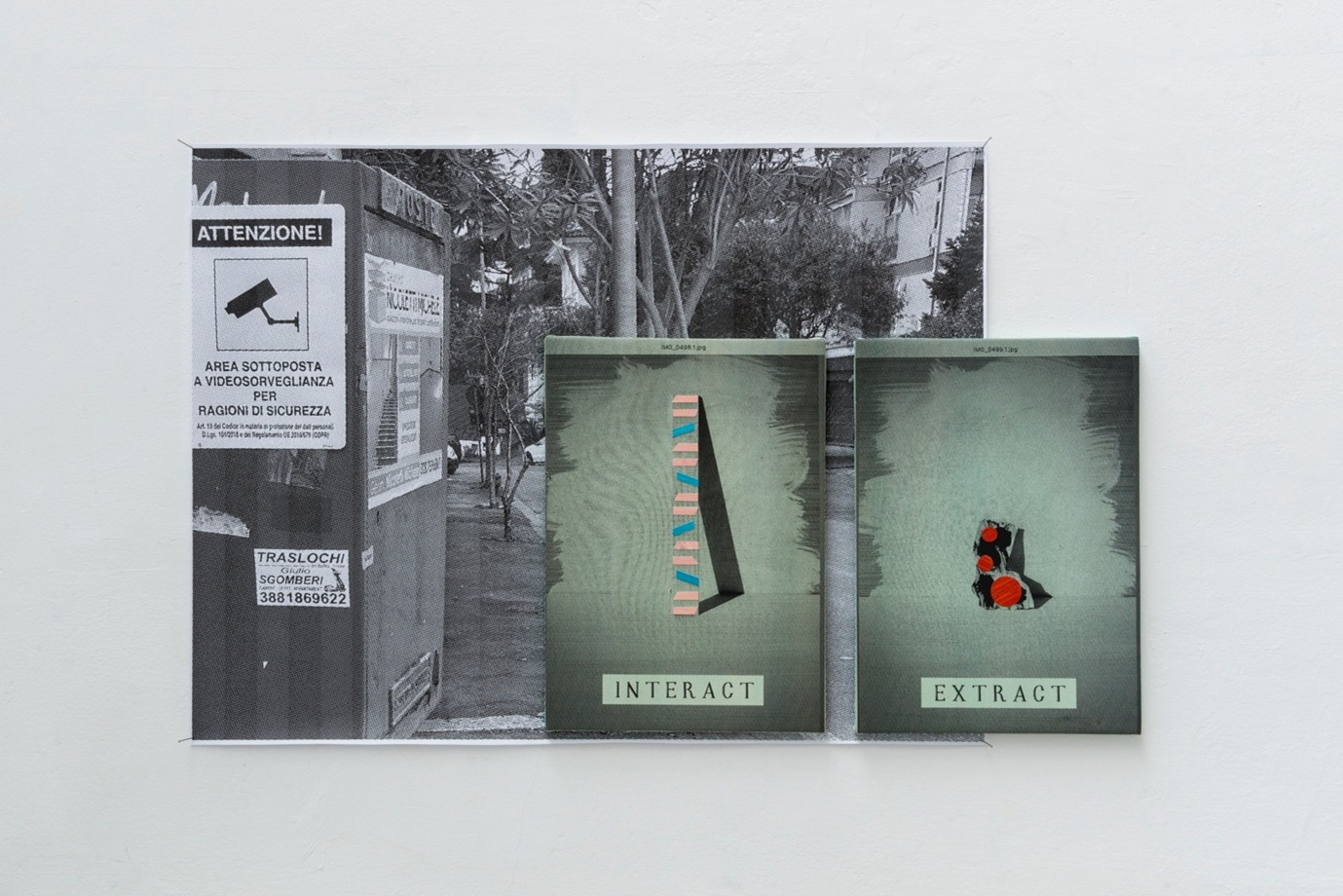
The Diverted (interact / extract) 2026. Oil, collage, & half-tone inkjet print on canvas, each 245 x 350mm, with 540 x 720mm printed poster.
In any city, but particularly in Rome, what often appears constant is the presence of a conspicuous authority where distinctions between the demarcation and politicisation of public space are difficult to avoid. These are diversions.
Sometimes diversions are to be tolerated or ignored like the litter of hazard tape. At other times confronted, as in the case of a shelter used by the homeless since being bricked up, or an armed soldier who demanded the deletion of the images I’d casually taken whilst under surveillance some distance from the Israeli embassy.
What became evident was a need in the studio to position each pair of paintings with photo documentation as posters in a bid to close the gap between the work and its wider context. So, the diversion isn’t just a literal but a metaphorical one, which infers more than one path is or isn’t possible.
To sum up, when I now settle on certain ideas to work with, I increasingly think less of them as definitions and more as vessels for association. What the city has given me to understand (with clarity) is that it isn’t just the things themselves as subjects which matter but their proximity, and the impetus to begin to saturate the work toward a more coherent psychic and physical effect.
A diversion can of course also be a distraction, and it is this which might lead us somewhere entirely unintended.
Open Studio, Installation. 2026, photo by Luana Rigolli
** The term “elective affinities” was originally a scientific term from chemistry, once widely used by scientists such as Robert Boyle, Isaac Newton and Antoine Lavoisier, to refer to chemical reactions in which one ion would displace another. Published in 1809 in his novel of the same name, the German writer and poet Goethe applied this understanding from physical chemistry as a metaphor for human passions and social relations supposedly being governed or regulated by such laws of chemical affinity.
Lisa-Marie Harris, Sainsbury Scholar at the BSR from January to June 2026, shares in this blog her reflections on her residency experience and the research
For over thirty years the BSR has run undergraduate (Summer School) and postgraduate (City of Rome) courses on the ancient history, archaeology, and topography of
Lisa-Marie Harris, Sainsbury Scholar at the BSR from January to June 2026, shares in this blog her reflections on her residency experience and the research
For over thirty years the BSR has run undergraduate (Summer School) and postgraduate (City of Rome) courses on the ancient history, archaeology, and topography of
We use cookies on our website to give you the most relevant experience by remembering your preferences and repeat visits. By clicking “Accept All”, you consent to the use of ALL the cookies. However, you may visit "Cookie Settings" to provide a controlled consent.
This website uses cookies to improve your experience while you navigate through the website. Out of these, the cookies that are categorized as necessary are stored on your browser as they are essential for the working of basic functionalities of the website. We also use third-party cookies that help us analyze and understand how you use this website. These cookies will be stored in your browser only with your consent. You also have the option to opt-out of these cookies. But opting out of some of these cookies may affect your browsing experience.
Necessary cookies are absolutely essential for the website to function properly. These cookies ensure basic functionalities and security features of the website, anonymously.
Cookie
Duration
Description
cookielawinfo-checkbox-advertisement
1 year
Set by the GDPR Cookie Consent plugin, this cookie records the user consent for the cookies in the "Advertisement" category.
cookielawinfo-checkbox-analytics
11 months
This cookie is set by GDPR Cookie Consent plugin. The cookie is used to store the user consent for the cookies in the category "Analytics".
cookielawinfo-checkbox-functional
11 months
The cookie is set by GDPR cookie consent to record the user consent for the cookies in the category "Functional".
cookielawinfo-checkbox-necessary
11 months
This cookie is set by GDPR Cookie Consent plugin. The cookies is used to store the user consent for the cookies in the category "Necessary".
cookielawinfo-checkbox-others
11 months
This cookie is set by GDPR Cookie Consent plugin. The cookie is used to store the user consent for the cookies in the category "Other.
cookielawinfo-checkbox-performance
11 months
This cookie is set by GDPR Cookie Consent plugin. The cookie is used to store the user consent for the cookies in the category "Performance".
CookieLawInfoConsent
1 year
CookieYes sets this cookie to record the default button state of the corresponding category and the status of CCPA. It works only in coordination with the primary cookie.
elementor
never
The website's WordPress theme uses this cookie. It allows the website owner to implement or change the website's content in real-time.
viewed_cookie_policy
11 months
The cookie is set by the GDPR Cookie Consent plugin and is used to store whether or not user has consented to the use of cookies. It does not store any personal data.
Functional cookies help to perform certain functionalities like sharing the content of the website on social media platforms, collect feedbacks, and other third-party features.
Performance cookies are used to understand and analyze the key performance indexes of the website which helps in delivering a better user experience for the visitors.
Analytical cookies are used to understand how visitors interact with the website. These cookies help provide information on metrics the number of visitors, bounce rate, traffic source, etc.
Cookie
Duration
Description
_ga
1 year 1 month 4 days
Google Analytics sets this cookie to calculate visitor, session and campaign data and track site usage for the site's analytics report. The cookie stores information anonymously and assigns a randomly generated number to recognise unique visitors.
_ga_*
1 year 1 month 4 days
Google Analytics sets this cookie to store and count page views.
_gat_gtag_UA_*
1 minute
Google Analytics sets this cookie to store a unique user ID.
_gid
1 day
Google Analytics sets this cookie to store information on how visitors use a website while also creating an analytics report of the website's performance. Some of the collected data includes the number of visitors, their source, and the pages they visit anonymously.
CONSENT
2 years
YouTube sets this cookie via embedded YouTube videos and registers anonymous statistical data.
Advertisement cookies are used to provide visitors with relevant ads and marketing campaigns. These cookies track visitors across websites and collect information to provide customized ads.
Cookie
Duration
Description
VISITOR_INFO1_LIVE
5 months 27 days
YouTube sets this cookie to measure bandwidth, determining whether the user gets the new or old player interface.
YSC
session
Youtube sets this cookie to track the views of embedded videos on Youtube pages.