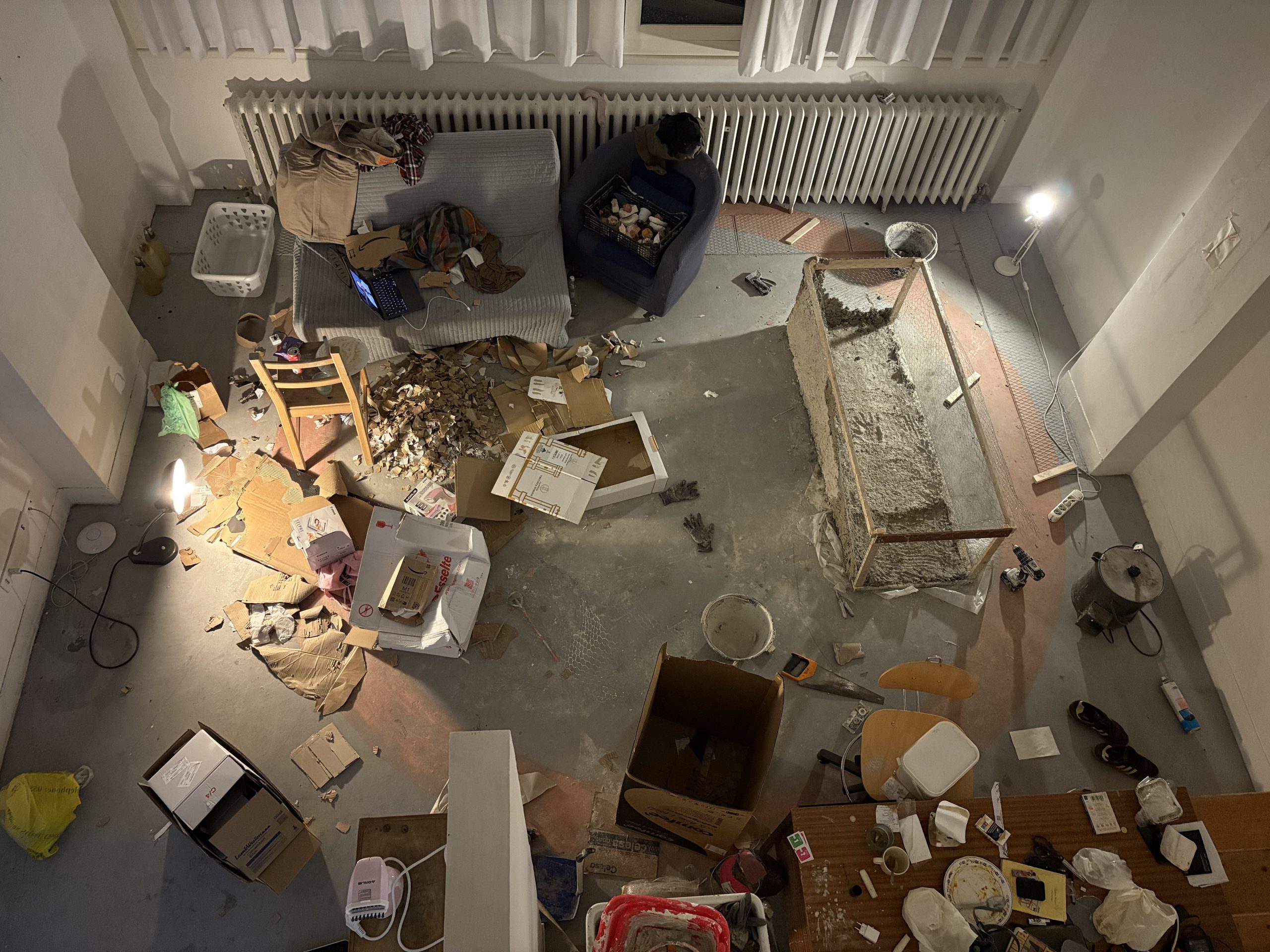
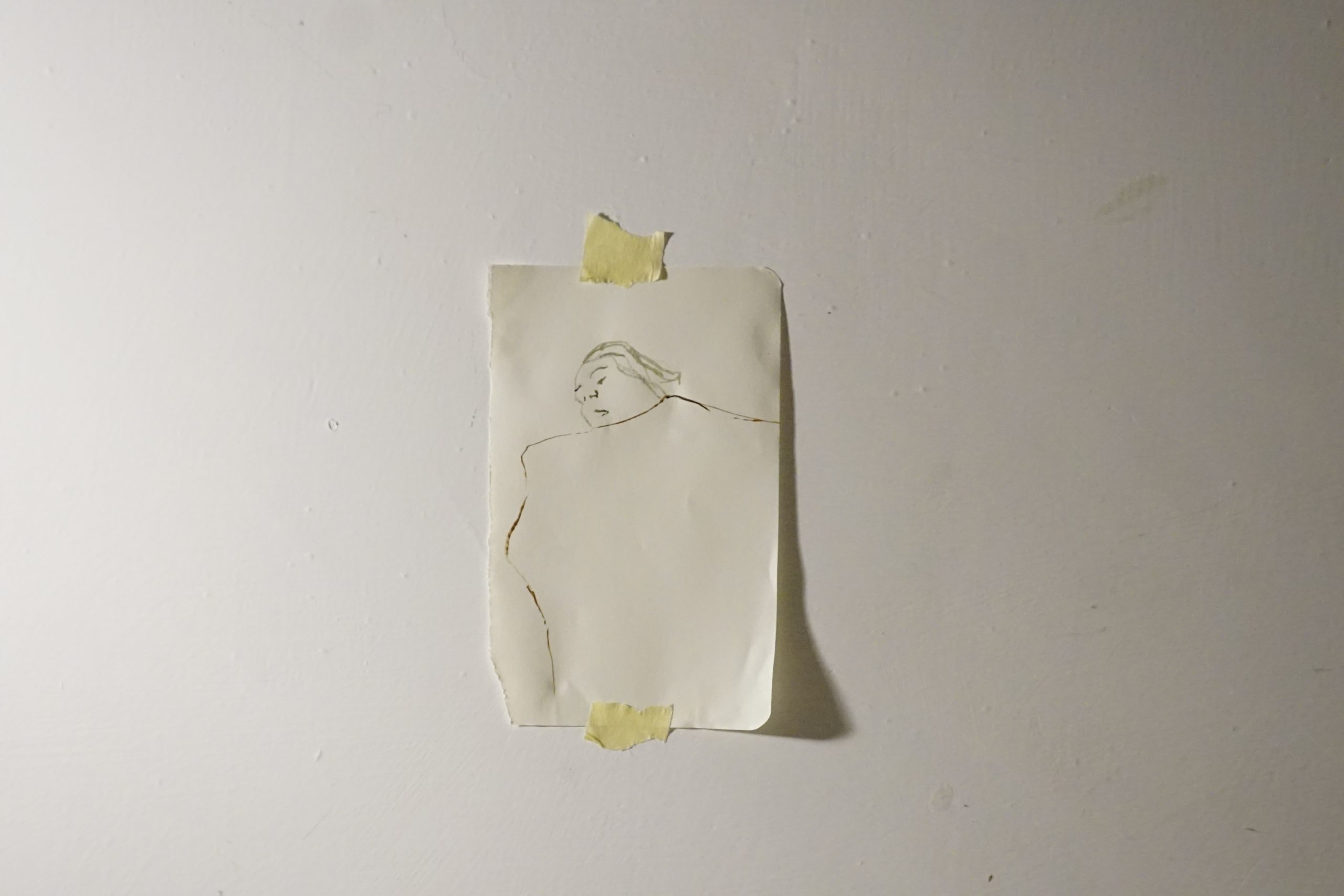
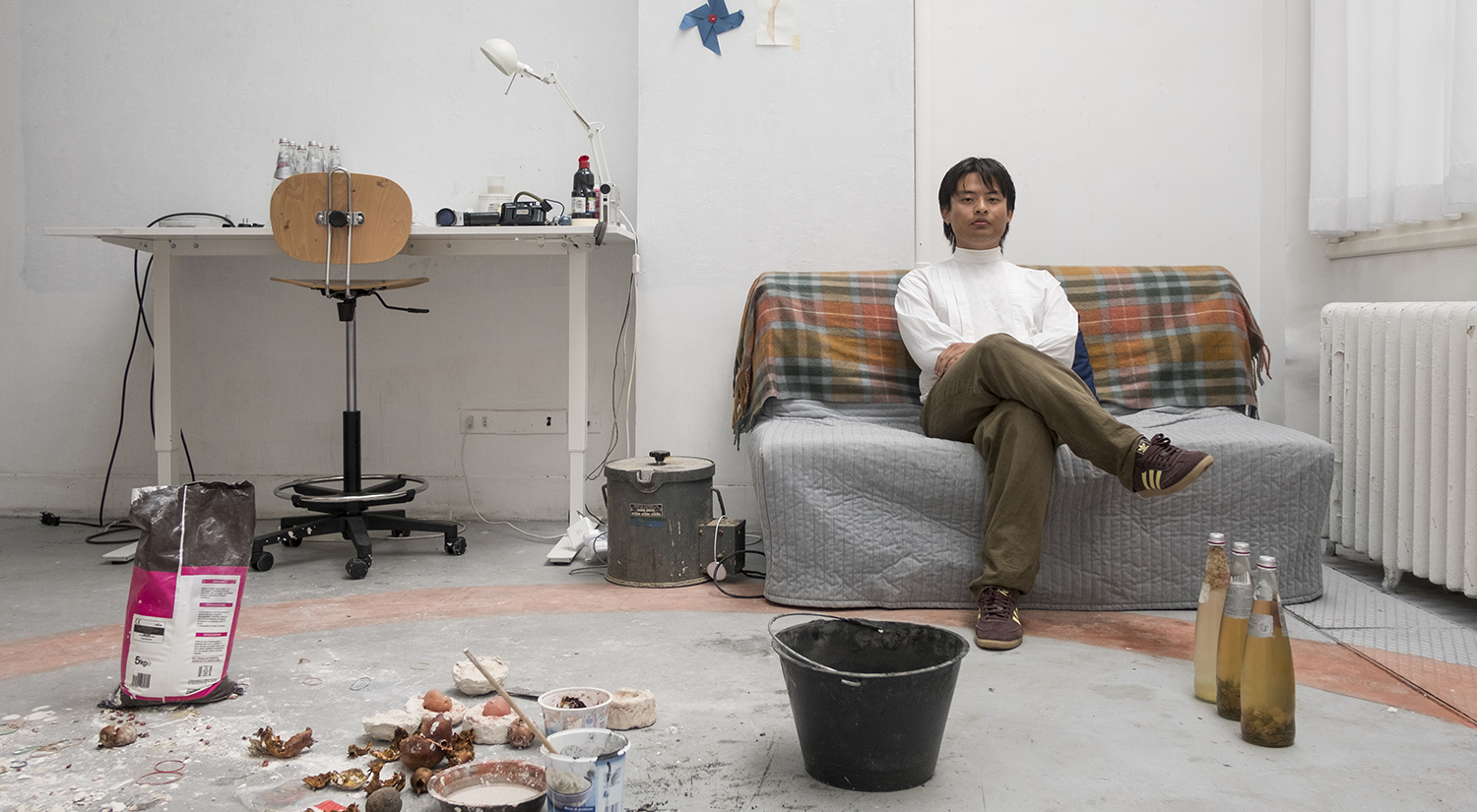
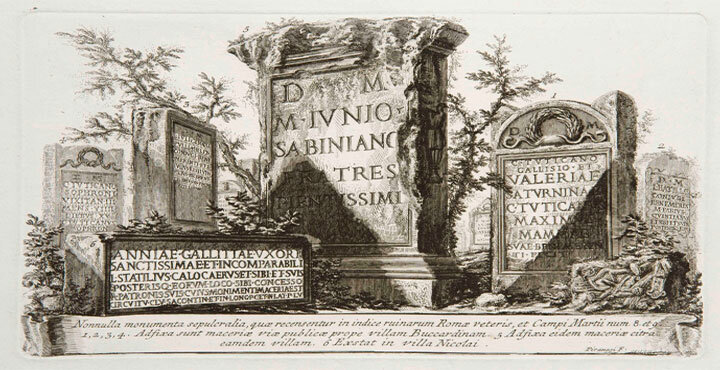
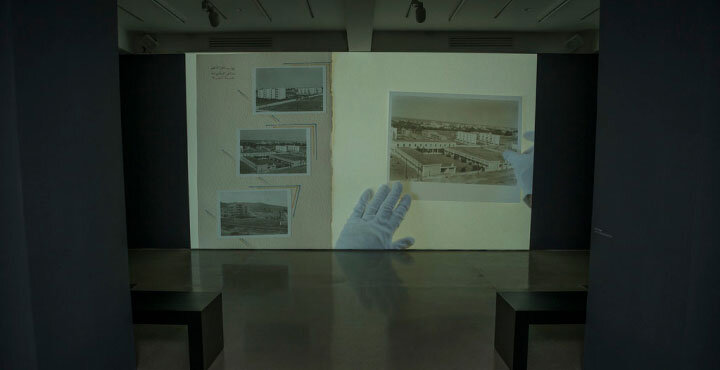
In this blog, Bishwadhan Rai —Sainsbury Scholar at the BSR from September to December 2025—shares reflections on his residency experience and the research he presented at the December 2025 Winter Open Studios.
Anthea Hamilton: “I’m literally thinking about monasteries and convents here: I romanticise that there’s kind of a decadence to that life because it’s so set. Like, you’re in a state of constant focus and holding oneself on a limit of rapture for even the smallest decisions or acts. You are close to the edges all the time. Hormonally, it must be a really extreme space”
I came to Rome on a search. Trying to live, breathe and work to locate the pulse. To find the feeling that comes from a restless state.
It was inevitable since I work in feelings. That I try to have a complete understanding of emotional habits. To reflect upon.
Certain forms, materials, motifs keep haunting me. As I walked around Rome, Turin, Pompeii and Naples, my body had a restless desire to record it, to make a portrait of.
My basic needs are being fulfilled. I do not need to worry about cooking, cleaning, money, or a home. I only need to worry about work.
How do I keep making? Not what or why but how?
Even though my needs are being met I cannot seem to understand certain habits, certain desires. These mysterious urges are valid as much as the ones I have words for.
Trying to hold, and to be held, but constantly falling apart.
In The Carrier Bag Theory of Fiction, Ursula K. Le Guin criticises the linear. The heroes story, fiction as something triumphant and tragic. Stories represented by weapons, by violence.
Instead Le Guin was interested in the story of the holder, and a recipient. Stories represented by vessels, by life.
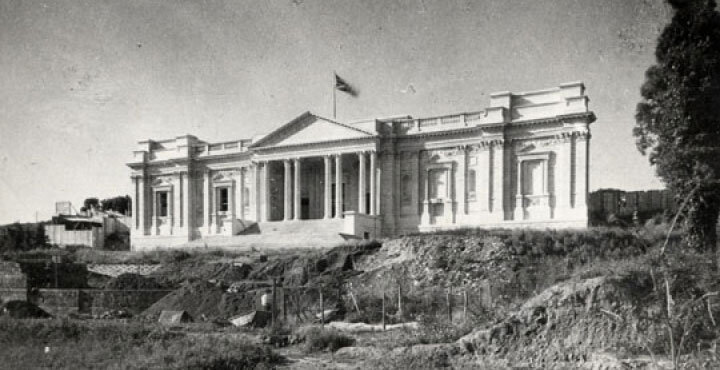
In this blog, David Osbaldeston, Abbey Fellow from January to March 2026, reflects on his residency experience and the research he presented at the Spring
For over thirty years the BSR has run undergraduate (Summer School) and postgraduate (City of Rome) courses on the ancient history, archaeology, and topography of
For over thirty years the BSR has run undergraduate (Summer School) and postgraduate (City of Rome) courses on the ancient history, archaeology, and topography of
In this blog, David Osbaldeston, Abbey Fellow from January to March 2026, reflects on his residency experience and the research he presented at the Spring
For over thirty years the BSR has run undergraduate (Summer School) and postgraduate (City of Rome) courses on the ancient history, archaeology, and topography of
For over thirty years the BSR has run undergraduate (Summer School) and postgraduate (City of Rome) courses on the ancient history, archaeology, and topography of
We use cookies on our website to give you the most relevant experience by remembering your preferences and repeat visits. By clicking “Accept All”, you consent to the use of ALL the cookies. However, you may visit "Cookie Settings" to provide a controlled consent.
This website uses cookies to improve your experience while you navigate through the website. Out of these, the cookies that are categorized as necessary are stored on your browser as they are essential for the working of basic functionalities of the website. We also use third-party cookies that help us analyze and understand how you use this website. These cookies will be stored in your browser only with your consent. You also have the option to opt-out of these cookies. But opting out of some of these cookies may affect your browsing experience.
Necessary cookies are absolutely essential for the website to function properly. These cookies ensure basic functionalities and security features of the website, anonymously.
Cookie
Duration
Description
cookielawinfo-checkbox-advertisement
1 year
Set by the GDPR Cookie Consent plugin, this cookie records the user consent for the cookies in the "Advertisement" category.
cookielawinfo-checkbox-analytics
11 months
This cookie is set by GDPR Cookie Consent plugin. The cookie is used to store the user consent for the cookies in the category "Analytics".
cookielawinfo-checkbox-functional
11 months
The cookie is set by GDPR cookie consent to record the user consent for the cookies in the category "Functional".
cookielawinfo-checkbox-necessary
11 months
This cookie is set by GDPR Cookie Consent plugin. The cookies is used to store the user consent for the cookies in the category "Necessary".
cookielawinfo-checkbox-others
11 months
This cookie is set by GDPR Cookie Consent plugin. The cookie is used to store the user consent for the cookies in the category "Other.
cookielawinfo-checkbox-performance
11 months
This cookie is set by GDPR Cookie Consent plugin. The cookie is used to store the user consent for the cookies in the category "Performance".
CookieLawInfoConsent
1 year
CookieYes sets this cookie to record the default button state of the corresponding category and the status of CCPA. It works only in coordination with the primary cookie.
elementor
never
The website's WordPress theme uses this cookie. It allows the website owner to implement or change the website's content in real-time.
viewed_cookie_policy
11 months
The cookie is set by the GDPR Cookie Consent plugin and is used to store whether or not user has consented to the use of cookies. It does not store any personal data.
Functional cookies help to perform certain functionalities like sharing the content of the website on social media platforms, collect feedbacks, and other third-party features.
Performance cookies are used to understand and analyze the key performance indexes of the website which helps in delivering a better user experience for the visitors.
Analytical cookies are used to understand how visitors interact with the website. These cookies help provide information on metrics the number of visitors, bounce rate, traffic source, etc.
Cookie
Duration
Description
_ga
1 year 1 month 4 days
Google Analytics sets this cookie to calculate visitor, session and campaign data and track site usage for the site's analytics report. The cookie stores information anonymously and assigns a randomly generated number to recognise unique visitors.
_ga_*
1 year 1 month 4 days
Google Analytics sets this cookie to store and count page views.
_gat_gtag_UA_*
1 minute
Google Analytics sets this cookie to store a unique user ID.
_gid
1 day
Google Analytics sets this cookie to store information on how visitors use a website while also creating an analytics report of the website's performance. Some of the collected data includes the number of visitors, their source, and the pages they visit anonymously.
CONSENT
2 years
YouTube sets this cookie via embedded YouTube videos and registers anonymous statistical data.
Advertisement cookies are used to provide visitors with relevant ads and marketing campaigns. These cookies track visitors across websites and collect information to provide customized ads.
Cookie
Duration
Description
VISITOR_INFO1_LIVE
5 months 27 days
YouTube sets this cookie to measure bandwidth, determining whether the user gets the new or old player interface.
YSC
session
Youtube sets this cookie to track the views of embedded videos on Youtube pages.