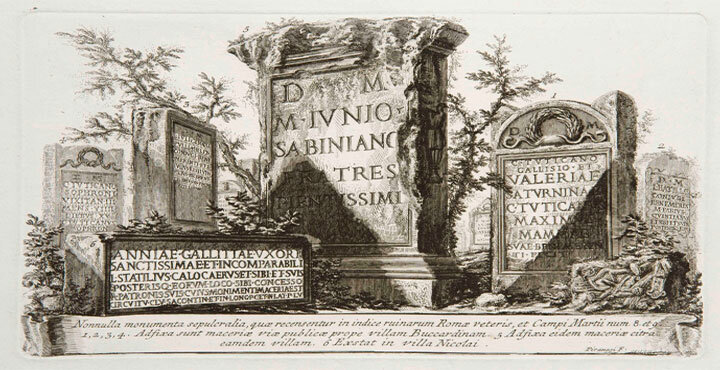


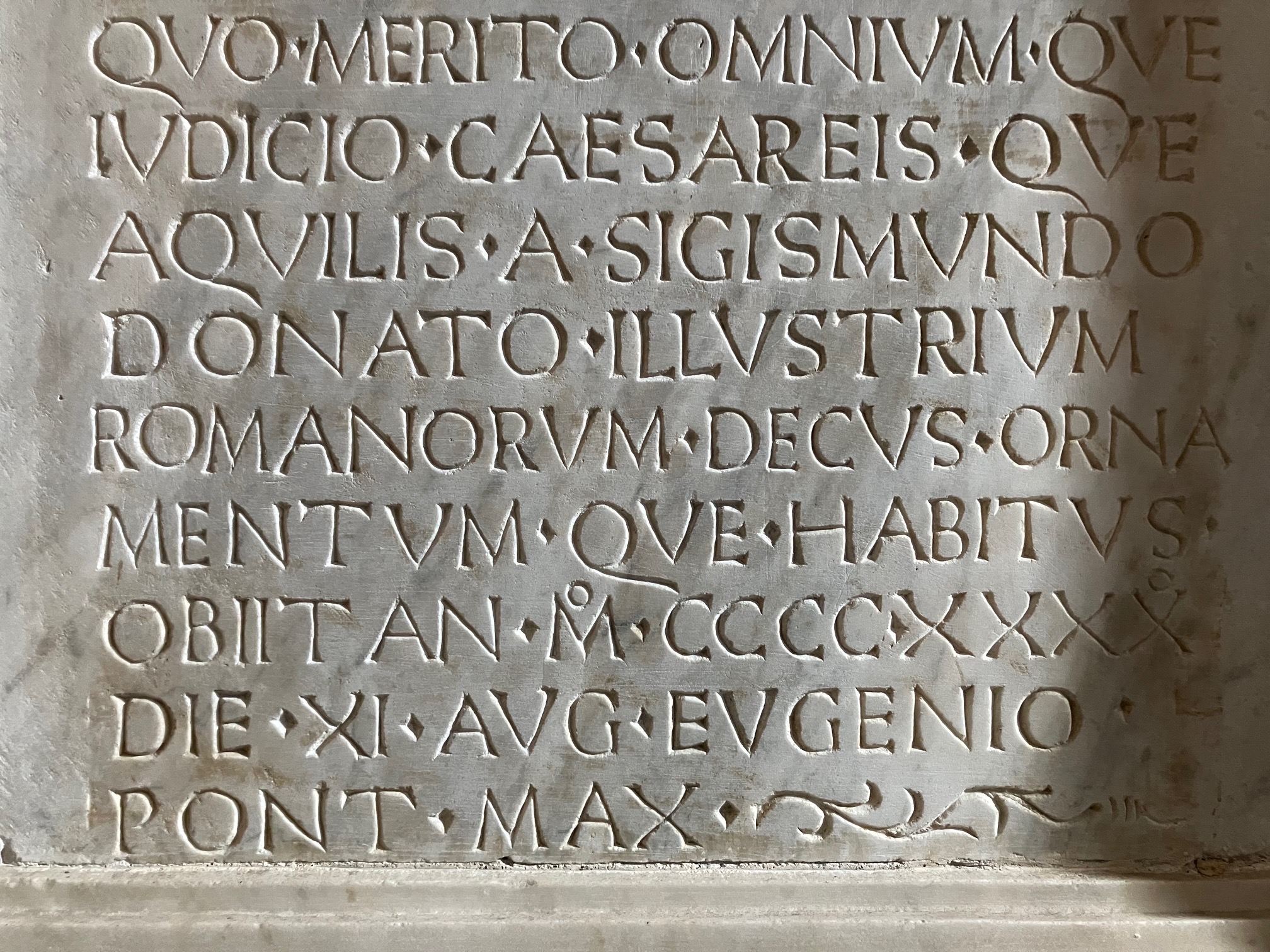

In the roughly 1000 years after its supposed rejection by the emperor Gratian as ‘unlawful for a Christian’, the pagan title pontifex maximus was only rarely used of the popes and never by the popes themselves. The explosion of its use in papal epigraphy in the later Quattrocento has usually been interpreted as a sign of the Renaissance papacy’s imperial ideology, though in reality it owed significantly to the impact of Florentine humanism and its project of language reform. Yet to be properly explained, however, is the appearance of the title in a series of inscriptions of local, non-papal commission in Quattrocento Rome. Their study exposes alternate ways of living alongside and thinking about the Roman past and papal authority that challenge the humanistic mainstream, as well as an epigraphic culture that challenges scholarly expectations. Tracing the legacy of this culture in Rome and Lazio and touching on the history of famous monuments including the Trevi Fountain, this paper asks what this ancient and seemingly familiar title actually meant to contemporary Romans. The research emerges from the speaker’s Hugh Last Fellowship and Leverhulme Trust-funded collaborative work with the BSR on ‘Christian Epigraphy of Rome, c. 590—1870’.
Dr Oren Margolis is Associate Professor of Renaissance Studies in the School of History and Art History at the University of East Anglia and a Research Fellow of the British School at Rome. He studied and previously taught at Oxford University. His book Aldus Manutius: The Invention of the Publisher won the Renaissance Society of America’s 2025 Gladys Krieble Delmas Foundation Prize for best book in Renaissance Venetian Studies. He was a BSR Rome Awardee (2012/3) and Hugh Last Fellow (2023/4), and he received an International Fellowship from the Leverhulme Trust (2024–25) for his work in collaboration with the BSR on ‘Christian Epigraphy of Rome, c. 590–1870’.
The event is hybrid. You’re welcome to attend in person—no registration is needed, and access is free. If you would like to join us online, please make sure to register using the link above.